
Bhagavad Gita — Dhyana Yoga, Shloka 1
Atma Samyama Yoga
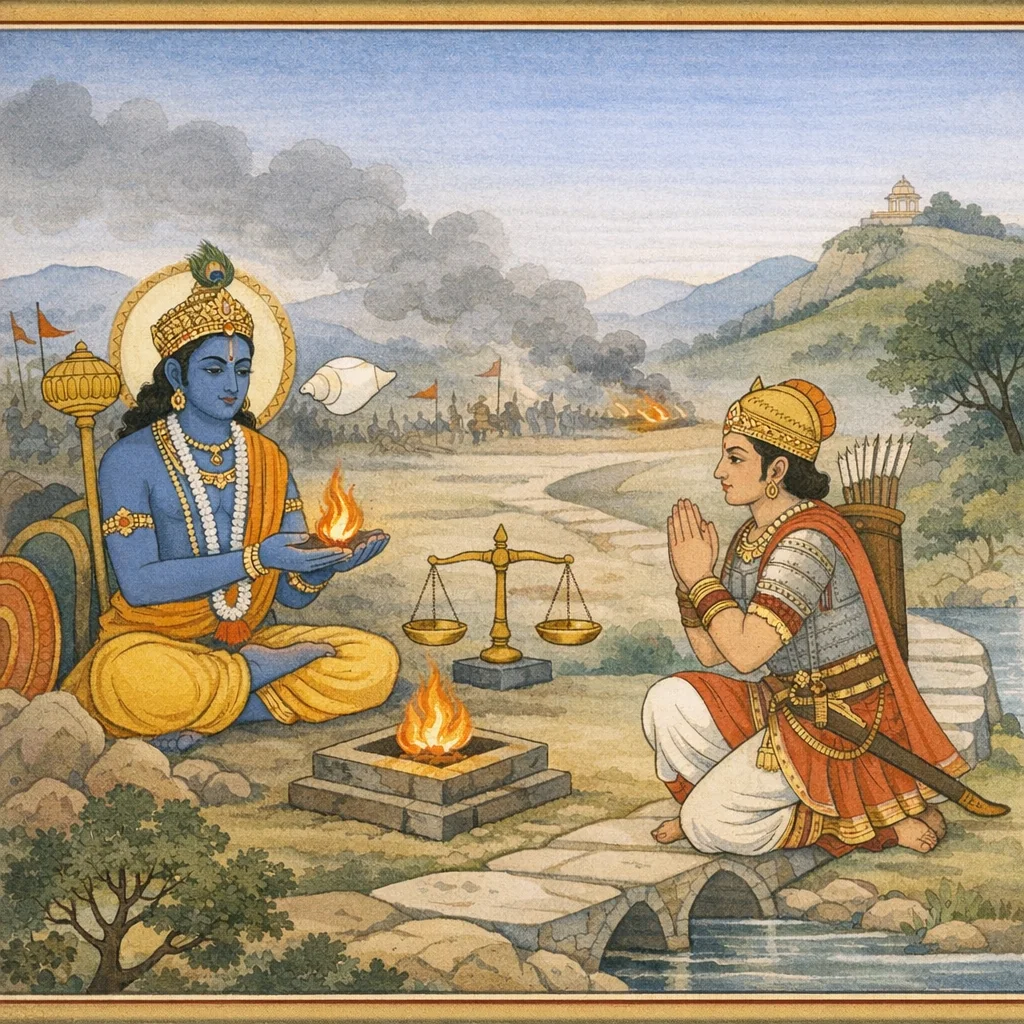
श्रीभगवानुवाच । अनाश्रितः कर्मफलं कार्यं कर्म करोति यः स संन्यासी च योगी च न निरग्निर्न चाक्रियः ॥
śrī-bhagavān uvāca | anāśritaḥ karma-phalaṁ kāryaṁ karma karoti yaḥ sa saṁnyāsī ca yogī ca na niragnir na cākriyaḥ ||

The Blessed Lord said: He who performs the duty that ought to be done without depending on the fruit of action—he is a sannyāsī and a yogī; not he who merely gives up the sacred fire, nor he who merely abstains from action.
श्रीभगवान् बोले—जो कर्मफल का आश्रय न लेकर कर्तव्य कर्म करता है, वही संन्यासी और योगी है; न कि वह जो (केवल) अग्नि का त्याग कर दे या (केवल) कर्म न करे।
The Blessed Lord said: He who performs the action that ought to be done without depending on its fruit—he is a renunciant and a yogin; not one who merely lacks ritual fire, nor one who is inactive.
The verse contrasts inner renunciation with external markers (ritual fire, inactivity). Commentarial traditions differ on whether “niragni” targets Vedic householder ritualism specifically or symbolizes outward renunciation more generally.
FAQs
It promotes outcome-independent agency: acting from values and responsibility rather than reward, which can reduce rumination and performance anxiety.
Renunciation is defined as a shift in identification—from being the ‘owner’ of results to acting as an instrument of dharma—preparing the mind for contemplative stability.
Opening Chapter 6, it connects the earlier discussion of renunciation (Chapter 5) to meditation (dhyāna) by defining the ethical basis required for yogic practice.
It supports professional and civic ethics: do necessary work conscientiously while loosening attachment to praise, status, or immediate payoff.