
Bhagavad Gita — Bhakti Yoga, Shloka 16
Bhakti Yoga
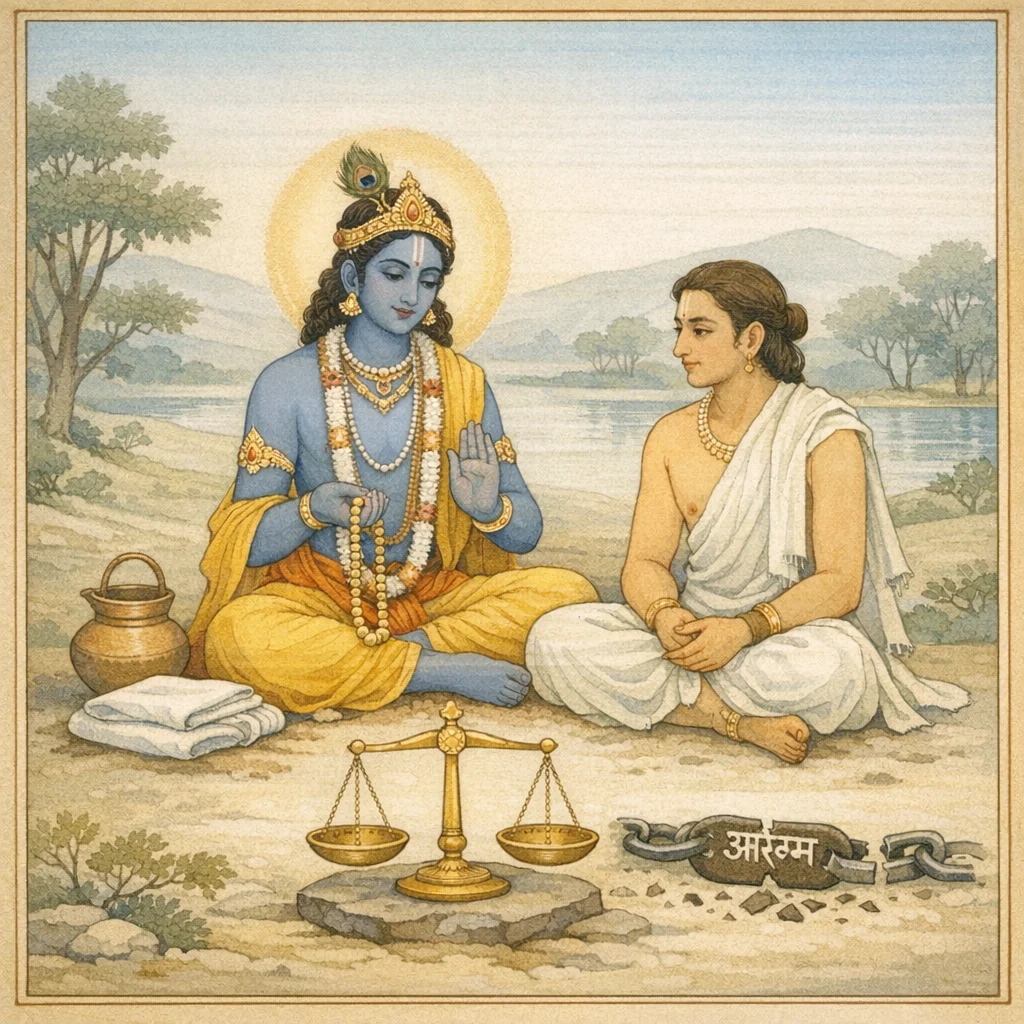
अनपेक्षः शुचिर्दक्ष उदासीनो गतव्यथः । सर्वारम्भपरित्यागी यो मद्भक्तः स मे प्रियः ॥ १२.१६ ॥
anapekṣaḥ śucir dakṣa udāsīno gata-vyathaḥ | sarvārambha-parityāgī yo mad-bhaktaḥ sa me priyaḥ || 12.16 ||

He who is without expectation, pure, capable, impartial, free from distress, and who has renounced all self-centered undertakings—such a devotee is dear to Me.
He who is without dependence, pure, capable, impartial, free from distress, and who has abandoned self-centered undertakings—such a devotee is dear to Me.
Independent (without expectation); pure; competent; detached/neutral; with pain/distress gone; one who has relinquished all ‘beginnings/undertakings’—that devotee of Mine is dear to Me.
‘Anapekṣa’ can mean ‘without expectation’ (not seeking rewards) or ‘independent.’ ‘Sarvārambha-parityāgī’ is debated: some take it as abandoning all new projects motivated by egoistic gain; others as renouncing the doer-claim while continuing necessary action.
FAQs
It promotes a stance of low entitlement and high competence: acting effectively while minimizing anxiety driven by expectations.
Renouncing ‘undertakings’ can be read as renouncing egoic authorship and acquisitive motivations, aligning action with a larger order rather than personal claim.
The devotee is characterized not only by emotions but also by practical conduct—skillful, clean in intention, and not driven by self-assertive projects.
Work with clear ethics and competence while reducing outcome-fixation; avoid projects primarily aimed at self-image maintenance.