
Bhagavad Gita — Bhakti Yoga, Shloka 1
Bhakti Yoga
अर्जुन उवाच । एवं सततयुक्ता ये भक्तास्त्वां पर्युपासते । ये चाप्यक्षरमव्यक्तं तेषां के योगवित्तमाः ॥ १२.१ ॥
arjuna uvāca | evaṁ satatayuktā ye bhaktās tvāṁ paryupāsate | ye cāpy akṣaram avyaktaṁ teṣāṁ ke yogavittamāḥ || 12.1 ||

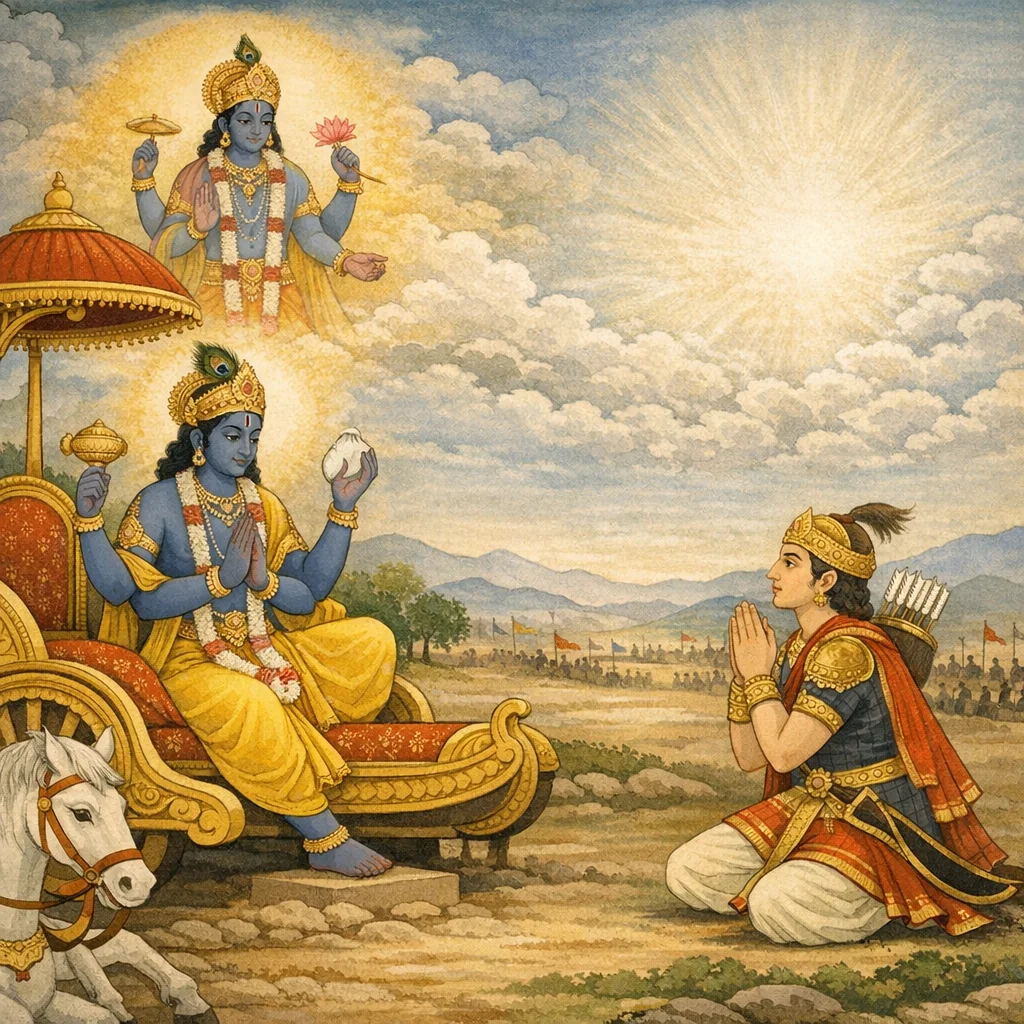
Arjuna said: Those devotees who, ever steadfast, worship You, and those who worship the imperishable unmanifest—who among them are the best knowers of yoga?
Arjuna said: Those devotees who, ever steadfast, worship You, and those who worship the imperishable unmanifest—who among them are the best knowers of yoga?
Arjuna said: Those devotees who, thus continually disciplined, revere you; and those who (revere) the imperishable, the unmanifest—who of these are the most knowledgeable in yoga?
The verse introduces a comparative framework between personal theism (saguṇa/with form, implied) and the imperishable unmanifest (nirguṇa/without manifest attributes, in later interpretive vocabularies). Academic translations retain the question’s neutrality without importing later sectarian hierarchies.
FAQs
The question reflects different cognitive-affective styles: devotion to a relatable focus versus contemplation of an abstract, unmanifest principle; it asks which yields steadier integration.
It raises a foundational issue in Indian philosophy: whether ultimate reality is best approached as a personal divine presence or as an imperishable, attribute-less unmanifest.
It opens Chapter 12 by directly connecting the cosmic vision’s aftermath to a practical inquiry about the most effective spiritual discipline.
It can guide contemporary practitioners to reflect on whether they benefit more from relational devotion, contemplative abstraction, or a balanced approach.