
Bhagavad Gita — Arjuna Vishada Yoga, Shloka 6
Arjuna Vishada Yoga
युधामन्युश्च विक्रान्त उत्तमौजाश्च वीर्यवान् । सौभद्रो द्रौपदेयाश्च सर्व एव महारथाः ॥
yudhāmanyuś ca vikrānta uttamaujāś ca vīryavān | saubhadro draupadeyāś ca sarva eva mahārathāḥ ||

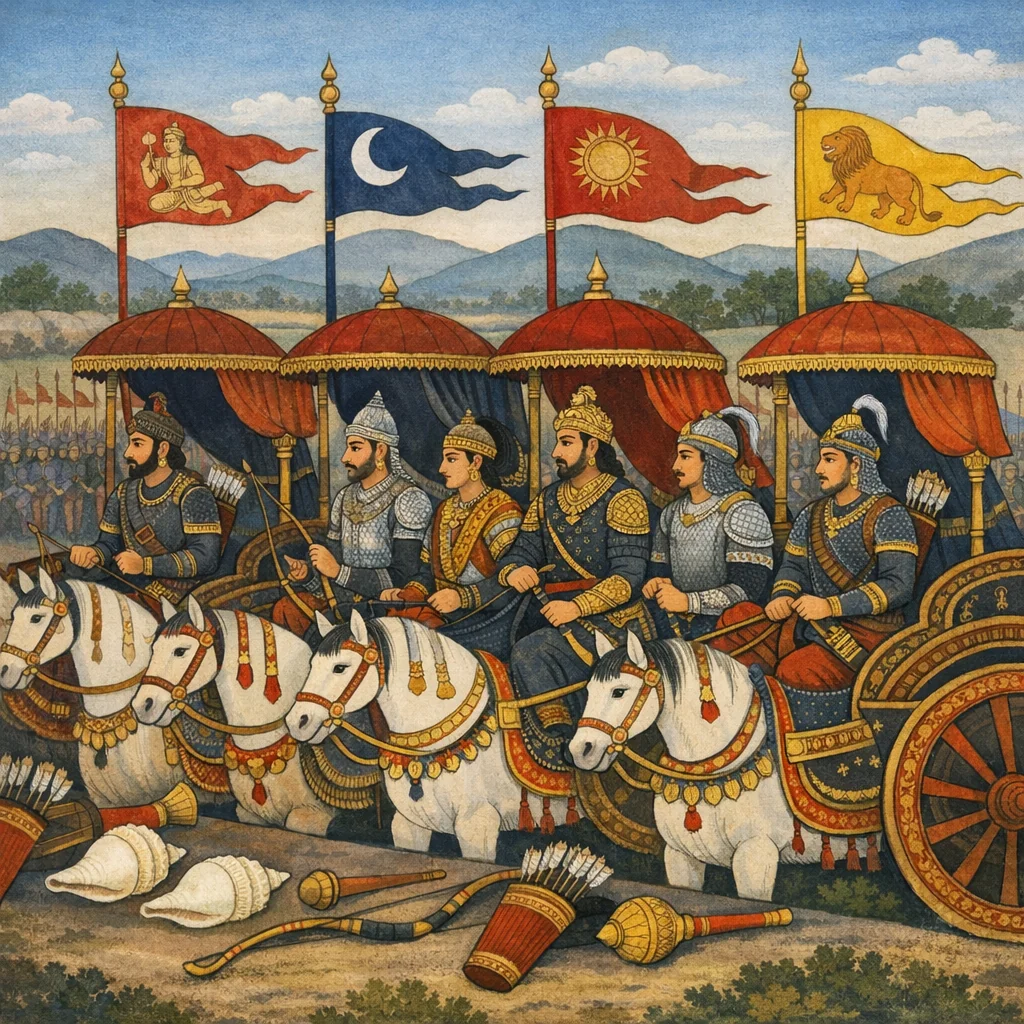
Yudhāmanyu the valiant, Uttamaujā the mighty, the son of Subhadrā, and the sons of Draupadī—all indeed are great chariot-warriors.
Yudhāmanyu the valiant, Uttamaujā the mighty, the son of Subhadrā, and the sons of Draupadī—all of them great chariot-warriors.
Yudhāmanyu, the bold, and Uttamaujā, the powerful; and Saubhadra; and the Draupadeyas—all indeed great chariot-fighters.
‘Saubhadra’ is a patronymic for Abhimanyu. ‘Draupadeyāḥ’ refers collectively to Draupadī’s sons. As with prior verses, the emphasis is on rank/competence, not on describing harm.
FAQs
By grouping individuals under patronymics and collectives, the verse shows how identity is organized through family and affiliation—useful for morale-building and strategic framing.
Lineage markers underscore embodied, relational existence: one’s situation (birth, ties, duties) conditions the arena in which spiritual discernment must operate.
It completes a segment of Duryodhana’s listing of prominent Pāṇḍava-aligned figures before he turns to his own side.
Teams often rely on both individual talent and group cohesion. The verse can be read as a reminder to recognize strengths across generations and networks without reducing persons to labels.