
Bhagavad Gita — Arjuna Vishada Yoga, Shloka 45
Arjuna Vishada Yoga
यदि मामप्रतीकारमशस्त्रं शस्त्रपाणयः । धार्तराष्ट्रा रणे हन्युस्तन्मे क्षेमतरं भवेत् ॥ १.४५ ॥
yadi mām apratīkāram aśastraṃ śastrapāṇayaḥ | dhārtarāṣṭrā raṇe hanyus tan me kṣemataraṃ bhavet || 1.45 ||

यदि शस्त्रधारी धृतराष्ट्र के पुत्र मुझे निःप्रतिरोध और निःशस्त्र को रण में मार दें, तो वही मेरे लिए अधिक कल्याणकारी होगा।
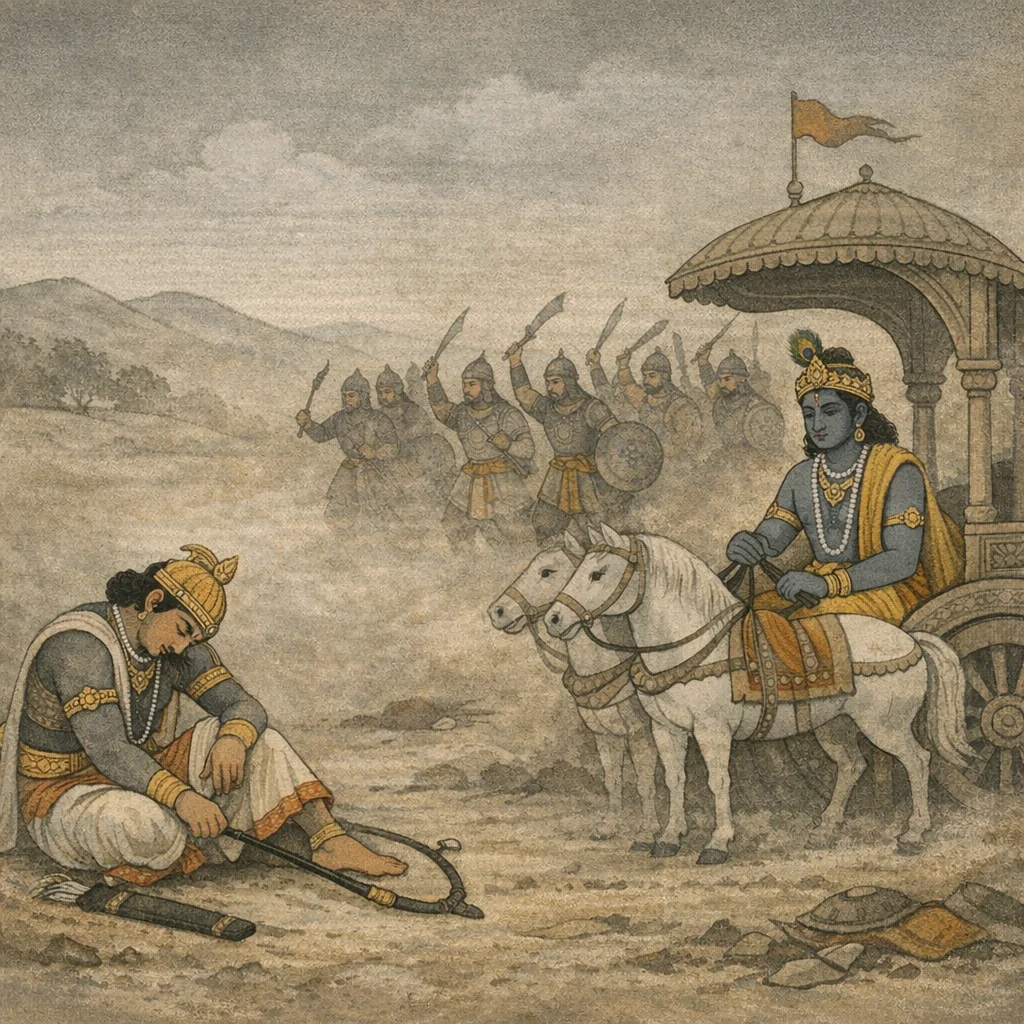
If the sons of Dhṛtarāṣṭra, weapons in hand, were to slay me in battle while I am unresisting and unarmed, that would be safer (better) for me.
To maintain non-graphic framing, the line can be read as Arjuna preferring personal loss over participation in perceived wrongdoing. ‘kṣematara’ carries the sense of ‘more secure/beneficial’—ethical security as much as physical.
FAQs
This expresses avoidance and self-negation: Arjuna views withdrawal—even at great personal cost—as preferable to acting against his conscience.
Not primarily metaphysical; it dramatizes an ethical calculus where moral integrity is valued above survival or victory.
It intensifies Arjuna’s collapse of will, setting up the narrative moment where he lays down his weapons.
It can be read as the dilemma of choosing non-participation in systems one believes are unjust, even when that choice carries personal consequences.