
Bhagavad Gita — Arjuna Vishada Yoga, Shloka 44
Arjuna Vishada Yoga
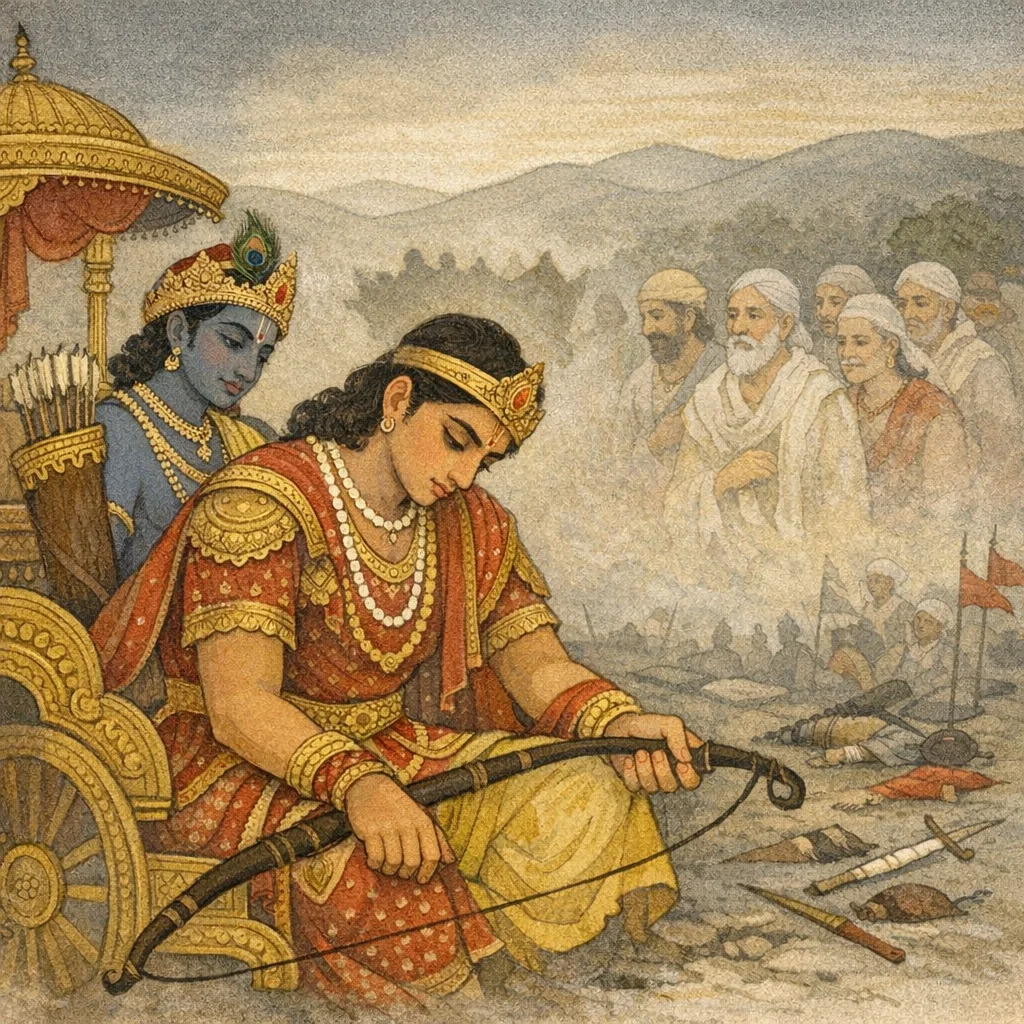
अहो बत महत्पापं कर्तुं व्यवसिता वयम् । यद्राज्यसुखलोभेन हन्तुं स्वजनमुद्यताः ॥ १.४४ ॥
aho bata mahat pāpaṃ kartuṃ vyavasitā vayam | yad rājyasukhallobhena hantuṃ svajanam udyatāḥ || 1.44 ||

हाय! हम तो बड़ा पाप करने को उद्यत हो गए हैं, जो राज्य और सुख के लोभ से अपने ही स्वजनों का संहार करने के लिए तैयार हैं।
Alas, we are resolved to commit a great wrong, since, out of desire for the pleasures of sovereignty, we are prepared to strike down our own people.
Many traditional translations use explicitly moral-religious language (‘pāpa’ as ‘sin’); academic renderings may translate ‘pāpa’ as ‘grave wrongdoing’ to preserve ethical force without importing later doctrinal connotations.
FAQs
Arjuna’s language shows acute moral distress: he interprets participation as a betrayal of core values, attributing the impulse to ‘greed for power and comfort.’
The verse is primarily ethical rather than metaphysical, contrasting desire-driven motivation with a higher standard of right action.
It marks a turn from social-ritual consequences to personal culpability: Arjuna now condemns his own side’s intention.
It can function as a critique of decisions driven by status, control, or comfort when they compromise relationships and ethical commitments.