
Bhagavad Gita — Arjuna Vishada Yoga, Shloka 34
Arjuna Vishada Yoga
आचार्या: पितर: पुत्रास्तथैव च पितामहा: | मातुला: श्वशुरा: पौत्रा: श्याला: सम्बन्धिनस्तथा॥ १.३४ ॥
ācāryāḥ pitaraḥ putrās tathaiva ca pitāmahāḥ | mātulāḥ śvaśurāḥ pautrāḥ śyālāḥ sambandhinas tathā || 1.34 ||

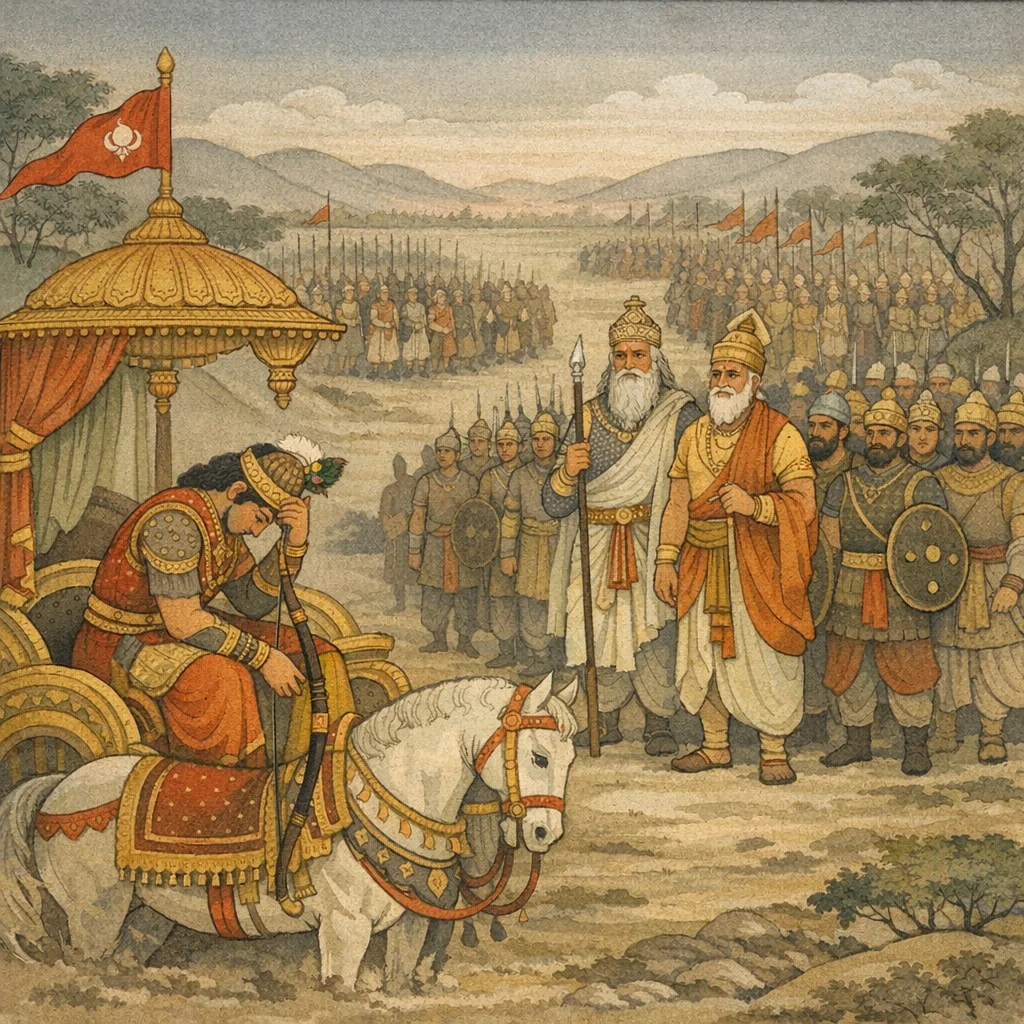
Teachers, fathers, sons, and likewise grandfathers; maternal uncles, fathers-in-law, grandsons, brothers-in-law, and other relatives—(all are here).
Teachers, fathers, sons, grandfathers, maternal uncles, fathers-in-law, grandsons, brothers-in-law, and other relatives (are here).
Teachers, fathers, sons, and likewise grandfathers; maternal uncles, fathers-in-law, grandsons, brothers-in-law, and also other relations.
This catalog functions rhetorically to expand the circle of concern from immediate family to the wider kinship network, underscoring the social fabric implicated in the conflict.
FAQs
Enumerating relations externalizes Arjuna’s inner conflict: naming roles (teacher, father, etc.) activates layered loyalties and intensifies his reluctance.
The verse highlights dharma as embedded in social roles; later teaching will distinguish role-based duty from attachment-driven identification.
Arjuna points out that the opposing side includes figures traditionally owed reverence and care, complicating any simple notion of righteous action.
It illustrates how ethical decisions often involve multiple role obligations (to mentors, parents, dependents), requiring careful discernment rather than single-metric thinking.