
Bhagavad Gita — Arjuna Vishada Yoga, Shloka 13
Arjuna Vishada Yoga
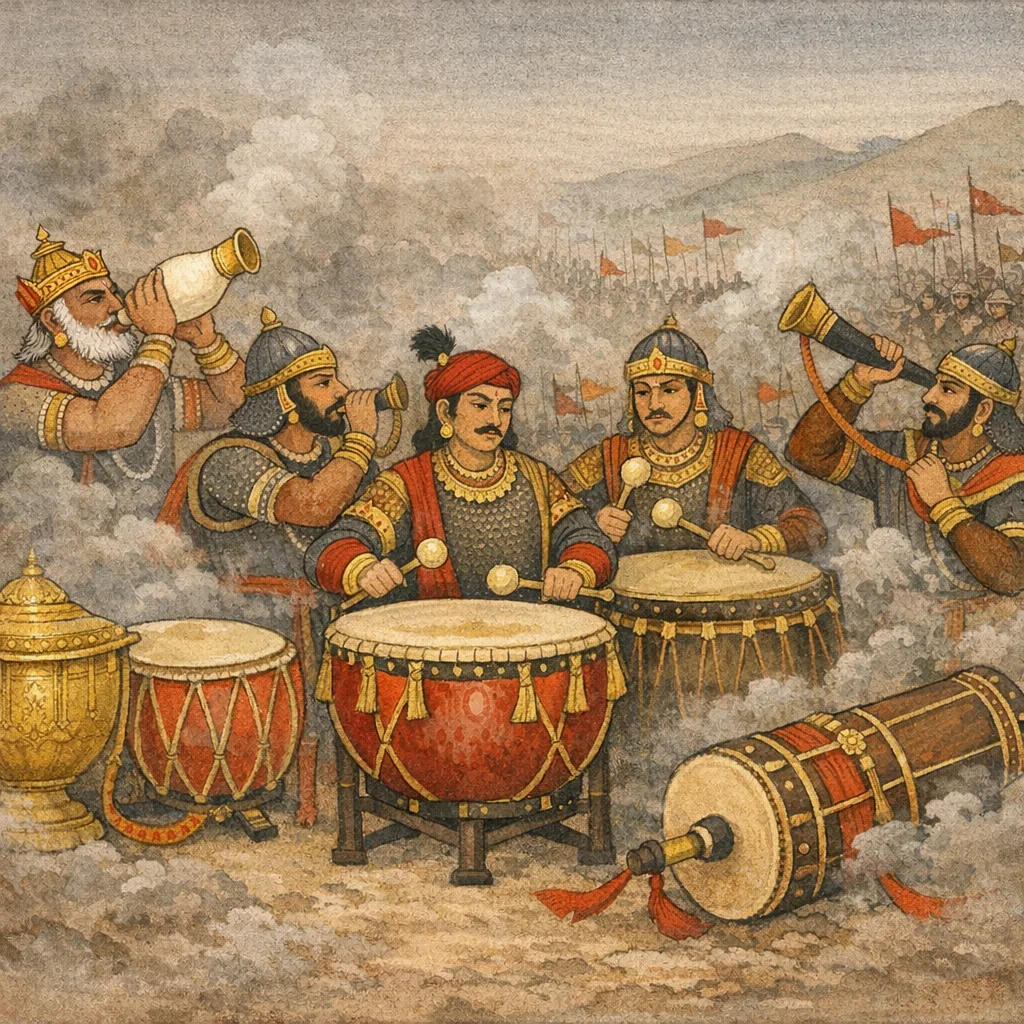
ततः शङ्खाश्च भेर्यश्च पणवानकगोमुखाः । सहसैवाभ्यहन्यन्त स शब्दस्तुमुलोऽभवत् ॥ १.१३ ॥
tataḥ śaṅkhāś ca bheryaś ca paṇavānaka-gomukhāḥ | sahasaivābhyahanyanta sa śabdas tumulo 'bhavat || 1.13 ||

Thereafter, conches and kettledrums, tabors and drums, and horns were sounded all at once; that uproar became tremendous.
“तत्पश्चात् शंख, नगाड़े, ढोल, मृदंग और नरसिंगे एक साथ बज उठे; वह शब्द बड़ा भारी (कोलाहलपूर्ण) हुआ।”
“Then conches, kettle-drums, hand-drums, larger drums, and horn-instruments were sounded all at once; that sound became tumultuous.”
वाद्य-नामों में अनुवाद-परंपरा के अनुसार सूक्ष्म भेद मिलते हैं (भेरी/पणव/आनक/गोमुख). ‘तुमुल’ का अर्थ सामान्यतः ‘बहुत ऊँचा/घना/व्यापक’ ध्वनि-परिवेश है।
FAQs
The simultaneous instruments create a shared emotional environment—heightening alertness and group identity through synchronized cues.
While later Indian traditions develop rich philosophies of sound, here sound primarily serves narrative and symbolic functions: announcement, unity, and heightened seriousness.
The verse depicts the collective response after Bhīṣma’s conch, indicating an organized, public readiness.
A parallel is coordinated signaling in teams—countdowns, opening ceremonies, or shared rituals that align participants before a challenging task.