
Bhagavad Gita — Arjuna Vishada Yoga, Shloka 12
Arjuna Vishada Yoga
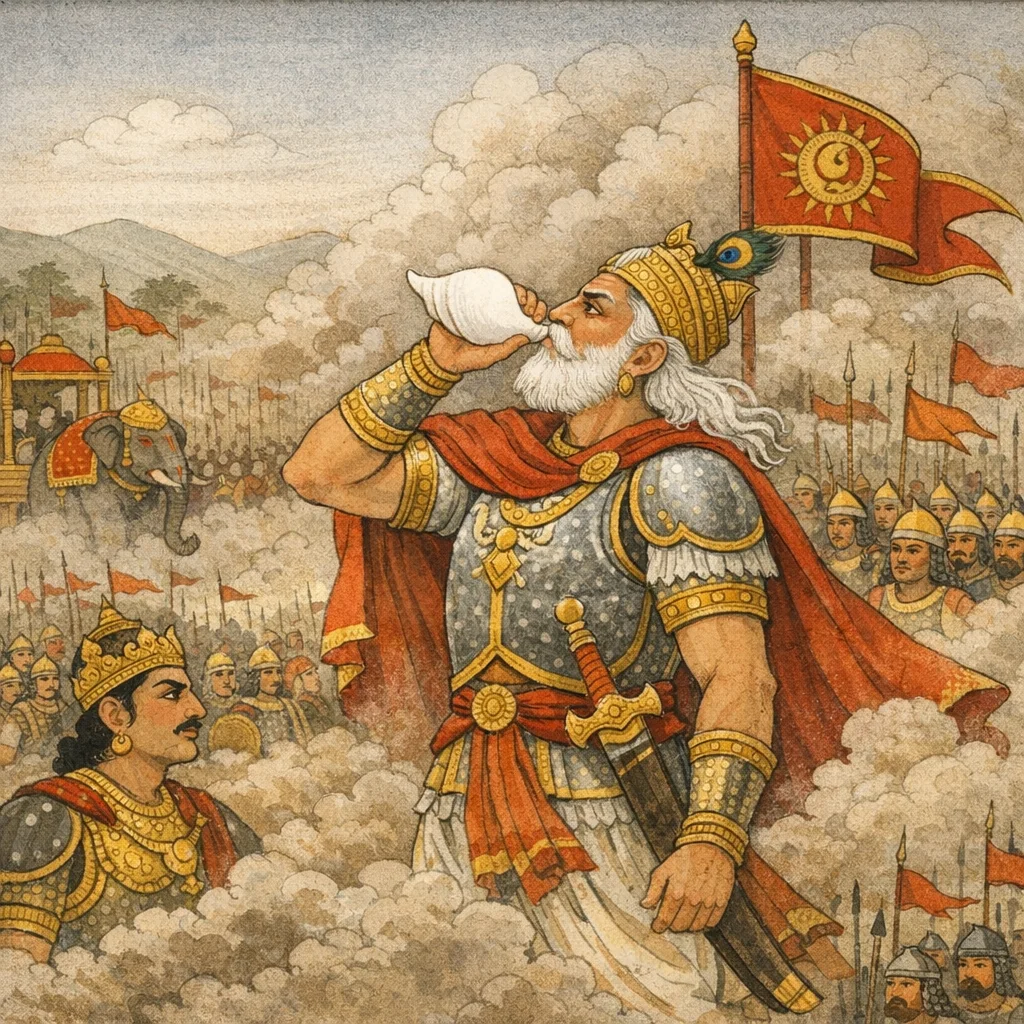
तस्य सञ्जनयन्हर्षं कुरुवृद्धः पितामहः । सिंहनादं विनद्योच्चैः शङ्खं दध्मौ प्रतापवान् ॥ १.१२ ॥
tasya sañjanayan harṣaṁ kuru-vṛddhaḥ pitāmahaḥ | siṁha-nādaṁ vinadyoccaiḥ śaṅkhaṁ dadhmau pratāpavān || 1.12 ||

Then, to kindle his joy, the aged grandsire of the Kurus, the mighty Bhīṣma, roared like a lion and blew his conch aloud.
“उस (दुर्योधन) में हर्ष उत्पन्न करते हुए कुरुवंश के वृद्ध पितामह प्रतापी भीष्म ने सिंहनाद के समान उच्च स्वर से शंख बजाया।”
“Then the mighty grandsire, the elder of the Kurus, to rouse his joy, blew his conch loudly, sounding like a lion’s roar.”
‘सिंहनाद’ उपमा को कुछ अनुवाद ‘lion-like roar’ (उत्साहवर्धक ध्वनि) के रूप में लेते हैं; यह रूपक वीर-रस/उत्साह का संकेत है, न कि किसी प्रत्यक्ष हिंसात्मक विवरण का।
FAQs
The conch-sound functions as a morale cue: a shared signal that organizes attention and strengthens resolve at a decisive moment.
Sound is often treated in Indian thought as a carrier of meaning and order; here it is primarily a conventional emblem of readiness and confidence rather than a metaphysical doctrine.
Bhīṣma’s act is portrayed as supportive of Duryodhana’s confidence, marking the transition from counsel to public readiness.
Comparable to symbolic communications—announcements, ceremonies, or signals—that unify a group’s focus before a demanding undertaking.