
Bhagavad Gita — Akshara Brahma Yoga, Shloka 22
Akshara Brahma Yoga
पुरुषः स परः पार्थ भक्त्या लभ्यस्त्वनन्यया । यस्यान्तःस्थानि भूतानि येन सर्वमिदं ततम् ॥ ८.२२ ॥
puruṣaḥ sa paraḥ pārtha bhaktyā labhyas tv ananyayā | yasyāntaḥsthāni bhūtāni yena sarvam idaṃ tatam || 8.22 ||

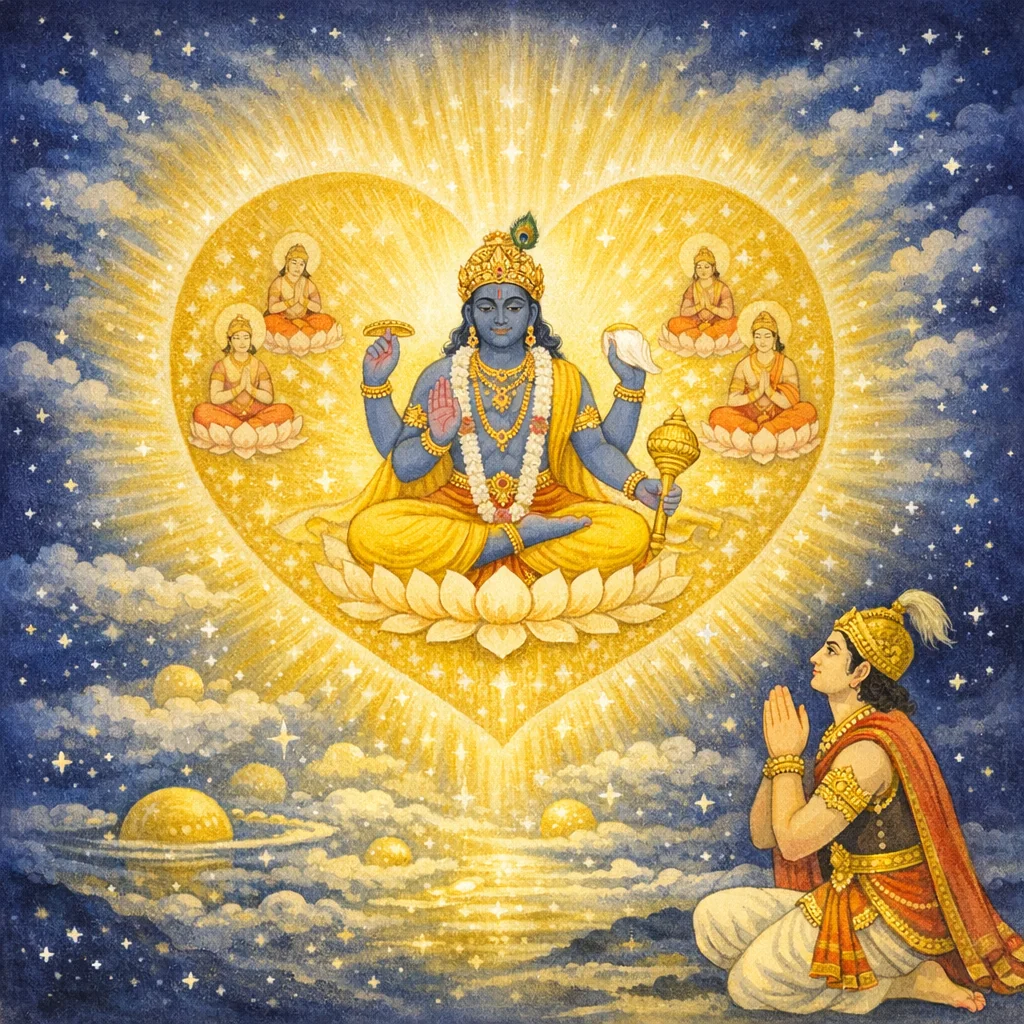
That Supreme Person, O Pārtha, is attainable by exclusive, undivided devotion—He within whom all beings abide, and by whom all this is pervaded.
That Supreme Person, O Partha, is attainable by exclusive devotion—He in whom all beings dwell and by whom all this is pervaded.
That supreme Person, O Pārtha, is attainable by undivided devotion—within whom beings abide, and by whom all this is pervaded.
The main interpretive axis is ‘puruṣaḥ paraḥ’: read as a personal God (Viṣṇu/Kṛṣṇa) in bhakti traditions, or as the supreme Self/absolute principle in more non-dual readings; the verse itself combines personal and cosmic-pervasive language.
FAQs
‘Undivided devotion’ can be read as sustained, non-fragmented attention and commitment—reducing inner conflict by aligning intention, emotion, and practice toward a single highest aim.
The ultimate is portrayed as both the inner ground in which beings subsist and the pervasive reality through which the world is ‘spread out,’ suggesting a non-separation between ultimate principle and the cosmos.
After defining the ‘supreme abode,’ the text states the means of access: not merely knowledge of the goal, but an integrated devotional orientation.
It supports practices of focused commitment—devotional, ethical, or contemplative—where consistency and wholeheartedness are emphasized over scattered pursuits.