Adhyaya 106: The Significance and Rite of Donating the ‘Curd-Cow’ (Dadhidhenudāna)
Dadhidhenudāna-māhātmya
Ritual-Manual (Dāna-vidhi and Phalaśruti)
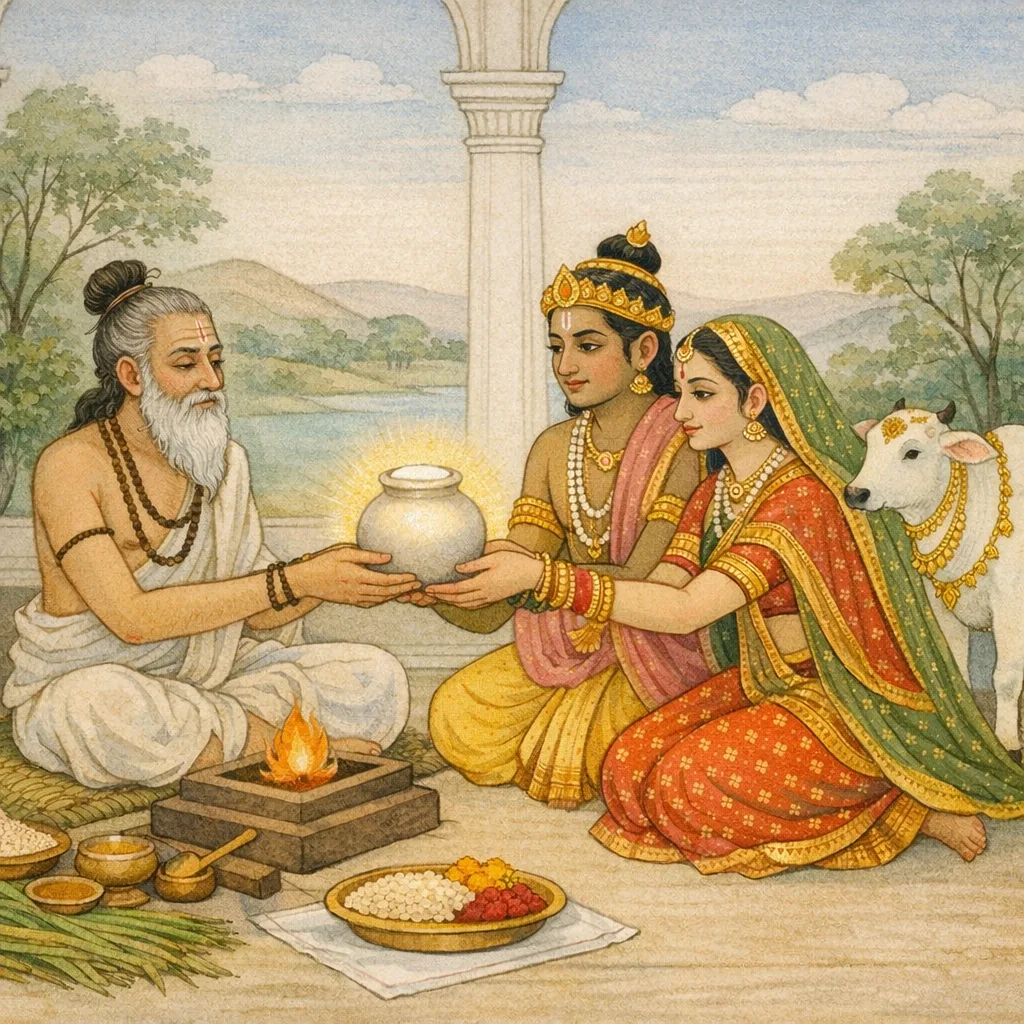
在《婆罗诃往世书》常见的婆罗诃—大地女神(Varāha–Pṛthivī)教诲框架中,本章简明阐述 dadhidhenudāna 的仪轨(vidhāna):以凝乳(curd)塑成/象征“乳牛”,并配以相关供品而行布施。讲者(称为 Hotṛ)教导国王受主如何净治坛场:以牛粪涂地,布置装饰过的地面量度,铺设库沙草(kuśa)与黑羚羊皮,并将盛凝乳之罐置于七种谷物堆上。又规定金制小牛,面部饰物庄严,并覆以布帛、花与香。此施当奉与具资格的婆罗门(brāhmaṇa),其以家世、行持与忍耐等德行著称。并施鞋履、伞盖等随施,伴以真言诵持;随后节制饮食,守持三夜之行。末以果报偈(phalaśruti)宣说:施主、见证者与诵读者皆得殊胜的身后归趣。
Primary Speakers
Key Concepts
Shlokas in Adhyaya 106
Verse 1
अथ दधिधेनुदान माहात्म्यम् ॥ होतोवाच ॥ दधिधेनोर्महाराज विधानं शृणु सांप्रतम् ॥ अनुलिप्ते महीभागे गोमयेन नराधिप
今说“达迪希德努”(凝乳之牛)布施之功德。Hotṛ 说道:“大王啊,请听如今达迪希德努的仪轨。人中王啊,于一处以牛粪涂抹的地面上……”
Verse 2
गोचर्ममात्रं तु पुनः पुष्पप्रकरशोभिते ॥ कुशैरास्तीर्य वसुधां कृष्णाजिनकुशोत्तरीम्
再者,(备)一处如牛皮般大小之地,饰以花簇;于地上铺敷库沙草,并置黑羚羊皮,其上再覆库沙草。
Verse 3
दधिकुम्भं तु संस्थाप्य सप्तधान्यचयोपरि ॥ चतुर्थांशेन वत्सं तु सौवर्णं मुखमण्डितम्
将盛凝乳之罐安置于七种谷物的堆上;并(制)一犊——以金为质,面部庄严——其量为四分之一(份)。
Verse 4
आच्छाद्य वस्त्रयुग्मेन पुष्पगन्धैस्तु पूजिताम् ॥ ब्राह्मणाय कुलीनाय साधुवृत्ताय धीमते
以一对衣物覆护此施物,并以花与香供养礼敬之后,应将其奉施于婆罗门——出身良族、行持清净、具慧明辨者。
Verse 5
क्षमादिगुणयुक्ताय दद्यत्तां दधिधेनुकाम् ॥ पुच्छदेशोपविष्टस्तु मुद्रिकाकर्णभूषणैः
应将此“凝乳之牛”布施给具忍辱等诸德之人;并当于尾部安置装饰,以戒指与耳饰为庄严。
Verse 6
पादुकोपानहौ छत्रं दत्त्वा मन्त्रिममं पठेत् ॥ दधिक्राव्णेति मन्त्रेण दद्याद्धेनुं सुपूजिताम्
施与木屐与鞋履,并奉献伞盖之后,应诵此真言;以“dadhikrāvṇa…”之咒,奉施那已受恭敬供养之牛。
Verse 7
एवं दधिमयीं धेनुं दत्त्वा राजर्षिसत्तम ॥ एकाहारी दिनं तिष्ठेद्दध्ना च नृपनन्दन
如是,既已奉施以凝乳所成(为仪式之施)的牝牛,噫,诸王仙之最胜者,当一日仅食一餐——且此餐亦当佐以凝乳,噫,王者之欢喜者。
Verse 8
यजमानो वसेद्राजंस्त्रिरात्रं च द्विजोत्तमः ॥ दीयमानां प्रपश्यन्ति ते यान्ति परमं पदम्
施主(yajamāna)当居留其处,噫,国王,为期三夜;最上之婆罗门亦复如是。凡见其施与之人,皆得至于最高境界。
Verse 9
य इदं शृणुयाद्भक्त्या श्रावयेद्वापि मानवः ॥ सोऽश्वमेधफलं प्राप्य विष्णुलोकं च गच्छति
凡以虔敬聆听此文,或令他人诵读者,得阿湿婆梅陀(马祭)之功德果报,并往生毗湿奴之界。
Frequently Asked Questions
The text emphasizes regulated generosity (dāna) performed with ritual cleanliness, correct procedure, and careful selection of a worthy recipient. Ethical value is located in disciplined giving—material support directed to a learned and virtuous brāhmaṇa—combined with self-restraint (niyama) after the donation. The chapter frames merit as arising from both the act and its orderly, socially accountable execution.
No lunar tithi, nakṣatra, month, or seasonal timing is specified. The only temporal markers are observance-lengths: the donor maintains a one-day regulated intake (ekāhāra) and remains with curd-based restraint for that day, while the officiant/leading brāhmaṇa is described as observing a three-night period (trirātra).
Environmental balance is implied through the ritual’s Earth-facing materials and purification logic: gomaya (cow-dung plaster) and kuśa (sacred grass) prepare the ground (vasudhā), highlighting a model where the terrestrial surface is treated as a managed, purified substrate for human action. The ‘cow’ symbolism (dhenū) and the use of grains (saptadhānya) also link prosperity and moral order to agrarian/ecological cycles, aligning with the Varāha Purāṇa’s broader Pṛthivī-centered worldview even when Pṛthivī is not explicitly named in the verses.
No specific dynasties or named sages are cited. The chapter addresses a generalized royal figure (e.g., mahārāja, narādhipa, nṛpa-nandana, rājarṣi-sattama) and prescribes gifting to a ‘kulīna’ brāhmaṇa of good conduct and virtues. The only explicit role-title is Hotṛ, indicating a Vedic ritual function rather than an individualized historical person.