Dashati 7
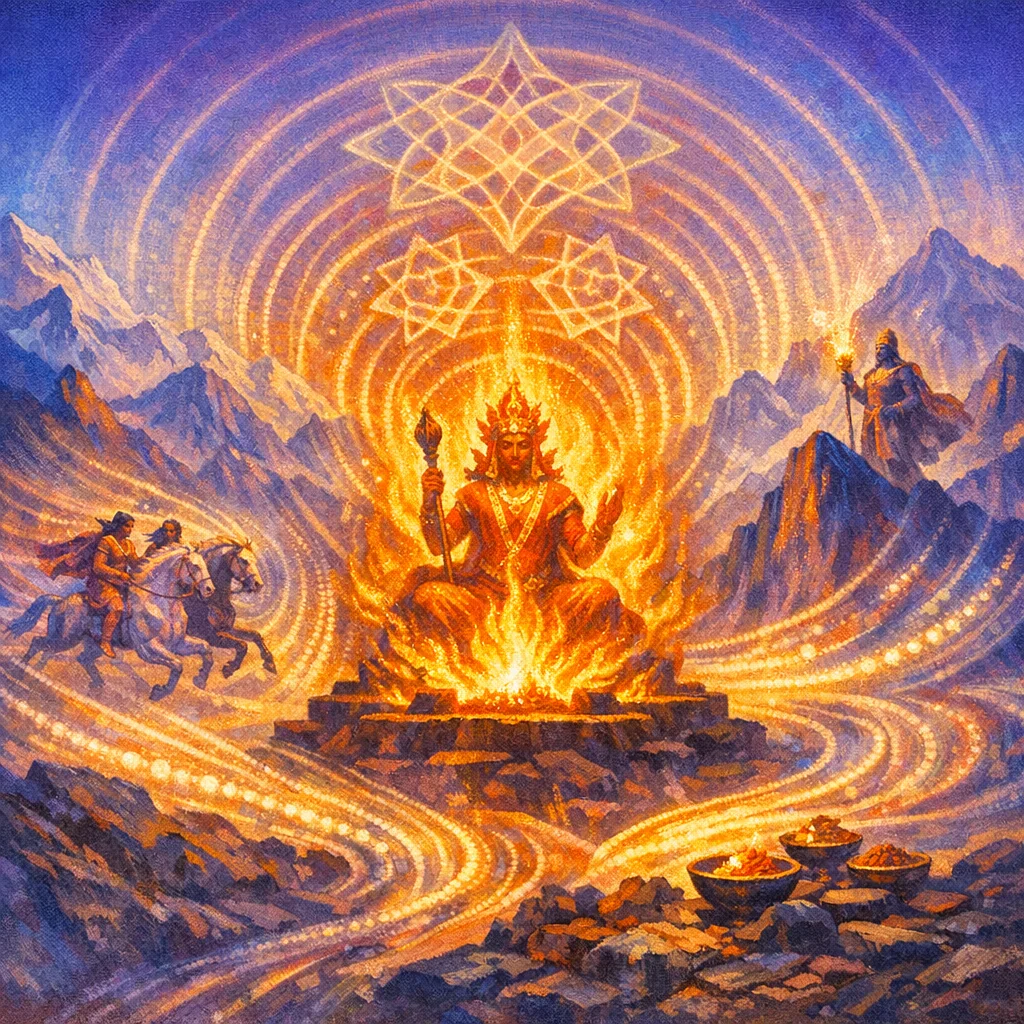
Agni as the sovereign of sacrifice (yajña-samrāṭ) and the energizing divine powers that make the rite fruitful
Agni
Bright forward-driving praise—processional and triumphant suited to ‘calling in’ deities and affirming ritual sovereignty
Ṛṣi and chandas are not provided; identification requires tracing each mantra to its Ṛgvedic source and consulting the Sāmavedic anukramaṇī for this arcikā/prapāṭhaka location.
本组颂歌以阿耆尼为祭祀之王(yajña-samrāṭ),主宰并承载供献,使仪式得以成就;继而召请阿湿毗那双神迅疾降临,作为慈惠的援助者与寻得财富者;又言因苏摩而振奋的因陀罗,威力被激发而倾释广大财宝。整体呈现“召请→临在→增力→赐予”的祭仪神学:以明亮而凯旋的赞颂确立神在祭中的主权,遂得牛群、财物与扩展的繁荣。
Mantras
Mantra 1
अस्तावि मन्म पूर्व्यं ब्रह्मेन्द्राय वोचत पूर्वीरृतस्य बृहतीरनूषत स्तोतुर्मेधा असृक्षत
古老之歌已被颂唱;当向因陀罗(Indra)宣告神圣梵咒(brahman)。多种宏大的、依ṛta(宇宙正法)之赞颂已回响;祭者之灵感与慧力已被放出。
Mantra 2
समिन्द्रो रायो बृहतीरधूनुत सं क्षोणी समु सूर्यम् सं शुक्रासः शुचयः सं गवाशिरः सोमा इन्द्रममन्दिषुः
因陀罗(Indra)已尽然抖落宏大之财宝;并使大地与太阳各得其位;使明净而光辉之力,与以牛群为首的财富,悉皆会聚:苏摩(Soma)之汁已使因陀罗欢悦振奋。
Mantra 3
स नो दूराच्चासाच्च नि मर्त्यादघायोः पाहि सदमिद्विश्वायुः
愿你护佑我们:无论远方或近处,使我们免受那欲加害的凡人之侵;恒常地,确然地,赐与我们遍一切的生命力(viśvāyuḥ)。
Frequently Asked Questions
The simile highlights Agni’s fitness and splendour in the rite—like a decorated steed ready for procession—while stressing his role as the sovereign presence guiding the sacrifice.
It describes the Aśvins as ‘born of/connected with the waters,’ emphasizing their swift, life-giving arrival and their power to aid the sacrificer and bring wealth.
The repeated “sam” conveys completeness and totality: Indra sets things fully in order and shakes forth abundant riches, especially after being exhilarated by Soma.