Dashati 3
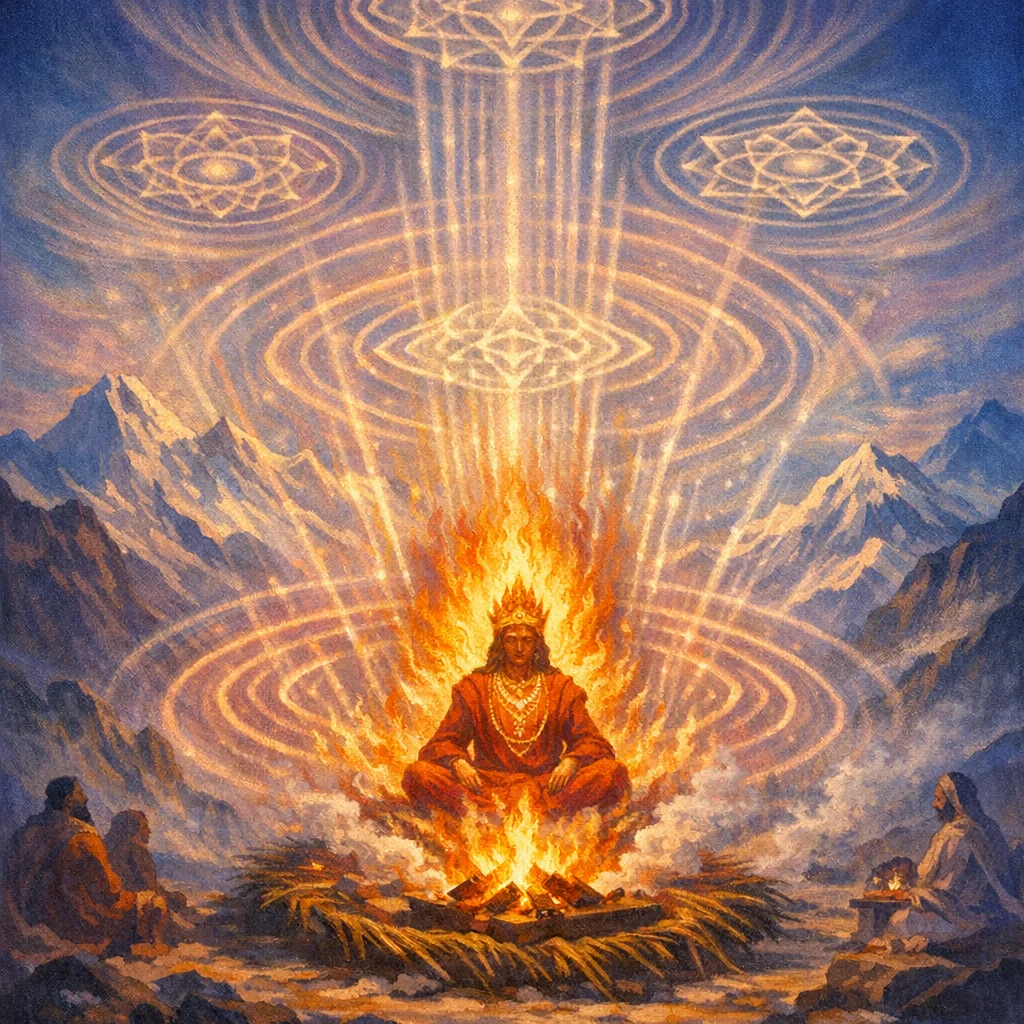
Agni as the gracious ritual guest—kindled, seated on the barhis, and invoked to grant welfare and carry offerings
Agni
Invocatory and reverent with a bright kindling-like uplift
Most attributions are unspecified in the provided data; one verse explicitly names Gopavana as the seer/voice. Rigvedic anukramaṇī confirmation would be needed for full rishi-family mapping.
主题:阿耆尼作为慈惠的祭仪宾客——被点燃而“诞生”,安坐于圣草(barhis)之上,聆听呼唤,净化并传递供献,赐予安康与福祉。赞颂其伟大与温和护佑之德(mṛḍa/śiva),并提及其由薪柴生起、呈炭火余烬(aṅgara)之形。末段转向因陀罗:以苏摩之主的身份被询问/邀请,拣选并坚固祭主的灵感之思(dhī)与颂词(gir),使所献赞歌蒙受悦纳而得神恩回应。
Mantras
Mantra 1
अग्निं वो वृधन्तमध्वराणां पुरूतमम् अच्छा नप्त्रे सहस्वते
你们在祭献(adhvara)中所增盛的阿耆尼,最为慷慨者——请来此处;来向那强力的后裔(naptṛ),来向那具足威力者。
Mantra 2
अग्निस्तिग्मेन शोचिषा यंसद्विश्वं न्या3त्रिणम् अग्निर्नो वंसते रयिम्
愿阿耆尼(Agni)以其锐烈的光焰,制伏一切吞噬的侵袭者;愿阿耆尼慈惠于我等,赐予财富。
Mantra 3
अग्ने मृड महां अस्यय आ देवयुं जनम् इयेथ बर्हिरासदम्
阿耆尼啊,施以慈悯;汝实伟大。请来此处,趋近那求神之民,坐于巴尔希(barhis,圣草座)之上。
Mantra 4
अग्ने रक्षा णो अंहसः प्रति स्म देव रीषतः तपिष्ठैरजरो दह
阿耆尼啊,护佑我们免于罪咎(aṃhas);噫,神圣者!汝不朽不坏,以最炽烈之焰,焚尽那加害者。
Mantra 5
अग्ने युङ्क्ष्वा हि ये तवाश्वासो देव साधवः अरं वहन्त्याशवः
阿耆尼(Agni)啊,套上吧:因为你的马匹,天神啊——善良而迅捷——正当而疾速地运载供献。
Mantra 6
नि त्वा नक्ष्य विश्पते द्युमन्तं धीमहे वयम् सुवीरमग्न आहुत
我等啊,民之主(viśpati)!得至于你;我等安立你——光辉者、赐善勇之主。阿耆尼(Agni)啊,受供献者(āhuta),愿你临此,为我等祭仪。
Mantra 7
अग्निर्मूर्धा दिवः ककुत्पतिः पृथिव्या अयम् अपां रेतांसि जिन्वति
阿耆尼(Agni),为天之首、穹顶之主,亦为大地之主——此阿耆尼振奋水中诸“种子”(retāṃsi),使其生生不息。
Mantra 8
इममू षु त्वमस्माकं सनिं गायत्रं नव्यांसम् अग्ने देवेषु प्र वोचः
诚然此刻,噢阿耆尼,请在诸神之间宣唱此我等新制之伽耶特利(Gāyatra),此为获致祭果之“得利之道”(sani)。
Mantra 9
तं त्वा गोपवनो गिरा जनिष्ठदग्ने अङ्गरः स पावक श्रुधी हवम्
彼汝——歌者戈帕瓦那(Gopavana)以颂歌使汝诞生,噢阿耆尼,如炽燃之炭火;汝彼净化者(pāvaka),请聆听此呼请。
Mantra 10
परि वाजपतिः कविरग्निर्हव्यान्यक्रमीत् दधद्रत्नानि दाशुषे
智者阿耆尼(Agni),滋养之主,环行四方,趋赴诸供献;为献供之祭主,捧持珍宝而来。
Mantra 11
उदु त्यं जातवेदसं देवं वहन्ति केतवः दृशे विश्वाय सूर्यम्
看哪,光辉的光线高举那位生知者贾塔韦达斯(Jātavedas)——太阳神,使万有得见。
Mantra 12
कविमग्निमुप स्तुहि सत्यधर्माणमध्वरे देवममीवचातनम्
于祭仪中赞颂圣贤阿耆尼(Agni),其法则真实不虚;彼神驱逐疾病与一切有害之侵袭。
Mantra 13
शं नो देवीरभिष्टये शं नो भवन्तु पीतये शं योरभि स्रवन्तु नः
愿诸女神为我等成就所愿而赐吉祥;愿诸女神为我等饮啜(pītá)而赐吉祥;愿那带来安泰与康健者,向我等流注而来。
Mantra 14
कस्य नूनं परीणसि धियो जिन्वसि सत्पते जोषाता यस्य ते गिरः
如今你全然眷顾的是谁?你激励谁的虔诚思虑(dhī)啊,善者之主(satpati)?你悦纳那向你献上颂歌(gir)之人。
Frequently Asked Questions
It centers on inviting Agni—gracious and great—to come, sit on the sacred grass, hear the call, purify the rite, and make the offering effective; it also gestures toward Indra’s granting of favor in the Soma-session.
The language is primarily ritual: Agni is ‘made to be born’ when the āhavanīya fire is kindled (agnijanana). The “ember” (aṅgara) image highlights his visible, glowing presence in the sacrifice.
Sāmavedic groupings can pivot from the fire-principle that enables offering to the Soma-lord who receives and rewards it. The Indra verse frames divine patronage—whose praise and intention Indra accepts and strengthens.