Adhyaya 208
A Compendium of Vows and Gifts (Vrata-Dāna-Ādi-Samuccaya)
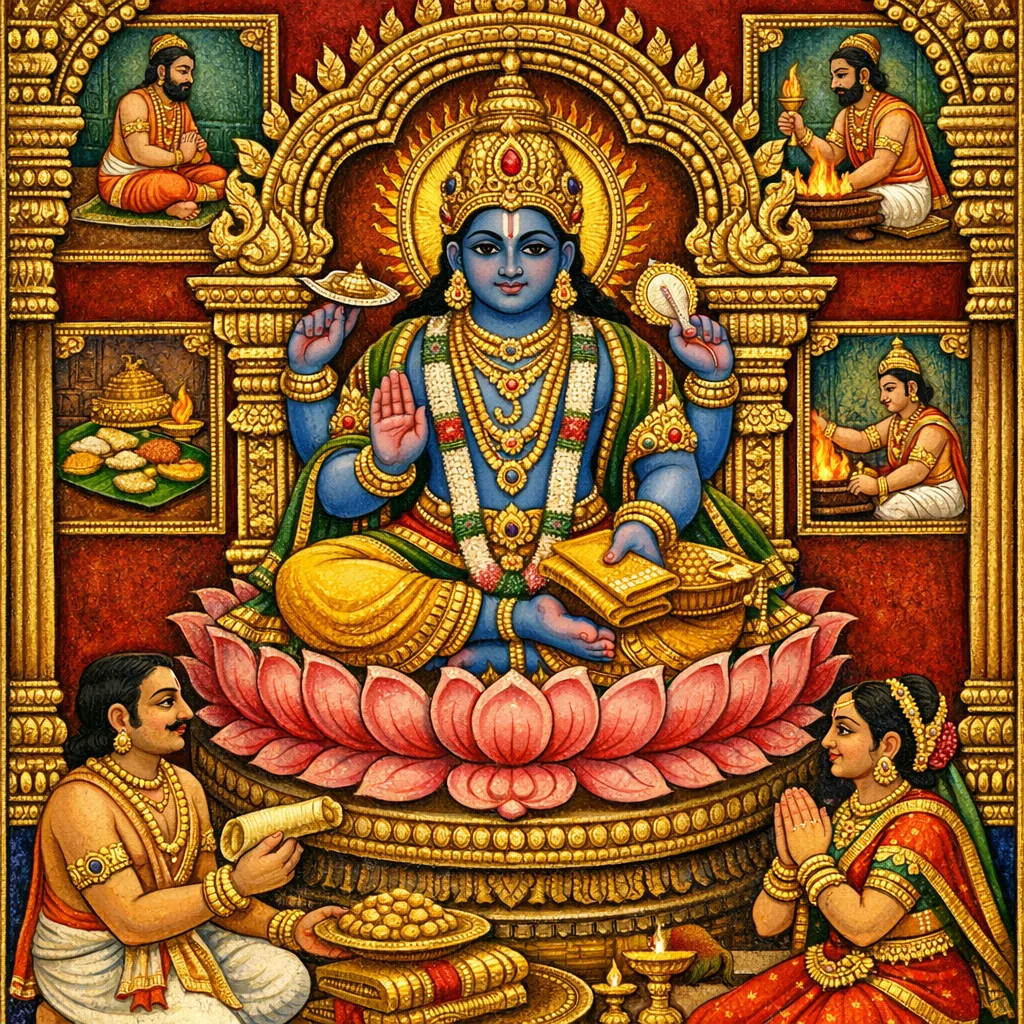
火神阿耆尼开示一套简明而有条理的戒愿(vrata)与布施(dāna)纲要,按仪式时间标记加以编排:tithi(月日)、vāra(星期)、nakṣatra(宿)、saṅkrānti(太阳入宫)、yoga,以及日月食与Manv-ādi等殊胜时日。继而确立统一的神学原则:无论“时间”(kāla)或“供物/资具”(dravya)皆由毗湿奴(Viṣṇu)主宰;而苏利耶(Sūrya)、伊湿(Īśa)、梵天(Brahmā)、吉祥天女(Lakṣmī)等被示为毗湿奴的vibhūti(威德显现),使诸多仪轨同归一义。章中并列出礼拜次第:āsana、pādya、arghya、madhuparka、ācamana、snāna、vastra、gandha、puṣpa、dhūpa、dīpa、naivedya;又给出标准布施文式,点明受施婆罗门及其gotra。施主所求从灭罪、健康、子嗣家系、胜利、财富,直至轮回解脱(saṃsāra-mukti)。末以phalaśruti宣说常诵常听者得bhukti与mukti,并告诫供奉婆苏提婆(Vāsudeva)及相关形相须遵一贯法则,不可杂糅多种程序。
Shlokas
No shlokas available for this adhyaya yet.
Frequently Asked Questions
A time-and-substance taxonomy for ritual action: vows and gifts are mapped to tithi, vāra, nakṣatra, saṅkrānti, yoga, and eclipse/Manv-ādi occasions, alongside a standardized pūjā-sequence and a fixed dāna-vākya (donation formula) for formal gifting.
It converts ritual into a Viṣṇu-centered discipline: by aligning intention (sin-pacification to mokṣa), correct timing (kāla), correct materials (dravya), and consistent procedure (niyama), the practitioner pursues all four puruṣārthas and is promised both bhukti and mukti through regular study and practice.