Adhyaya 206
Agastyārghyadāna-kathana (On the Giving of the Agastya Honor-Offering)
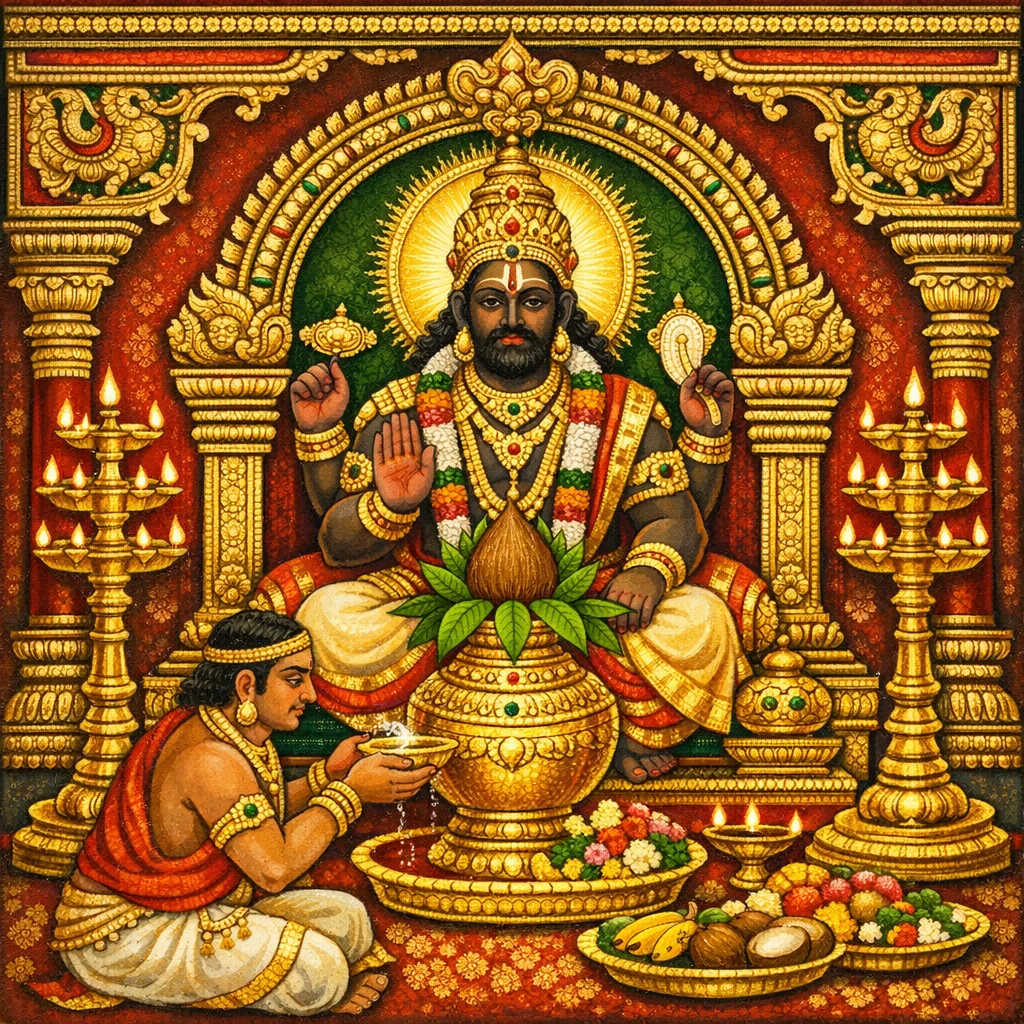
火神阿耆尼开示以阿伽斯提耶为中心的誓戒式礼拜(vrata),并明言阿伽斯提耶即毗湿奴,由此把圣贤崇奉与毗湿奴派的解脱目标——证得哈利——相连。仪轨有期限与次第:三日之内,日出前行者持斋、礼拜,并向阿伽斯提耶奉献阿尔伽(arghya)。至薄暮时分(pradoṣa),以迦舍花(kāśa)制像安置于盛水之壶(ghaṭa/kumbha)中,继而通宵守夜(prajāgara)。翌晨在水库/水边献阿尔伽,诵赞阿伽斯提耶的神话功业(令大海干涸;诛灭阿塔毗—瓦塔毗 Ātāpi–Vātāpi),并祈求福愿与善后世。章中详述供品与布施次第:檀香、花鬘、熏香、衣布、米与谷物、水果、黄金,以及将水壶施与婆罗门,并设食施与达克希那(dakṣiṇā:牛、衣物、黄金)。又记载咒文传诵的异本,并立便行之规:妇女与首陀罗行此礼时不诵吠陀咒。若长期修持(七年献阿尔伽),则得圆满兴盛——无子者得子,处女得王者之夫。
Shlokas
No shlokas available for this adhyaya yet.
Frequently Asked Questions
Fasting and worship precede the arghya; at pradoṣa a kāśa-flower image is placed in a ghaṭa/kumbha, followed by night vigil; in the morning the arghya is offered near water, then tyāga (grain, fruit, libation) and charitable gifts/feeding of brāhmaṇas conclude the rite.
Sandalwood, garlands, incense, cloth, rice/grains, fruits, gold (and in an expanded description: five gems, gold and silver, seven grains, curd, sandalwood), plus a pot-gift to a brāhmaṇa and dakṣiṇā including cow, garments, and gold.
The rite explicitly aims at attaining Hari through Agastya-worship (mukti-oriented devotion) while also promising dharma-anchored prosperity—health, fortune, desired boons, lineage, and marital success—thus integrating dharma, artha, kāma, and mokṣa.
It states that for women and Śūdras the rite is ‘non-Vedic,’ i.e., performed without Vedic mantras, indicating an inclusive procedural adaptation while preserving the devotional and charitable structure.
By giving the arghya for seven years, ‘all obtain everything’: a childless woman gains sons and good fortune, and a maiden gains a husband of royal birth; the arghya is also described in some readings as imperishable and mind-fulfilling.