Adhyaya 202
Puṣpādhyāya-kathana (Account of Flowers in Worship)
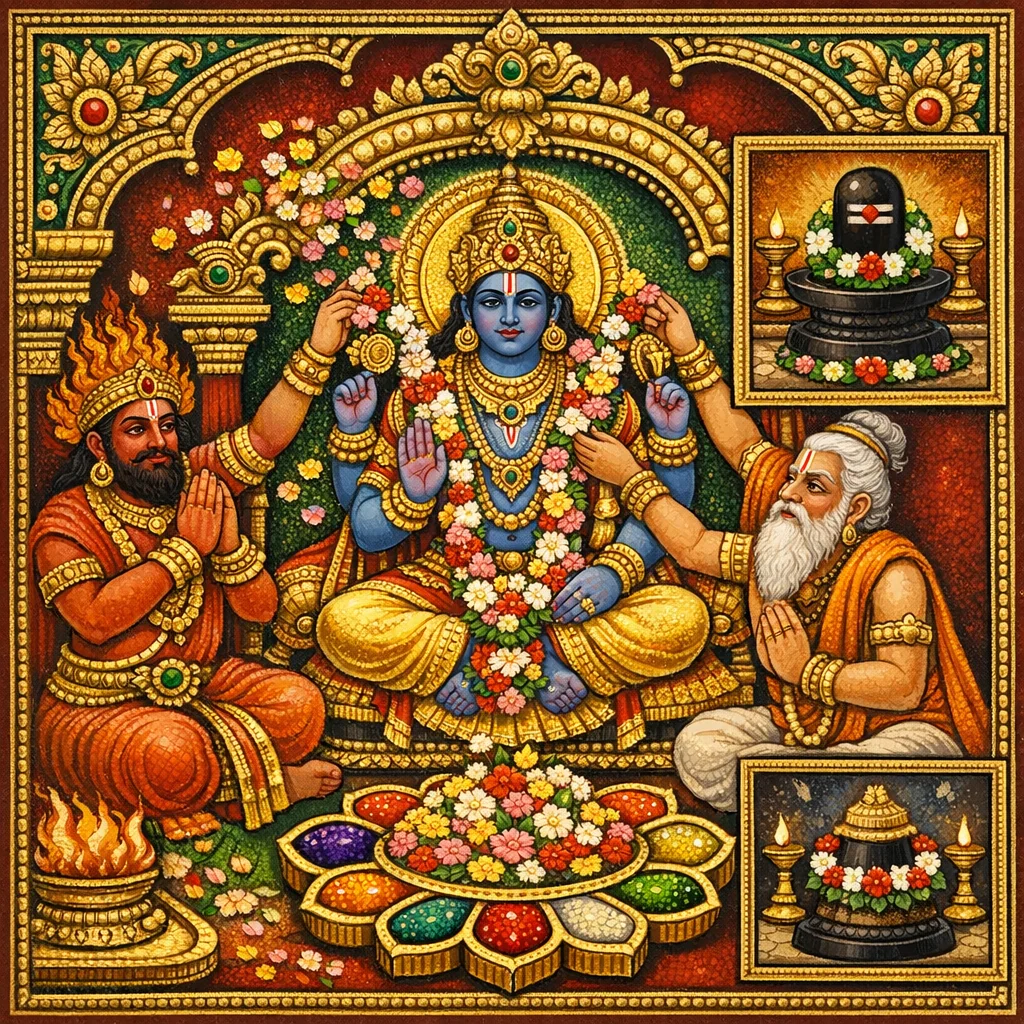
承接《誓戒品》(Vrata-khaṇḍa)的实修仪轨,火神阿耆尼向圣者婆悉吒开示:供养之物,尤以花与香料为要,是有纪律的奉爱媒介,能令诃利(毗湿奴)欢喜,并依次获得果报:罪障消减(pāpa-hāni)、世间受用(bhukti)、解脱(mukti)以及得入毗湿奴界(Viṣṇuloka)。本章先罗列“适合诸天”(deva-yogya)的花与叶,并将多种供品与特定灵性成果相系;继而立规:枯萎、破损、有缺陷或不祥之物不宜用于礼拜。又作宗派区分:有些花适合供毗湿奴,湿婆则以别种花供奉,且有若干供品对湿婆为禁。教诲的关键在于内化:最高的“花”乃伦理与观修之德——不害(ahiṃsā)、制胜诸根(indriya-jaya)、忍辱(kṣānti)、慈悲(dayā)、寂静(śama)、苦行(tapaḥ)、禅定(dhyāna)、真实(satya;部分写本并记信心śraddhā)——显示《阿耆尼往世书》以百科式综合,使外在仪轨的精严由内在品格圆满。章末并将供养置于有序的 pūjā 框架(āsana、mūrti-pañcāṅga、aṣṭa-puṣpikā)及神名次第(毗湿奴以 Vāsudeva-ādi;湿婆以 Īśāna-ādi)。
Shlokas
No shlokas available for this adhyaya yet.
Frequently Asked Questions
Flowers and fragrant substances (gandha, dhūpa, dīpa, naivedya) are emphasized, with extensive lists of specific blossoms, lotuses, aromatic leaves, and also bilva and śamī leaves; the text also highlights that devotion (bhakti) makes all admissible offerings effective.
They are inner virtues presented as worship-offerings—commonly ahiṃsā, indriya-nigraha/jaya, kṣānti, dayā, śama/śānti, tapaḥ, dhyāna, and satya (with manuscript variation also referencing śraddhā). They are central because they complete external pūjā with ethical and contemplative transformation, aligning ritual with mukti.
One should avoid withered/fallen items, broken or damaged materials, and offerings marked by defects (described as “extra limbs/defects”); additionally, certain flowers are disallowed for Śiva, and inauspicious, non-fragrant items (e.g., associated with kuṣmāṇḍa or nimba in the text’s phrasing) are rejected.
It combines (1) catalog-style taxonomies of flowers and offering-types, (2) ritual-legal admissibility rules, (3) deity-specific liturgical distinctions, and (4) a moral psychology of worship via the inner ‘flowers’—integrating technical detail with the spiritual goals of bhukti and mukti.