Adhyaya 201
Worship of the Nine Vyūhas (Nava-vyūha-arcana)
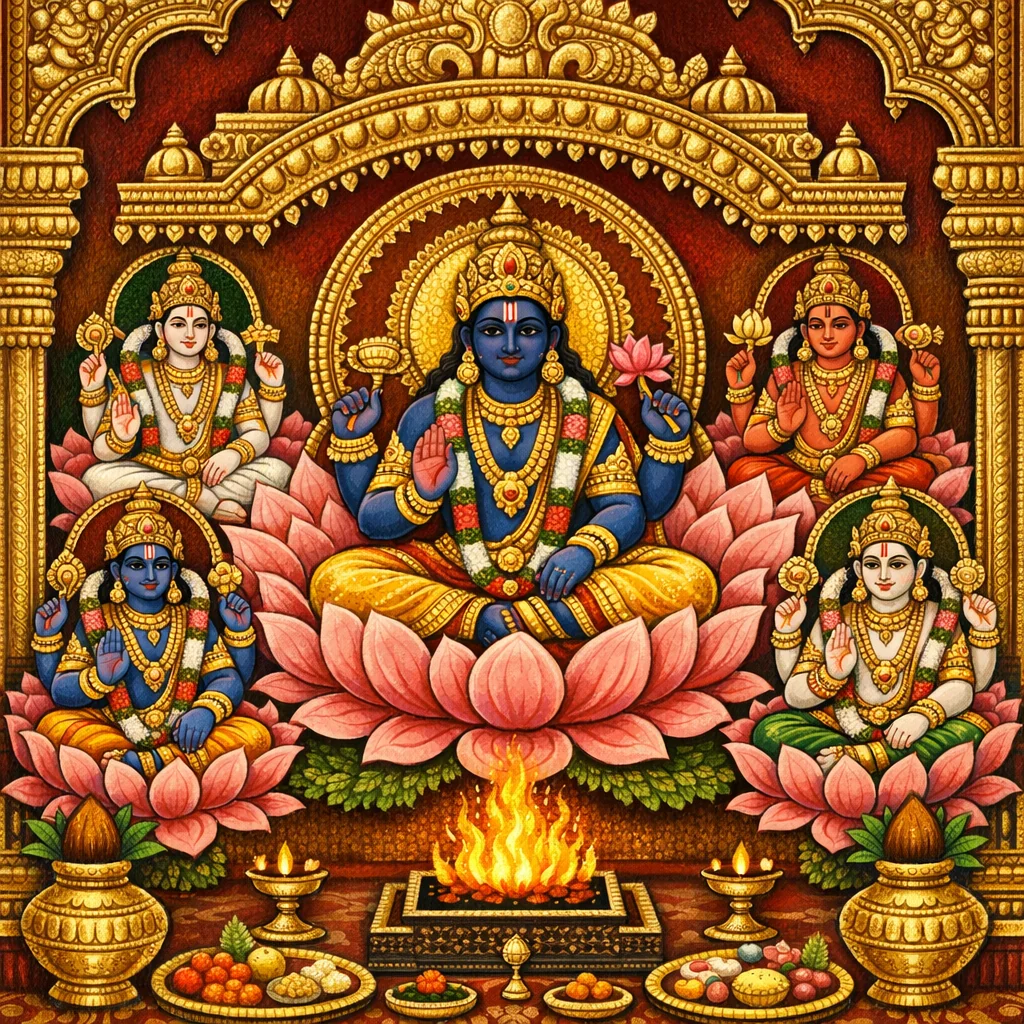
本章先标示前一章灯施戒(Dīpadāna-vrata)的圆满,随即转入由哈利(Hari)传授的九重毗优诃礼(Navavyūha-arcana)之技术性仪轨。阿耆尼讲解莲华曼荼罗的安置:以婆苏提婆(Vāsudeva)居中,复将僧羯罗沙那(Saṅkarṣaṇa)、普罗陀优摩那(Pradyumna)、阿尼卢陀(Aniruddha)与那罗延那(Nārāyaṇa)依方位布列,并各配以种子音(bīja)及相应的元素/祭仪处所(含置水之法)。继而详述与萨德梵摩(Sadbrahmā)、毗湿奴(Viṣṇu)、人狮(Nṛsiṃha)、地野猪(Bhūr-Varāha)等相关形相的咒—种子音对应,以及门阈与西方分区的辅助安置,并列举涉及迦楼罗(Garuḍa)与伽陀(gadā,钉锤)咒的专门程序。仪次由外在曼荼罗建构转为内摄:依十支次第(daśāṅga-krama)礼拜,安置守方护神之水罐(ghaṭa),观想门楼(toraṇa)与华盖(vitāna),并于月甘露中修习微细身禅观。终以十二种子音行安置法(nyāsa)而成“天身”,并说明以掷花辨识弟子、净化所需火供(homa)次数及灌顶(dīkṣā)费用,彰显入门乃祭仪学之社会与灵性印契。
Shlokas
No shlokas available for this adhyaya yet.
Frequently Asked Questions
A lotus-maṇḍala Navavyūha worship beginning with Vāsudeva at the center, followed by directional deity placements with specific bīja-syllables, then internalization through visualization, daśāṅga-krama, and nyāsa culminating in dīkṣā.
After mandala and mantra placements, it shifts to subtle-body contemplation (lunar nectar), self-identification with Viṣṇu, and nyāsa that produces a “divine body,” explicitly valuing heart-worship of Hari (anirmālyā) as the inner completion of the rite.
Disciples are seated to the left, identify a chosen form by blind flower-casting, perform homa with 108 and then 1000 oblations for purification, and receive dīkṣā after payment of prescribed fees honoring the guru.