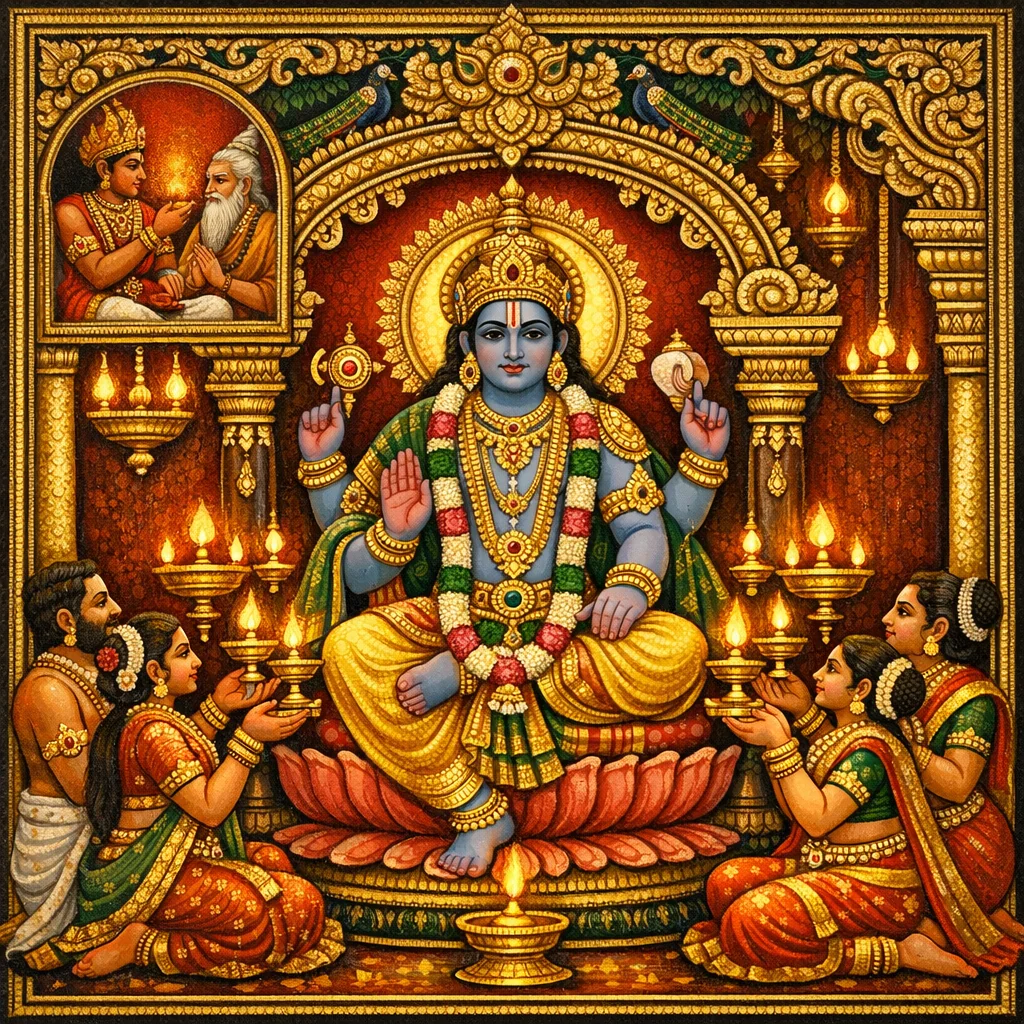
Adhyaya 200
Dīpadāna-vrata (The Vow of Offering Lamps)
火神阿耆尼宣说“施灯誓”(Dīpadāna-vrata),此誓能同时成就世间福乐(bhukti)与解脱(mukti)。若在神祠或婆罗门家中持续一年供奉明灯,即得圆满兴盛。施灯之功德被尊为无上,尤以四月斋期(Cāturmāsya)与迦尔提迦月(Kārttika)最为殊胜,许人得入毗湿奴之界并享天福。阿耆尼又举拉利塔(Lalitā)为例:她在毗湿奴庙中与灯相关的一次看似偶然之举,虽非刻意,仍结极大善果,使其再生王者之福,并增广婚姻与家业之昌盛。教诲亦及戒慎:盗灯为大罪,招致业报——生为哑钝之人,并堕入黑暗地狱。随后作道德劝诫,批评纵欲与不义之欲(尤指通奸),引导听者归向易行之道:称念哈利(Hari)圣名,并以一盏灯等简供修持。章末重申:施灯能增益一切誓行之果,闻此教并奉行者,命运上升,趋向高处。
Shlokas
No shlokas available for this adhyaya yet.
Frequently Asked Questions
Offer a lamp—ideally sustained as a yearly practice—in a deity’s shrine (especially Viṣṇu’s) or a brāhmaṇa’s home; the act is taught as a high-merit vrata granting prosperity, longevity, clarity of sight, and higher worlds, ultimately supporting liberation.
Kārttika is presented as a peak season of ritual potency: lamp-giving then is said to yield exceptional heavenly results, surpassing ordinary times and amplifying vrata-fruit.
It demonstrates that even an unpremeditated or indirect contribution to a lamp-offering in a Viṣṇu temple can generate powerful puṇya, underscoring the vow’s efficacy and the sacredness of temple-based offerings.
The chapter condemns dīpa-theft with severe karmic outcomes and uses hell imagery to caution against negligence, sense-addiction, and sexual misconduct (adultery), redirecting the practitioner toward dharmic restraint and Hari-nāma.