Adhyaya 196
Chapter 196 — Nakṣatra-vratāni (Observances of the Lunar Mansions)
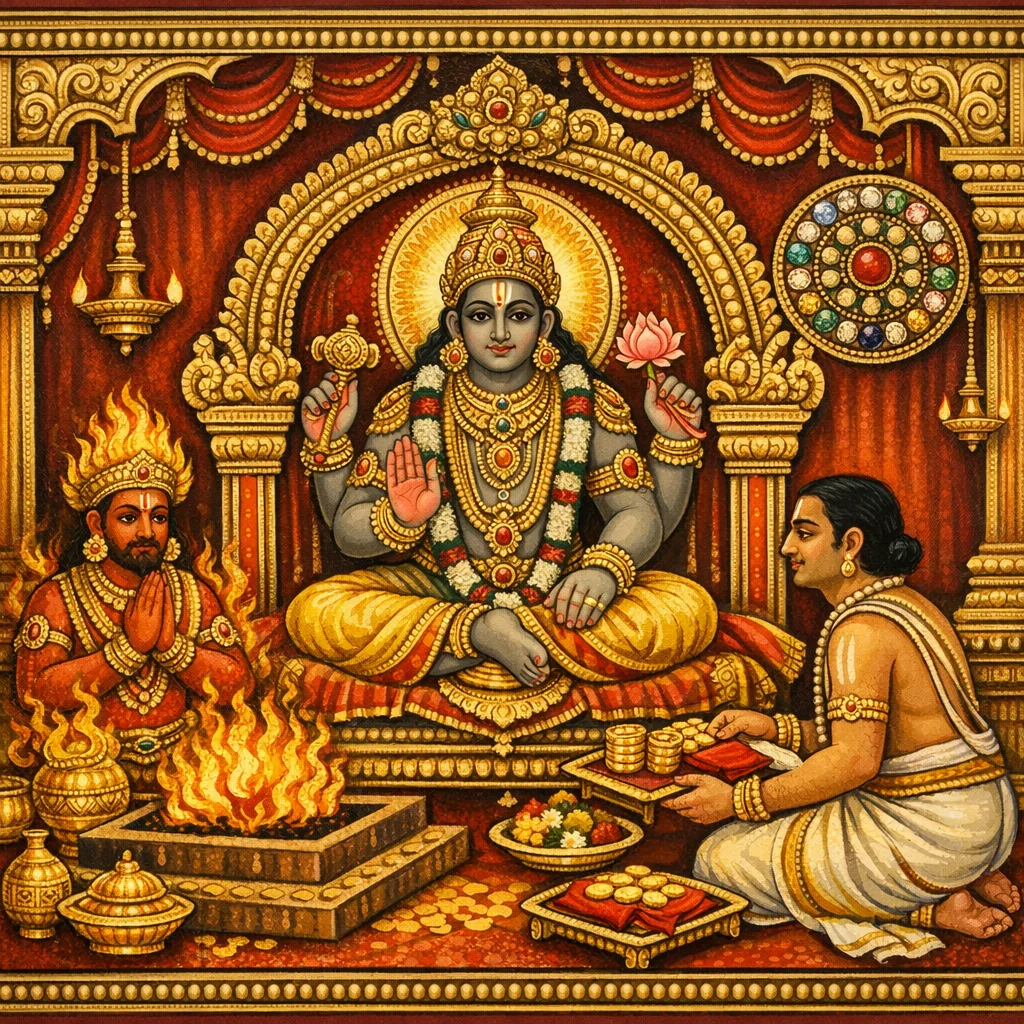
火神阿耆尼向圣者婆悉吒讲授“宿曜誓”(Nakṣatra-vrata)体系:先迎请“宿曜之人”(Nakṣatra-Puruṣa),并以恰特罗月(Caitra)为始。以“肢分对应”之法,将诸宿曜安置于宇宙之身:足、胫、小腿、膝、股、阴部、髋、胁、腹、胸、背、臂、指、甲、喉、耳、口、齿、鼻、目与额;使天时化为具身的仪轨秩序。于Citrā/Ārdrā及岁末行特别供奉:以盛满粗糖(jaggery)之罐安置金质哈利(Hari),并依不同写本传承而异其dakṣiṇā施物。继而详述以迦尔提迦月(Kārttika)与Kṛttikā宿为中心的Śāmbhavāyanīya誓:或诵Keśava诸名,或持Acyuta真言,按月设食供,行pañcagavya净化,并阐明教义上在送神( visarjana )之后,naivedya与nirmālya之别。末后祈愿灭罪增福、富贵不减、宗族绵延;持守七年得bhukti与mukti。又引出Ananta誓( Mārgaśīrṣa/Mṛgaśīrṣa ):强调夜食不加油、四个月火供(homa)次第、功德无尽,并以曼陀诃多(Māndhātā)因斯誓而生为例。
Shlokas
No shlokas available for this adhyaya yet.
Frequently Asked Questions
It is Viṣṇu envisioned as the cosmic person constituted by the lunar mansions; worship is performed by assigning specific nakṣatras to specific limbs, making the body a ritual map of the nakṣatra cycle.
A substance is termed naivedya only until the moment of visarjana (ritual dismissal); once Jagannātha is dismissed, it immediately becomes nirmālya (the remnant of the offering).
On the Kārttika day when Kṛttikā prevails, the practitioner invokes Acyuta (via Keśava-names or a simple Acyuta salutation), offers prescribed foods across months, maintains purity via pañcagavya, and seeks both enjoyment and liberation.
It is said to generate an endless accumulation of merit, to recur as the ‘gift Ananta’ even in another birth, and to yield imperishable (akṣaya) attainment of desired aims.