Adhyaya 194
Aśoka-Pūrṇimā and Related Vows (अशोकपूर्णिमादिव्रत)
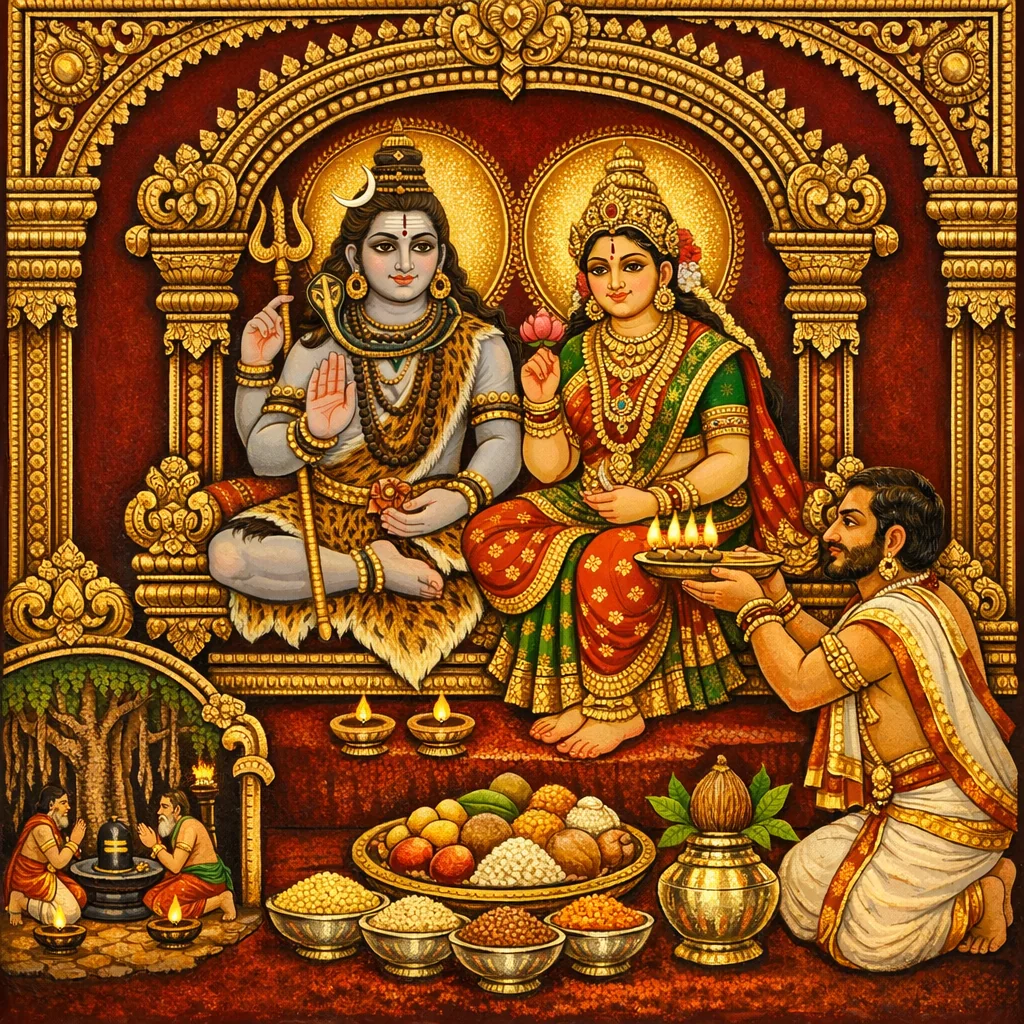
本章延续《誓愿品》(Vrata-khaṇḍa)对历法戒行的规范,阿耆尼向婆悉吒讲授一组将神圣时日转化为有序法义的誓行。开篇称前述“湿婆夜誓”(Śivarātri-vrata)能赐予享受与解脱(Bhukti–Mukti);继而说“阿输迦满月”(Aśoka-Pūrṇimā):在法尔古那月(Phālguna)明半月礼拜Bhūdhara与Bhuva,持行一年可得世乐与解脱。又教迦尔提迦月(Kārttika)之仪:以vṛṣotsarga(放生/布施公牛)配合naktam(夜间仅一餐),称为至上“公牛誓”(vṛṣa-vrata),导向湿婆之居处。随后讲“祖灵新月”(Pitṛ-amāvāsyā):以akṣayya(不坏、无尽)供品奉献祖先,并守一年斋戒与祭祖,可除罪得天界。末以“Sāvitrī新月”(Sāvitrī-Amāvāsyā)作结:在杰耶什塔月(Jyeṣṭha)第十五日,妇女连斋三夜,于榕树根下礼敬贞洁伟大的女神,以七种谷粒与饰物供养,通宵守夜歌舞,向婆罗门奉献naivedya并供食诸婆罗门,行正式送神仪式,祈求saubhāgya(婚姻福泽)与吉祥富足,令天后欢喜。
Shlokas
No shlokas available for this adhyaya yet.
Frequently Asked Questions
Worship of Bhūdhara and Bhuva in Phālguna’s bright fortnight, sustained as an observance for a year, stated to yield both Bhukti and Mukti.
By performing vṛṣotsarga (release/donation of a bull) and observing naktam (a single meal at night), the practitioner is said to attain Śiva’s state/abode.
It combines akṣayya offerings to the Pitṛs with a year-long fasting discipline and formal ancestor worship, promising sinlessness and attainment of heaven.
A three-night fast by women, worship at a banyan root with seven grains, night adornment and vigil with song/dance, offering naivedya to a brāhmaṇa, feeding brāhmaṇas, self-meal, and ritual dismissal, aiming at Devī’s favor and saubhāgya.