Adhyaya 191
Trayodaśī-vratāni — Anaṅga-Trayodaśī and Kāma-Trayodaśī (Chapter 191)
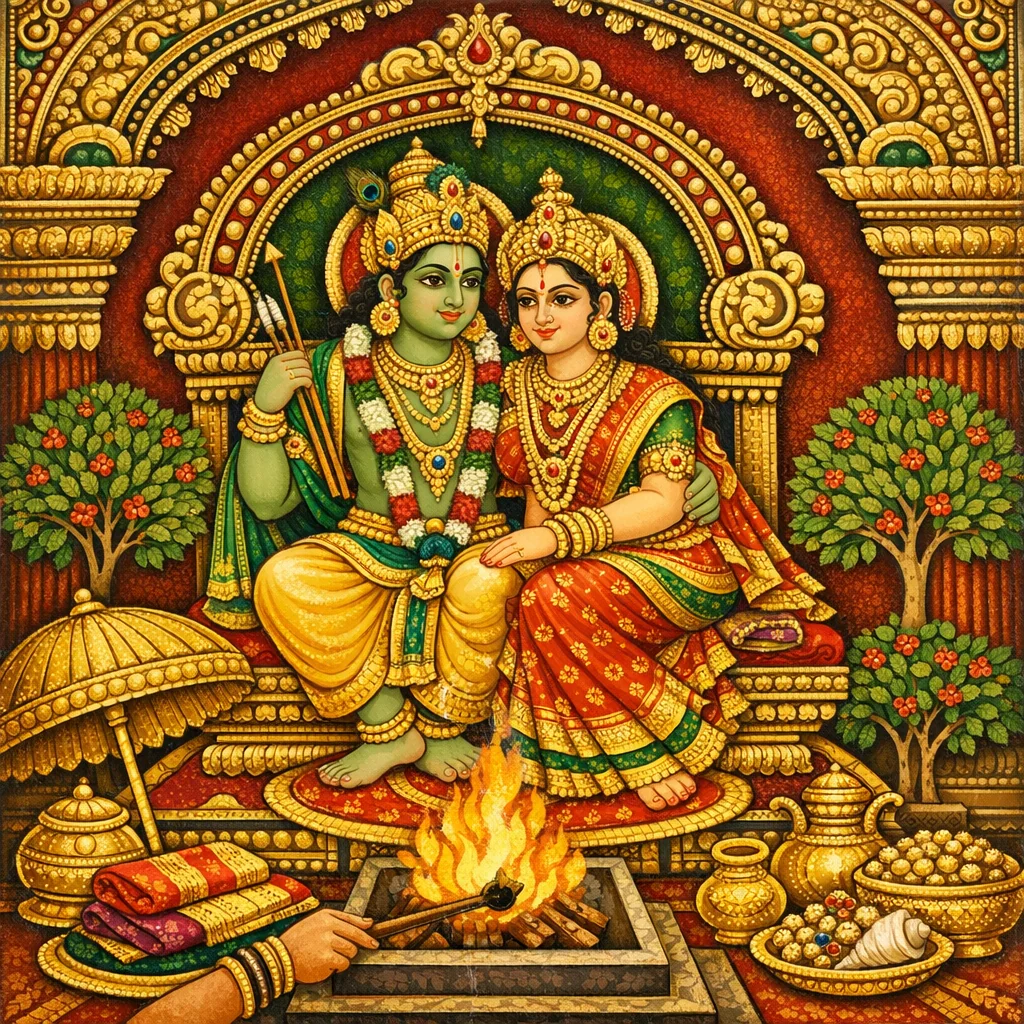
火神阿耆尼系统阐述十三日(Trayodaśī,阴历第十三日)的诸般斋戒仪轨,先说与无身者阿难伽(Anaṅga,即迦摩 Kāma)相关的“阿难伽十三日”,并强调阿难伽与诃罗(Hara,湿婆 Śiva)之合祀。章中自摩伽尸罗月(Mārgaśīrṣa)起按月制定修持次第:迎请神祇、特定苦行饮食,以及夜间火供(homa:以酥油和芝麻、米作供)。末段明列布施(dāna)规范——衣服、乳牛、床榻、伞盖、陶罐、鞋履、坐具与器皿——显示斋戒以社会与神圣的施与而圆满。又在恰特罗月(Caitra)提出第二重点:与罗蒂(Rati)同忆迦摩,以吉祥颜料绘阿输迦树(aśoka),并行半月连续供奉以求愿满。全章体现誓戒品(Vrata‑khaṇḍa)的法义“技术”:时间纪律、感官节制、图像/仪式行为与布施合为一体的修行,旨在得福、得祥与增上功德。
Shlokas
No shlokas available for this adhyaya yet.
Frequently Asked Questions
On Mārgaśīrṣa bright Trayodaśī, worship Anaṅga (Kāma) with Hara (Śiva), take honey at night, and perform a ghṛta-homa using sesame (tila) and unhusked rice (akṣata), then continue with month-wise deity-forms and regulated diets.
A garment first, then gifts to a brāhmaṇa including a cow, bed, umbrella, water-pots (kalaśa), sandals (pādukā), a seat, and a vessel.
In Caitra bright Trayodaśī it prescribes remembering Kāma with Rati and drawing an aśoka tree with vermilion and turmeric—an auspicious fertility/joy symbol—followed by a half-month worship for kāma-siddhi.
Variant readings include “golden vessels” attested in kha/gha/ña manuscripts, and a passage on ‘unbroken Dvādaśī’ to ‘attains royal enjoyments’ absent in the jha manuscript, indicating layered transmission around adjacent vrata material.