Adhyaya 190
Chapter 190: Akhaṇḍa-dvādaśī-vrata (The Unbroken Dvādaśī Vow)
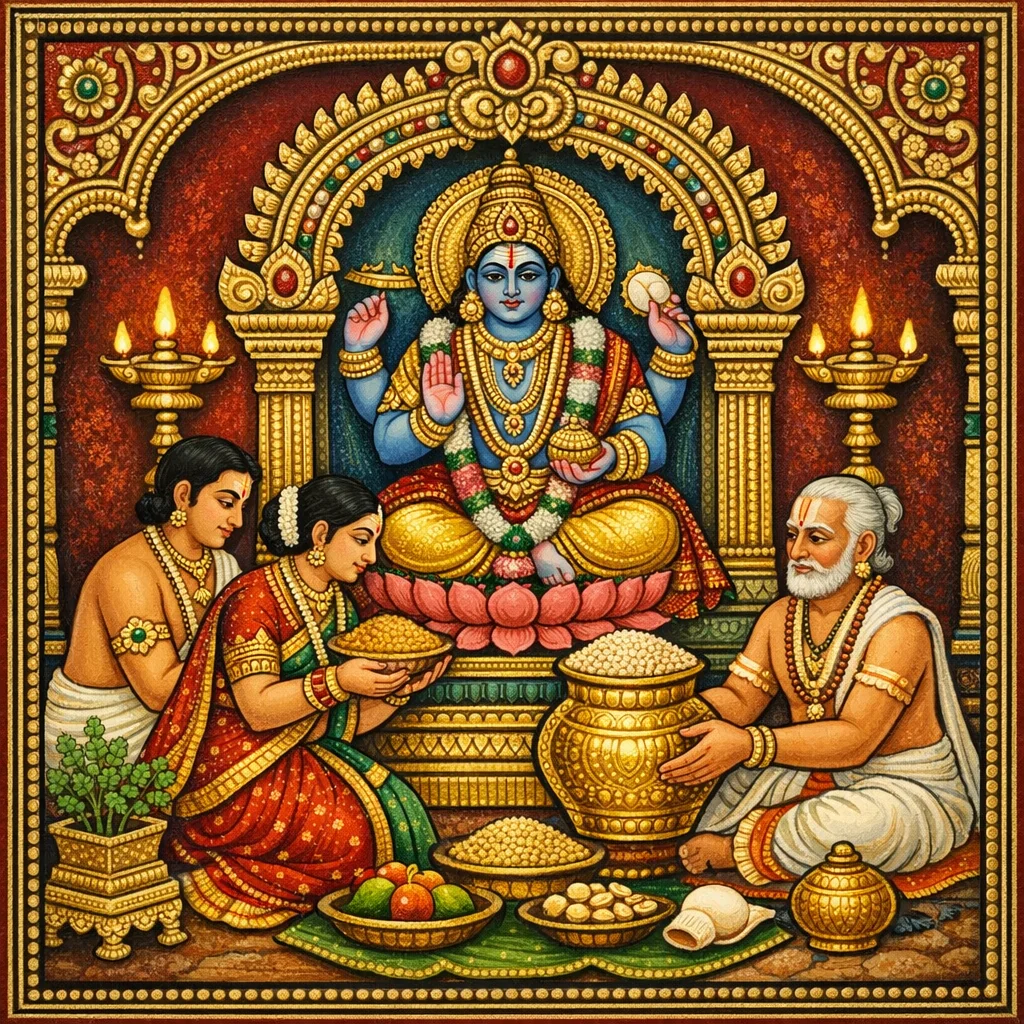
火神阿耆尼向圣者婆悉吒传授“阿坎达·德瓦达希誓行”(Akhaṇḍa-dvādaśī),作为令诸誓愿圆满无缺的仪轨(vrata-sampūrṇatā),使所立之愿不致断裂。行者于摩伽尸罗月(Mārgaśīrṣa)上半月明分第十二日(Dvādaśī)为毗湿奴守斋礼拜,先以五牛净(pañcagavya)之水沐浴,并依仪式服用净化之物。其要义之一为布施(dāna):在Dvādaśī当日,将盛有大麦与米的器皿施与婆罗门。经文继而给出神学式祈祷框架:誓行者祈求毗湿奴修补七生以来所积累的一切誓愿缺失,并以“宇宙在至上人格Puruṣottama中不间断、不断裂”的形上意象为依归。阿耆尼又将此法扩展为周期性戒行——每月守持与四月斋期Cāturmāsya——并列举按月供献之物,如供奉烘炒大麦粉śaktu之钵。最后强调从室罗伐那月(Śrāvaṇa)起至迦尔提迦月(Kārttika)末完成破斋(pāraṇa)的正确时序,警示缺失可在七生中回响;若守持圆满,则得长寿、健康、福财、王权与诸享乐。
Shlokas
No shlokas available for this adhyaya yet.
Frequently Asked Questions
It is explicitly framed as a rite for vrata-sampūrṇatā—making vows complete and ‘unbroken,’ including repairing deficiencies believed to persist across seven births through Viṣṇu’s grace.
Fasting on bright Mārgaśīrṣa Dvādaśī for Viṣṇu, bathing in pañcagavya-water and partaking of it, and giving a brāhmaṇa a vessel containing barley and rice on Dvādaśī.
The votary’s prayer links personal vow-completion to the cosmic ‘unbroken wholeness’ of the universe identified with Puruṣottama (Viṣṇu), making ritual integrity a mirror of ontological unity.
The course is described as beginning in Śrāvaṇa and reaching pāraṇa at the end of Kārttika, aligning with the Cāturmāsya-related discipline and its closure.
Long life, freedom from disease, good fortune, sovereignty/kingship, and enjoyments (along with similar prosperities) are stated as outcomes.