Adhyaya 189
Śravaṇa Dvādaśī Vrata (श्रवणद्वादशीव्रतम्)
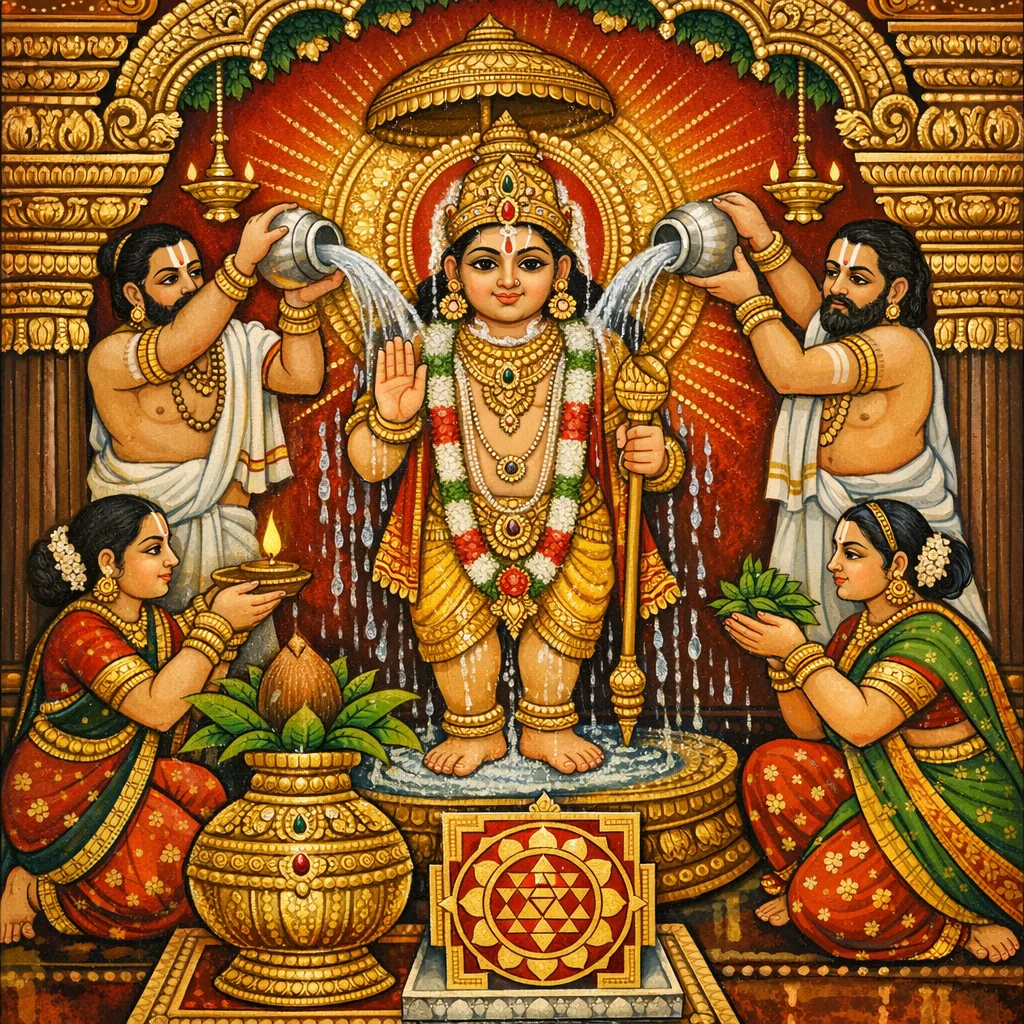
火神阿耆尼向圣贤婆悉吒开示「室罗伐那·第十二日誓戒」(Śravaṇa Dvādaśī Vrata):于跋陀罗钵陀月(Bhādrapada)明半月,当室罗伐那宿(Śravaṇa nakṣatra)相应之日奉行。此章称其因持斋禁食(upavāsa)与“闻法”之吉祥、智者善谈之加持而威力殊胜。行者于第十二日守“离食”(nirāhāra),第十三日行破斋(pāraṇa),纵与通行禁例相违亦当如法完成。礼敬毗湿奴—侏儒化身瓦摩那(Viṣṇu–Vāmana)时,以金制延陀罗(yantra)为座,置水罐并以咒召请入罐;以净水与五甘露(pañcāmṛta)行灌顶(abhiṣeka),并用白布覆饰、伞盖与履等仪物,成就规范的 pūjā 次第。继而作身分安置之礼,将真言配属毗湿奴诸肢(类 nyāsa),供献以酥油(ghee)烹制之食为 naivedya,并施舍酸乳饭罐;夜间守醒,黎明于两河汇流处沐浴,向 Govinda(Budhaśravaṇa)献花合掌祈祷(puṣpāñjali)。最后以供养金(dakṣiṇā)、施食婆罗门而圆满,并宣示教义:瓦摩那遍满供品、受纳供养,复赐福报——享乐(bhukti)、名闻(kīrti)、子嗣、自在富贵(aiśvarya)与解脱(mukti)。
Shlokas
No shlokas available for this adhyaya yet.
Frequently Asked Questions
It is prescribed on Dvādaśī in the bright fortnight of Bhādrapada when it is conjoined with the Śravaṇa nakṣatra; the chapter notes manuscript variants about alternative month/nakṣatra readings, but the main instruction emphasizes Bhādrapada-śukla Dvādaśī with Śravaṇa.
The practitioner remains without food on Dvādaśī (nirāhāra) and performs pāraṇa on Trayodaśī, stated as to be done even if it is otherwise considered prohibited—highlighting the vrata’s specific injunction.
Invocation into a water-pot placed on a golden yantra, abhiṣeka with pure water and pañcāmṛta, arghya, fragrant homa with the Vāmana mantra, naivedya cooked in ghee, gifting pots of curd-rice, and concluding with dakṣiṇā and feeding brāhmaṇas.
It explicitly states results such as enjoyment, fame, progeny, and sovereignty (bhukti-oriented aims) while also promising liberation (mukti), presenting disciplined ritual action as a bridge between worldly order and spiritual release.