Adhyaya 188
Chapter 188: द्वादशीव्रतानि (The Dvādaśī-vows)
火神阿耆尼开始系统编列诸种“十二日斋”(Dvādaśī)之行持,明言其为获得世间受用与福报(bhukti)及究竟解脱(mukti)之方便;行者当守一日一食、以虔敬心奉行,并以“不求而受”(ayācita)为准则。本章将诸誓愿对应于仪式历:在恰特罗月明半十二日,礼敬能降伏爱欲之哈利,名为“摩陀那十二日”(Madana-Dvādaśī);在摩伽月明半十二日为“毗摩十二日”(Bhīma-Dvādaśikā);在颇伽罗那月明半十二日则示“瞿文达十二日”(Govinda-Dvādaśī)及相关仪轨。又举月度要点:阿湿婆由阇月之“离忧十二日”(Viśoka-Dvādaśī),以及跋陀罗钵陀月之“牛犊十二日”(Govatsa-Dvādaśī),以礼敬母牛与牛犊,强调忏悔除罪与积集功德。核心段落精确定义“芝麻十二日”(Tiladvādaśī):须为黑半(Kṛṣṇa-pakṣa)十二日,过午后并与“室罗伐那”(Śravaṇa)宿相合;继而规定以芝麻为中心的仪式技术——芝麻浴、芝麻火供(homa)、芝麻供食(naivedya)、芝麻油灯、芝麻水与施芝麻——最终以“唵 南无 薄伽梵 瓦苏提瓦耶”(Oṃ namo bhagavate vāsudevāya)之真言礼敬瓦苏提瓦。并列举“六芝麻十二日”(Ṣaṭ-tila Dvādaśī,得天界果报)、“名号十二日”(Nāmadvādaśī,依凯舍瓦诸名次第修持一年)、以及“善慧”(Sumati)与“无尽”(Ananta)十二日、“善趣十二日”(Sugati-Dvādaśī)并以“Kṛṣṇa-jaya”致敬;末了指出保沙月明半十二日为与Sampprāpti相关之行持时机,体现《往世书》将法(dharma)视为导向解脱的仪式之学。
Shlokas
No shlokas available for this adhyaya yet.
Frequently Asked Questions
It is the Kṛṣṇa-pakṣa Dvādaśī that occurs after midday (madhyāhna-samatītā) and is conjoined with the Śravaṇa nakṣatra; this conjunction is explicitly named Tiladvādaśī.
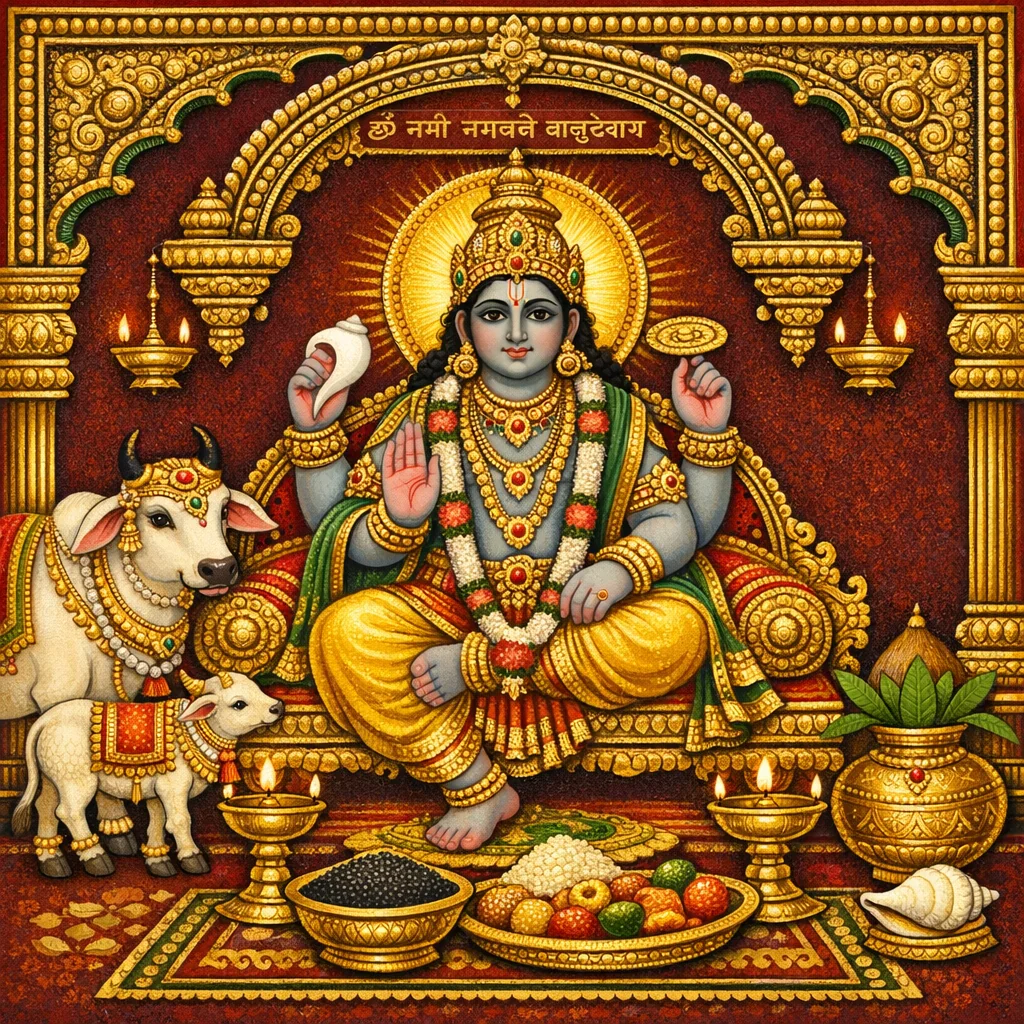
Sesame-based observances: bathing with sesame, sesame homa, sesame sweet offerings (tilamodaka) as naivedya, lighting a lamp with sesame oil, offering/gifting sesame-water, and donating sesame to Brahmins, followed by Vāsudeva worship with “Oṃ namo bhagavate vāsudevāya.”
Govatsa-dvādaśī; it is performed in the month of Bhādrapada, where the votary worships a cow along with her calf as part of the vow’s expiatory and merit-generating framework.
Nāmadvādaśī is a year-long worship of Hari using the divine names beginning with Keśava; the text states the performer becomes heaven-destined and does not become hell-bound.