Adhyaya 186
Daśamī-vrata (Observance for the Tenth Lunar Day)
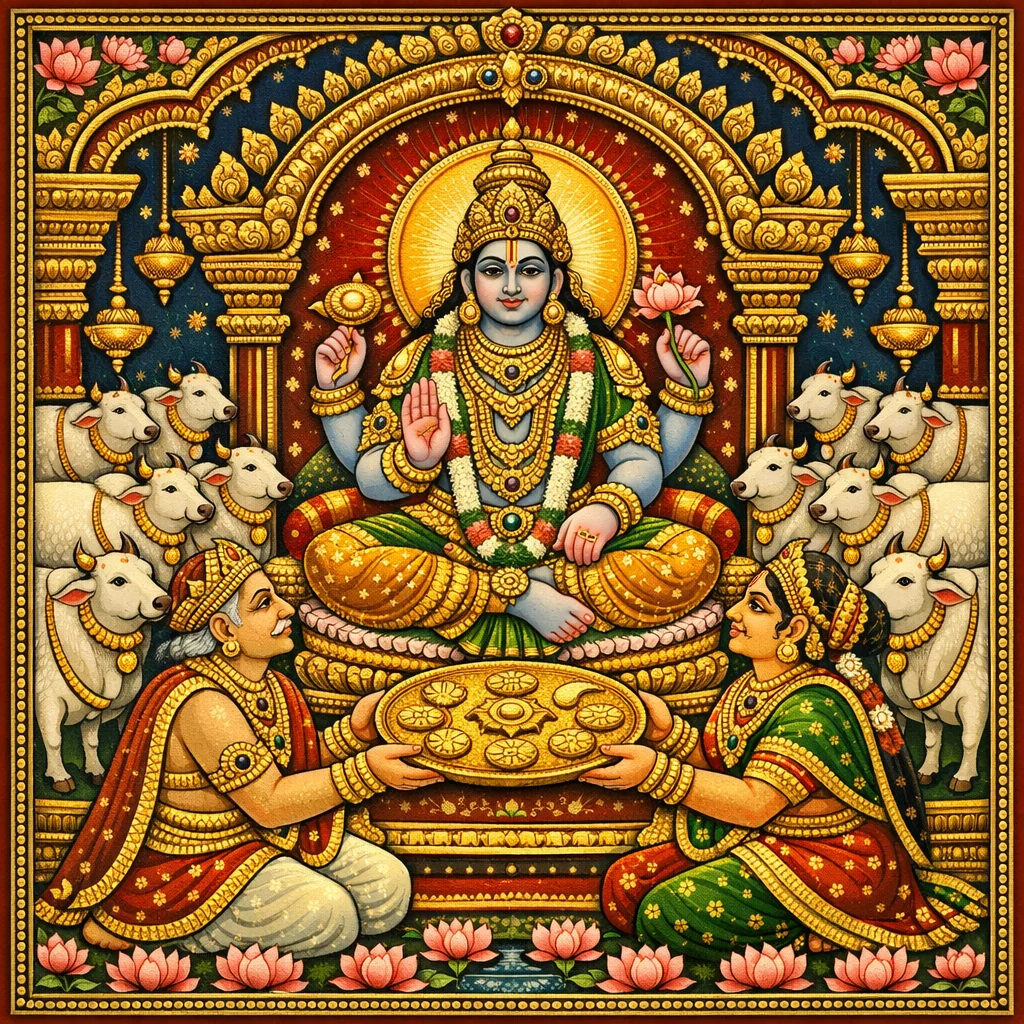
在《誓戒品》(Vrata-khaṇḍa)依月日(tithi)次第叙述诸戒的脉络中,火神阿耆尼在讲完第九日(Navamī)诸誓后,紧接开示第十日誓戒——Daśamī-vrata。其果报以“人生四义”(puruṣārtha)之语说明:赐予法(dharma)、欲(kāma)及相关目标,显示仪式性的自律既能成就伦理与灵性功德,也能带来有序的世间兴盛。核心修持在于节制:第十日行“单食”(ekabhakta),仅进一餐,以调控饮食为净化之法。誓戒以布施(dāna)圆满,规定具社会意义的施与——施十头牛,使个人苦行完成于公共善行。又述一项具声望的供施:以黄金铸成八方( dik )而奉献,据说能令施主在婆罗门中升至如主宰之位。由此,阿耆尼把内在的持戒(niyama)、历法圣时(tithi)与外在的慷慨布施(dāna)贯通为一体的法之修程。
Shlokas
No shlokas available for this adhyaya yet.
Frequently Asked Questions
The practitioner observes ekabhakta on Daśamī—taking a single meal—establishing dietary restraint as the vow’s primary discipline.
Upon completion of the vow, one should gift ten cows (daśa-dhenu-dāna), making dana the culminating act that externalizes the merit of the observance.
The text states that gifting the directions (dik) fashioned in gold results in becoming a lord among Brāhmaṇas, indicating social-spiritual elevation linked to high-value symbolic dana.
By combining tithi-discipline (Daśamī), bodily restraint (ekabhakta), and compassionate redistribution (dana), the vrata trains self-control and generosity—core dharmic virtues that support both worldly order and inner purification.