Adhyaya 184
Chapter 184 — अष्टमीव्रतानि (Aṣṭamī Observances: Kṛṣṇāṣṭamī, Budhāṣṭamī/Svargati-vrata, and Mātṛgaṇa-Aṣṭamī)
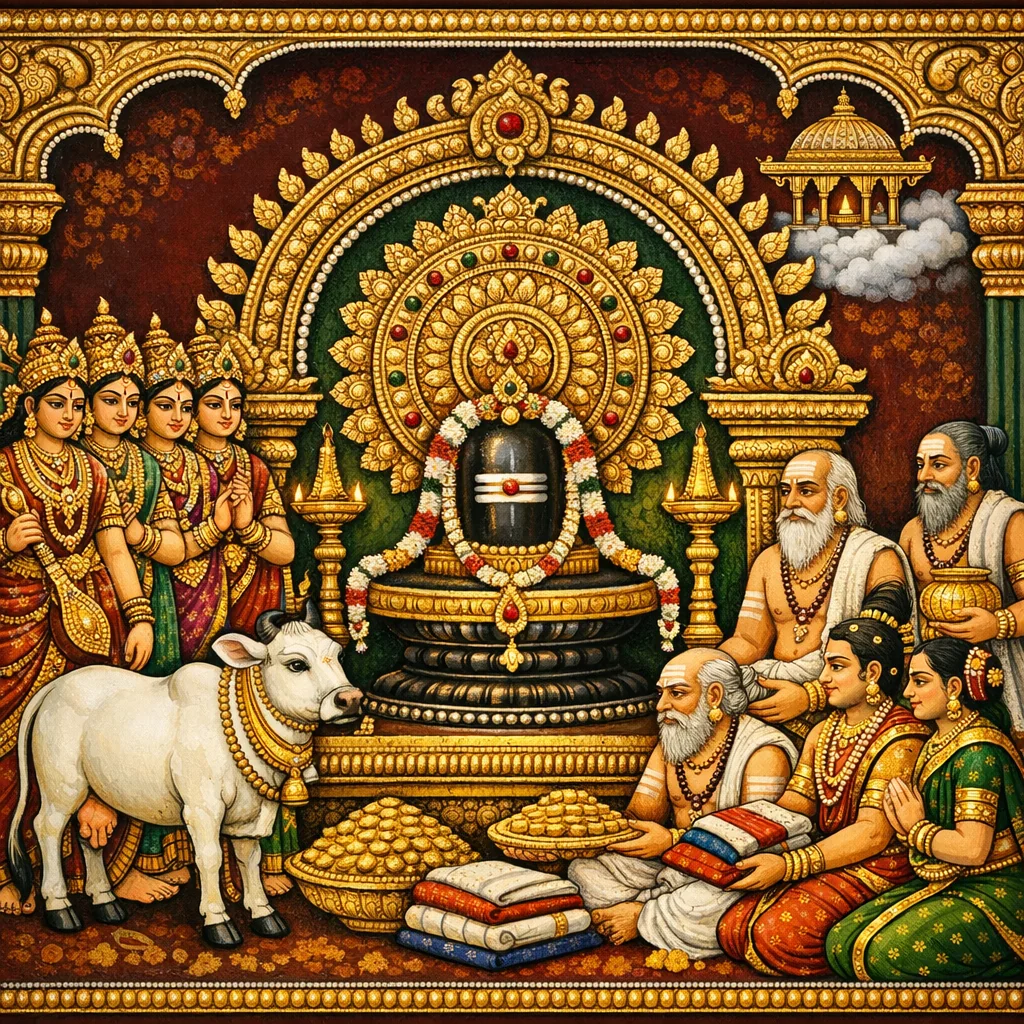
阿耆尼向婆悉吒传授以“第八日”(Aṣṭamī)为核心的诸种誓戒,融汇历法之精确、身心克制、对湿婆的虔敬,以及社会与祭仪义务。章首说“母众第八日”(Mātṛgaṇa-Aṣṭamī):于恰特罗月(Caitra)黑半第八日(Kṛṣṇāṣṭamī)起,先礼婆罗摩尼(Brahmāṇī)等诸母神,得富饶并得入克里希那(Kṛṣṇa)之界。继而详述自摩伽尸罗月(Mārgaśīrṣa)开始的一年期“黑半第八日誓”(Kṛṣṇāṣṭamī-vrata):行夜食(nakta)斋、净身净仪、卧地而眠,并按月次第礼敬湿婆诸名号(Śaṅkara/Śambhu/Maheśvara/Mahādeva/Sthāṇu/Paśupati/Tryambaka/Īśa),各配严峻饮食法(牛尿、酥油、乳、芝麻、大麦、毕尔瓦叶、米等)。终以护摩(homa)、坛城供(maṇḍala-pūjā)、供养婆罗门与规定布施(牛、衣、金)作圆满,获世福(bhukti)与解脱(mukti)。又举“周三第八日”(Budhavāra-Aṣṭamī,Svargati-vrata)为特例,称能得因陀罗之位:以芒果叶器盛定量米并置库沙草(kuśa)而供,行清净萨特维卡(sāttvika)礼,继以听闻故事(kathā-śravaṇa)与奉施达克希那(dakṣiṇā)。以提罗(Dhīra)一家、雄牛Vṛṣa、失而复得、阎摩界与两次守持Budhāṣṭamī之果为譬,显其救度力——令祖先出地狱而升天。末又说于Punarvasu日饮阿输迦(aśoka)嫩芽之仪,并立第八日祈祷以除忧,重申自恰特罗月起行母神供养,能克敌得胜。
Shlokas
No shlokas available for this adhyaya yet.
Frequently Asked Questions
A year-linked discipline starting in Mārgaśīrṣa with nakta-fasting and purification, followed by month-specific Śiva-worship names and corresponding dietary austerities, concluding with homa, maṇḍala worship, feeding brāhmaṇas, and dāna (cow, garments, gold).
When Aṣṭamī coincides with Wednesday in either fortnight it is termed Svargati-vrata; the text assigns it a specific offering protocol (measured rice preparation, mango-leaf vessel with kuśa, sāttvika pūjā, kathā-śravaṇa, and dakṣiṇā) and promises attainment of Indra’s station.
By combining austerity (niyama), purity (śauca), devotion (Śiva/Mātṛ worship), narrative-hearing, and charity (dāna) into a complete sādhanā, it explicitly states the attainment of both bhukti and mukti and illustrates salvific efficacy through the liberation of ancestors from naraka.
Prosperity, victory over enemies through Mātṛ-pūjā on Aṣṭamī, sorrow-removal via the Aśoka rite, and restoration of fortune/standing through proper rule-keeping and sanctioned dāna.