Adhyaya 183
Aṣṭamī-vratāni — Jayantī (Janmāṣṭamī) Vrata with Rohiṇī in Bhādrapada
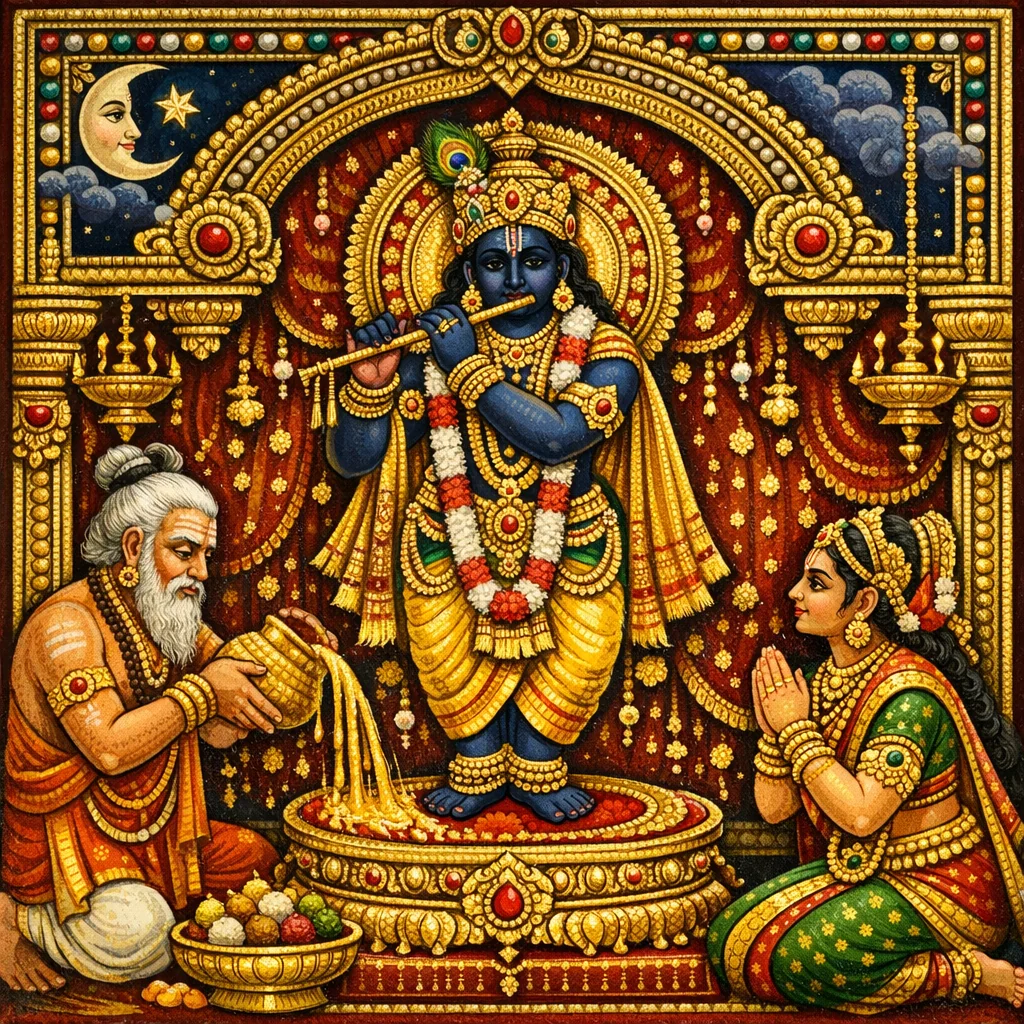
火神阿耆尼开启“阿ष्ट弥誓戒”之次第,规定当阴历第八日与罗希尼宿(Rohiṇī)在婆陀罗钵陀月(Bhādrapada)黑半月相合时,应行最上之戒;此日名“胜生日”(Jayantī),因圣主室利·克里希那(Śrī Kṛṣṇa)即于此合相诞生。此誓戒以午夜为核心,从内在净化的禁食(upavāsa)起,继而安置神像、层层供养。行者奉请克里希那与巴拉婆陀罗(Balabhadra),并及父母眷属圈(德瓦姬Devakī、瓦苏提婆Vasudeva、耶输达Yaśodā、难陀Nanda),依咒行诸供事(upacāra):沐浴供(snāna)、献水礼(arghya)、花、香(dhūpa)、灯(dīpa)、食供(nivedya),反复赞颂戈文达(Govinda)为瑜伽、祭祀(Yajña)、法(Dharma)与宇宙之本源。其中特具月宿之要素:与罗希尼同礼月神,并向“月王”Śaśāṅka献arghya。至午夜,仪式以诵圣名而将红糖(jaggery)拌酥油(ghee)如流注般分次奉献而圆满。末后行布施(衣、金)并供养婆罗门,许诺能灭除七生之罪、得子嗣,年年奉行则得无畏,并往生毗湿奴界(Viṣṇuloka),明示合一世间福乐(bhukti)与解脱上升(mukti)。
Shlokas
No shlokas available for this adhyaya yet.
Frequently Asked Questions
The vow is emphasized for Bhādrapada’s kṛṣṇa-pakṣa Aṣṭamī when it coincides with the Rohiṇī nakṣatra, with the principal worship performed at midnight.
Kṛṣṇa is invoked as primary, together with Balabhadra, Devakī, Vasudeva, and Yaśodā (with attendants), and additionally the Moon (Śaśāṅka) is worshipped along with Rohiṇī through arghya and related rites.
It ties ritual action to purification and ascent: fasting is said to remove sins from seven births, the liturgy praises Govinda as the source of Yoga/Yajña/Dharma/Viśva, and the fruits include ūrdhva-gati (higher progress) and Viṣṇuloka, aligning bhakti and vrata-discipline with mokṣa.