Adhyaya 181
Vows of the Sixth Lunar Day (Ṣaṣṭhī-vratāni)
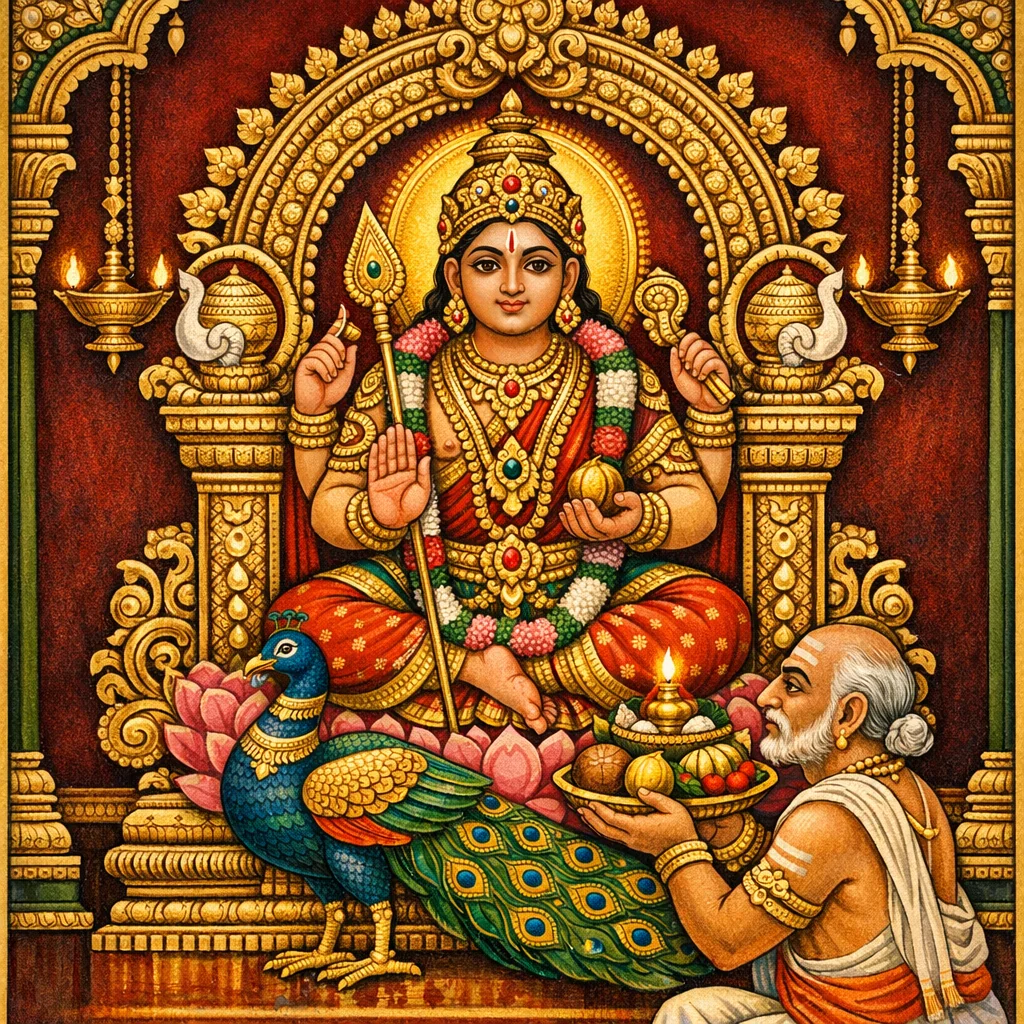
火神阿耆尼延续《誓戒品》(Vrata-khaṇḍa)的历法式教导,由五日斋(Pañcamī-vrata)转入六日斋(Ṣaṣṭhī-vrata),指出阴历第六日是能成就世间受用(bhukti)与解脱(mukti)的关键仪轨节点。章首阿耆尼许诺宣说Ṣaṣṭhī诸行;一系传本以迦尔提迦月(Kārttika)为起点,而手稿异读则保留不同的开端与读法。核心修持包括节制饮食(依传本或唯食果品,或仅受一餐清净简食)以及供献如阿尔吉亚(arghya)等。随后阿耆尼指出名为“斯甘达六日斋”(Skanda-Ṣaṣṭhī)之行,称若于婆陀罗钵陀月(Bhādrapada)第六日奉行则为不坏(akṣaya);并宣告后续之“黑天六日斋”(Kṛṣṇa-Ṣaṣṭhī)当于摩伽尸罗月(Mārgaśīrṣa)修持。章末以更严峻的苦行作结:一年断食被说能赐予双重人生目标(puruṣārtha)——受用与解脱,彰显《阿耆尼往世书》以仪轨纪律通向超越之旨。
Shlokas
No shlokas available for this adhyaya yet.
Frequently Asked Questions
Observing Ṣaṣṭhī with dietary restraint (fruit-only or a simple pure meal in variants) and performing offerings such as arghya, oriented toward attaining bhukti and mukti.
Skanda-Ṣaṣṭhī is described as an akṣaya observance on the sixth day in Bhādrapada; Kṛṣṇa-Ṣaṣṭhī is announced to be performed in Mārgaśīrṣa.
Some recensions include the directive to begin observance in Kārttika, while the Jha manuscript reportedly lacks that ending; other variants adjust the dietary instruction from fruit-only to a simple pure meal.