Adhyaya 179
Caturthī-vratāni (Vows of the Fourth Lunar Day)
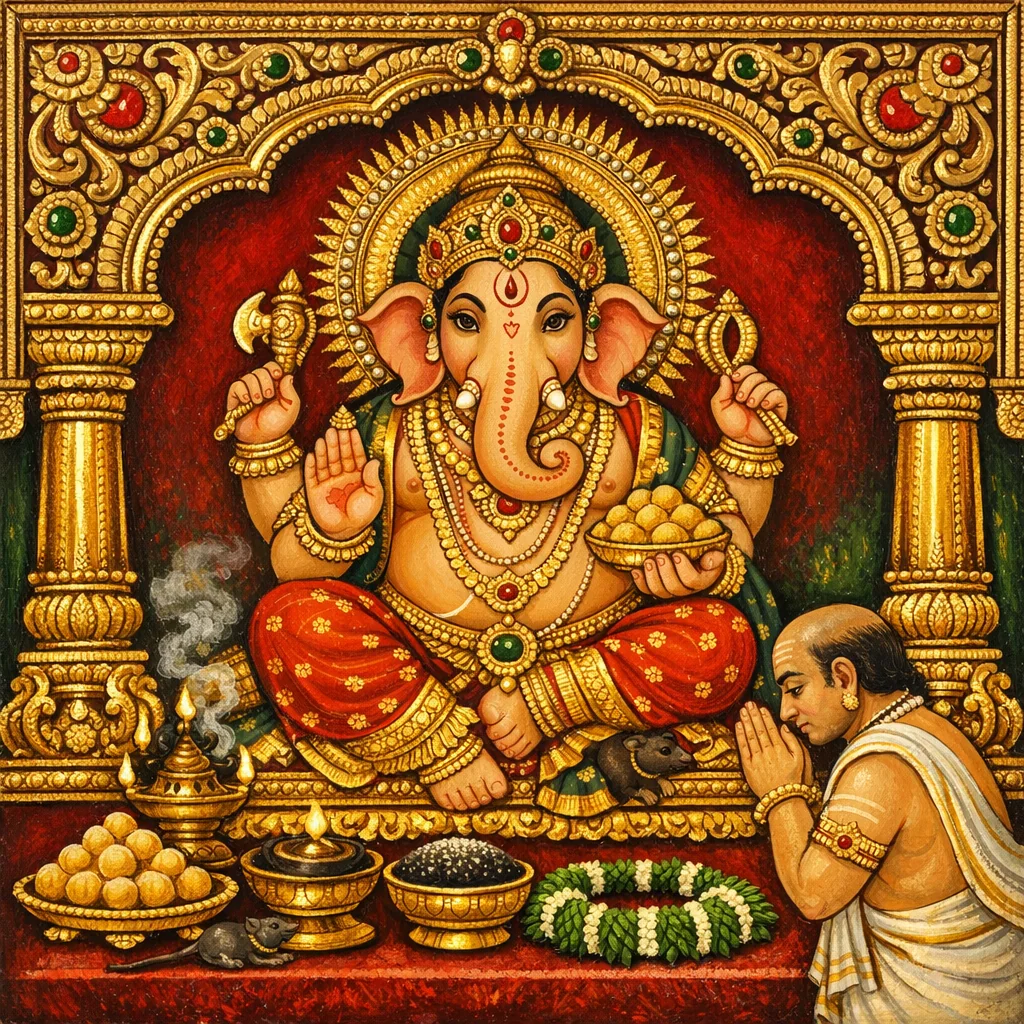
火神阿耆尼系统阐述以“第四日”(Caturthī)为核心的诸种誓戒(vrata),并明言此类修持具“双重果报”,能赐予Bhukti(世间受用与安乐)与Mukti(解脱)。本章先以简短文字提示不同传本/抄本之间的差异,继而按月份与tithi(阴历日序)分别规定仪轨。于Māgha月白半第四日,教人斋戒并礼拜,以“Guṇa”(德性、卓越之质)为仪式观想与供奉焦点。修持延续至第五日(pañcamī),以芝麻饭供献,祈求一年无障碍的安康,并引入根本咒(mūla-mantra)“gaṁ svāhā”,说明其在aṅga-nyāsa(以“gām”等心咒与肢体安置咒)中的运用。随后详列以“āgaccha ulkā”“gaccha ulkā”行āvāhana(迎请)与visarjana(送神)的次第,并配以guggulu香、modaka甜团等供品,另加一段近似Gaṇeśa-gāyatrī的咒语。末后归纳专门行法:Bhādrapada月第四日的Kṛcchra苦行、Phālguna月第四日名为Avighnā的夜间斋戒,以及Caitra月第四日以damana/dūrvā草供奉Gaṇa,显示誓戒乃成就吉祥与净化身心之法门。
Shlokas
No shlokas available for this adhyaya yet.
Frequently Asked Questions
It specifies mantra-technology and ritual sequencing: the mūla-mantra “gaṁ svāhā,” its gāmādi application as hṛdaya and aṅga-mantras for nyāsa, and the precise āvāhana–visarjana formulas (“āgaccha ulkā” / “gaccha ulkā”) alongside prescribed offerings.
By presenting Caturthī vratas as disciplined, time-bound sādhana that removes obstacles (Avighnā), cultivates restraint (fasting/kṛcchra), and aligns ritual action with inner purification—thereby supporting both worldly stability (Bhukti) and liberation-oriented refinement (Mukti).