Adhyaya 178
Tṛtīyā-vratāni (Vows for the Third Lunar Day): Lalitā Tṛtīyā, Mūla-Gaurī Vrata, and Saubhāgya Observances
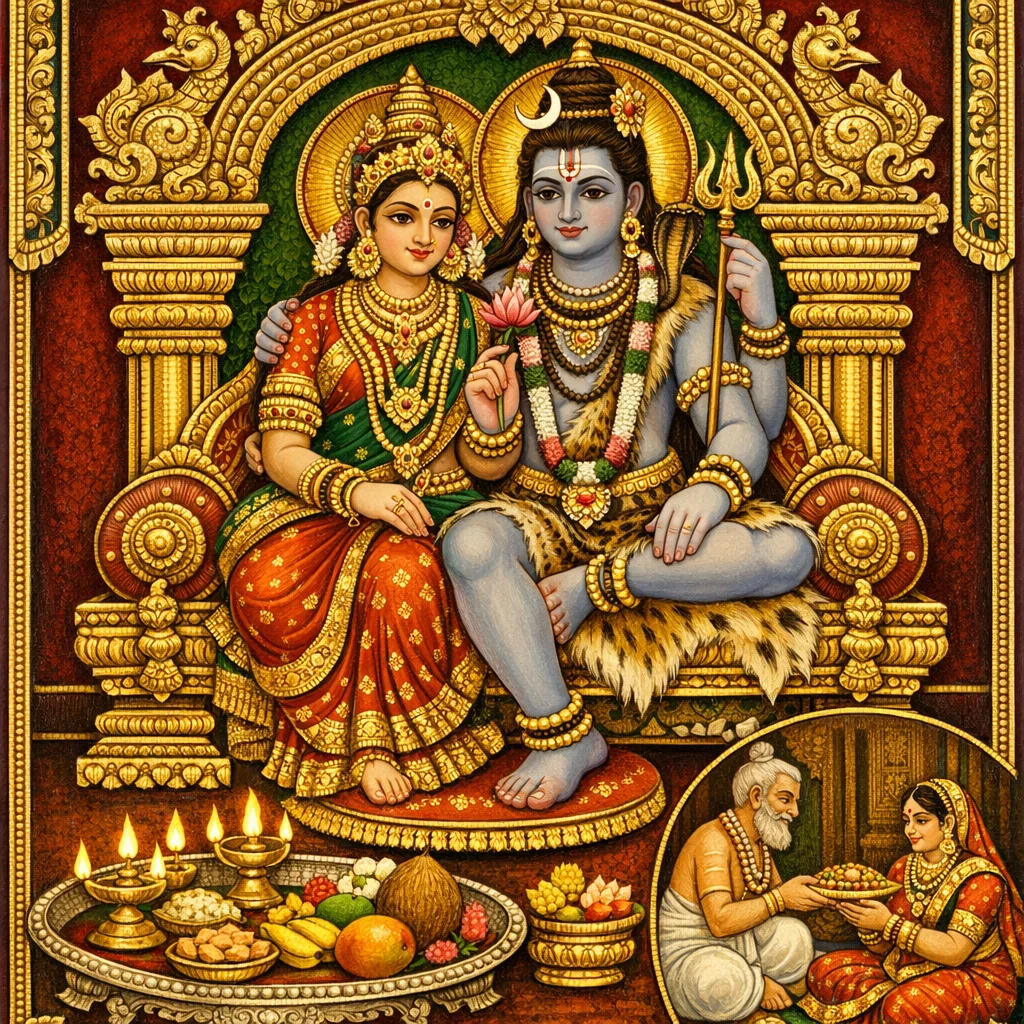
火神阿耆尼在本章开端由“第二日誓愿”(Dvitīyā-vrata)转入“第三日誓愿”(Tṛtīyā-vrata),并明言此类誓修能赐予世间受用之福(bhukti)与解脱之果(mukti)。随后详述在“恰伊特拉月白半第三日”(Caitra śukla tṛtīyā)所行的“根本高丽誓”(Mūla-Gaurī),以纪念高丽(Gaurī)与诃罗(Hara,湿婆)的婚配:先以芝麻浴净身,再以吉祥供品(如“金色果实”)同供商婆(Śambhu)与高丽。其核心为冗长的“咒安置”(mantra-nyāsa)与按肢体召请:将神名与神力安置于足、踝、胫、膝、腰、腹、乳、喉、手、臂、面、鼻、眉、上腭、发与顶等处,使湿婆—女神能量(Śiva–Śakti)之教义融入具身礼拜。章中规定花与香料、按月次第的供养,并以布施(dāna)作结:礼敬婆罗门夫妇,施与成套物品,以及大施如金制乌玛—摩诃伊湿伐罗(Umā–Maheśvara)像并赠牛等。又列可替代的时日(毗舍佉月、婆陀罗钵陀/雨季月Nābhasya、摩伽尸罗月)与第二种程序,含反复供奉及诵“胜死咒”(Mṛtyuñjaya)。最后阿耆尼引入“吉祥婚福誓”(Saubhāgya-vrata),尤强调自“颇罗古那月第三日”(Phālguna tṛtīyā)起禁盐,并列举诸第三日对应的女神形相,许以婚福(saubhāgya)与天界(svarga)之果。
Shlokas
No shlokas available for this adhyaya yet.
Frequently Asked Questions
The chapter primarily teaches Tṛtīyā-vratas, especially Lalitā Tṛtīyā and the Mūla-Gaurī vrata, including a detailed mantra-nyāsa and concluding dāna; it also introduces the Saubhāgya-vrata for marital prosperity.
By embedding limb-wise mantra-nyāsa (a technical ritual technology) within Śiva–Śakti worship and ethical-social duties (honoring a brāhmaṇa couple and dāna), the chapter frames embodied discipline and generosity as means toward both prosperity (bhukti) and liberation (mukti).
Caitra śukla tṛtīyā is highlighted for Lalitā/Mūla-Gaurī; alternative performance months include Vaiśākha, Bhādrapada (Nābhasya), and Mārgaśīrṣa, with additional mentions of Māgha and Bhādra for Tṛtīyā-vrata practice.