Adhyaya 177
Adhyāya 177 — Dvitīyā-vratāni (Observances for the Lunar Second Day)
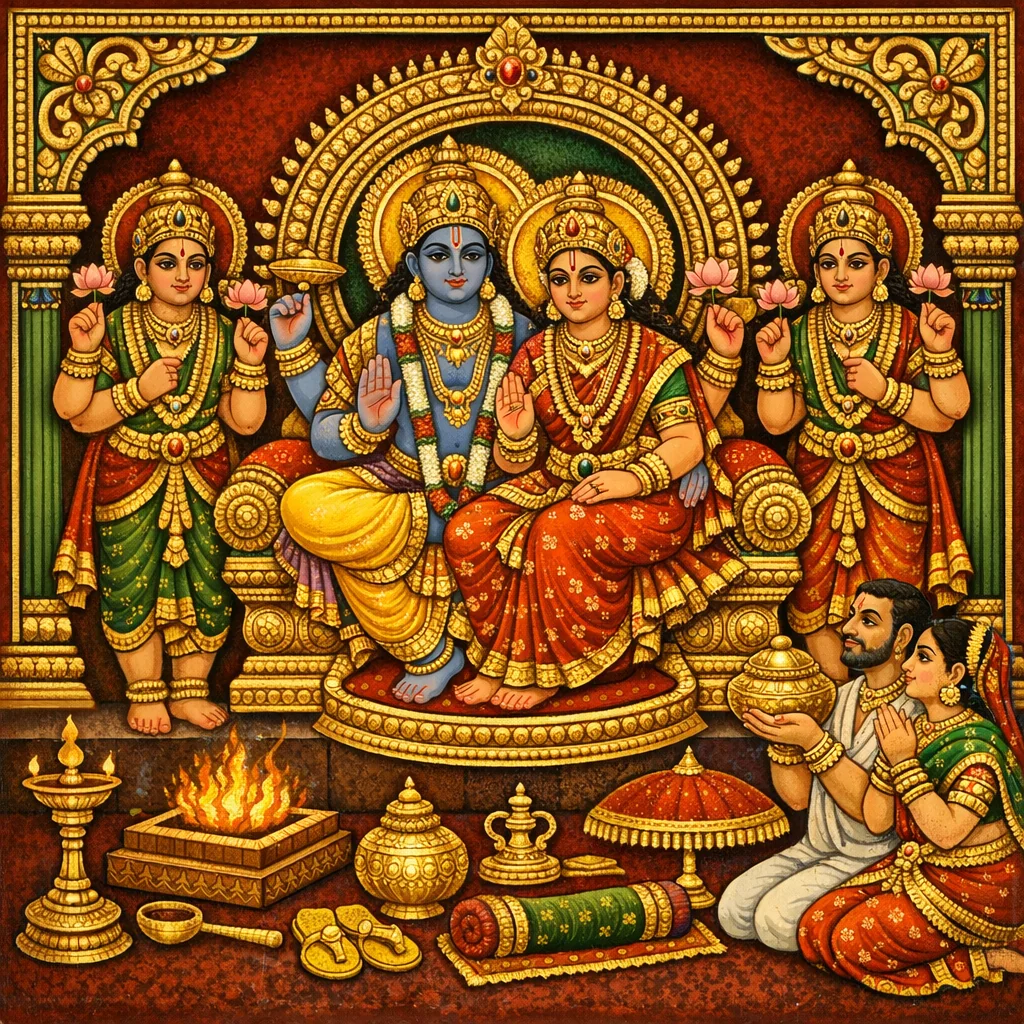
火神阿耆尼开示以“月二日”(Dvitīyā)为核心的一系列誓戒,强调按月、半月(pakṣa)、日分(tithi)之精确历法来建立仪轨,以兼得世间福乐(bhukti)与解脱(mukti)。章首为Dvitīyā-vrata:以花为食并礼敬阿湿毗双神(Aśvins),得富饶、容光与天界功德;其Kārttika白半月二日之别法则规定礼敬阎摩(Yama)。继而说Aśūnya-śayana(Śrāvaṇa黑半月二日),旨在护持家道相续——祭火、诸神、祖先与夫妇和合——以祈请毗湿奴(Viṣṇu)与室利Śrī(拉克希米Lakṣmī)同临,完成供奉,并每月以真言献Soma-arghya,酥油火供(homa),守夜戒律,以及次第布施(dāna),尤重施床、灯、器具、伞、鞋、座、水罐、圣像与器皿。随后为Kānti-vrata(Kārttika明半月):唯夜食并礼敬Bala–Keśava,以得光辉、寿命与健康。最后教授Śiṣṇu-vrata:自Pauṣa白半月二日起行四日法,依次以芥子、黑芝麻、菖蒲(vacā)与诸药草(sarvauṣadhi)沐浴;按名号Kṛṣṇa/Acyuta/Ananta/Hṛṣīkeśa安花礼拜;以诸尊称向月献arghya;并以“久远净化之功德”作结,兼记抄本异文与传统行持者(国王、妇女、诸天)。
Shlokas
No shlokas available for this adhyaya yet.
Frequently Asked Questions
It treats Dvitīyā as a repeatable ritual node: specific deities, dietary rules (flowers or night-only eating), mantra, homa, and dāna are coordinated to yield prosperity/health (bhukti) and purification/heavenward merit (mukti-oriented phala).
Time-fixation (Śrāvaṇa kṛṣṇa-dvitīyā), Viṣṇu–Śrī invocations, monthly Soma-arghya with mantra, ghṛta-homa, nakta discipline, and a specified dāna-set (bed plus household and ritual items) culminating in merit tied to marital stability and household continuity.
It prescribes a four-day bath sequence using siddhārthaka (mustard), black sesame, vacā, and a defined sarvauṣadhi herb group—showing the Purāṇa’s characteristic fusion of vrata procedure with āyurvedic-style materia lists.
The Aśvins (general Dvitīyā vow), Yama (Kārttika śukla-dvitīyā), Lakṣmī–Viṣṇu/Śrīdhara (Aśūnya-śayana), Bala–Keśava (Kānti-vrata), and Soma/Indu (monthly arghya and lunar-focused elements).