Adhyaya 176
Pratipadā-vratāni (Vows Observed on the Lunar First Day)
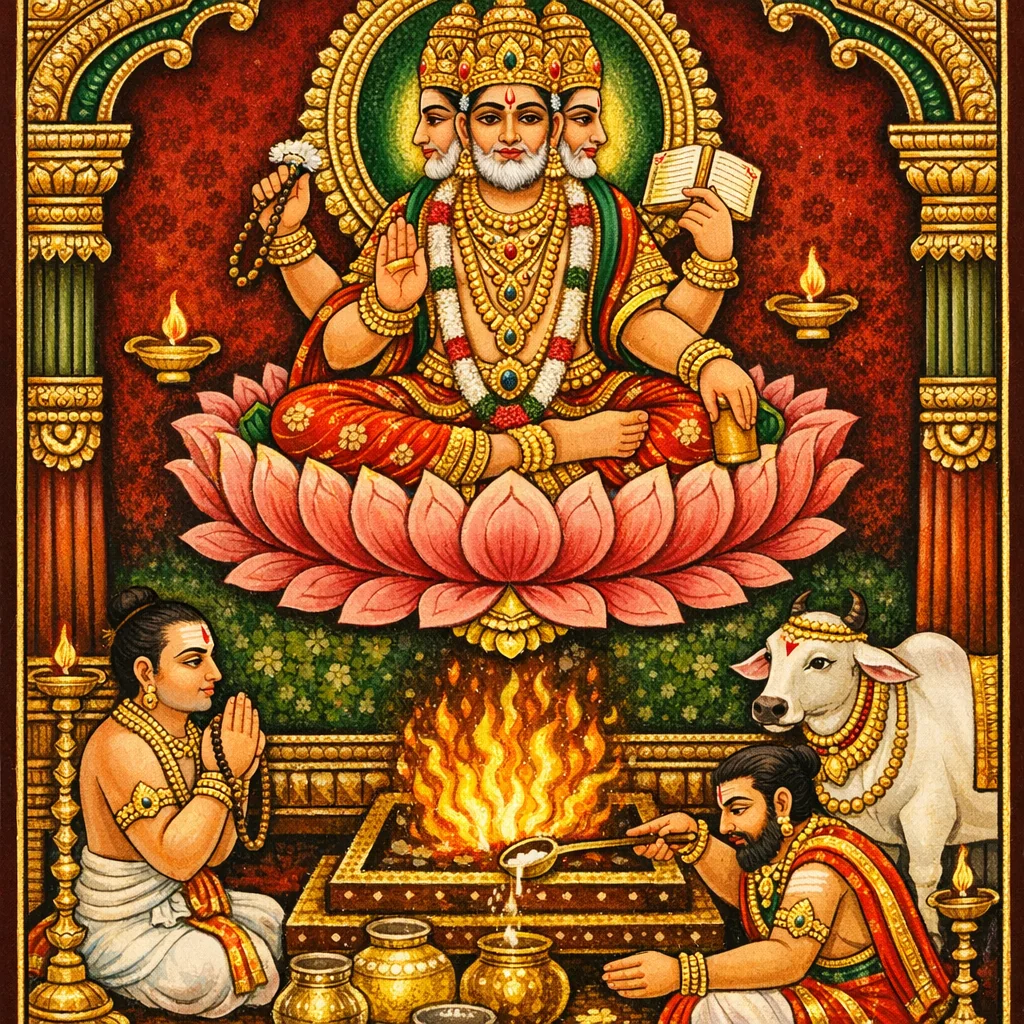
火神阿耆尼开始有条理地宣说以朔后一日(Pratipadā,月初一)为依止的诸种誓戒(vrata),指出月之第一日是进入一年持修之门、具强大仪轨力的起点。他又说迦尔提迦月、阿湿瓦瑜阇月与柴特罗月的朔后一日为梵天(Brahmā)之提提(tithi),由此将历法时间与特定天神的观修焦点相连。本章继而阐明誓戒之“行持法”:斋戒规制(含长时断食与节制进食之法)、持诵“Om tat sat brahmaṇe namaḥ”并配合伽耶特丽(Gāyatrī),以及对梵天形相的清晰观想(金色身、结发,执念珠akṣamālā与祭勺,具水壶kamaṇḍalu)。布施(dāna)被纳入为可衡量的伦理成果——随力施乳——其果报为净化、天界受乐与婆罗门之世间兴盛。另一支则介绍摩伽尸罗月的“谷丰誓”(Dhanya-vrata),以夜食戒(nakta)与火供(homa)为要,继而一年礼敬火神,终以施赠黄褐色母牛作圆满。章末点出“施奇誓”(Śikhī-vrata)及其果:得至毗舍瓦那罗(Vaiśvānara)之境/住处,从而将誓戒实践贯通于世间福享(bhukti)与更高灵性归趣。
Shlokas
No shlokas available for this adhyaya yet.
Frequently Asked Questions
Kārttika, Āśvayuja, and Caitra are identified as months where Pratipadā is regarded as Brahmā’s tithi.
The chapter prescribes the mantra “Oṃ tat sat brahmaṇe namaḥ” together with Gāyatrī, maintained as a year-long observance.
Brahmā is described as golden and matted-haired, with akṣamālā and a ladle (śruva) in the right hand, and a sacrificial ladle (śruc) and kamaṇḍalu in the left, with a long tuft/brush-like emblem (lambakūrca).
Milk is to be donated according to capacity with the resolve “May Brahmā be pleased,” yielding purification, heavenly enjoyment, and wealth on earth (for a brāhmaṇa). The Dhanya/Agni-oriented year observance culminates in gifting a kapilā (tawny) cow.
By mapping time-discipline (tithi), mantra, and dāna into repeatable observances culminating in destinations like Vaiśvānara pada, it frames vrata as a sādhana that integrates ethical action and higher spiritual attainment (bhukti-mukti samanvaya).