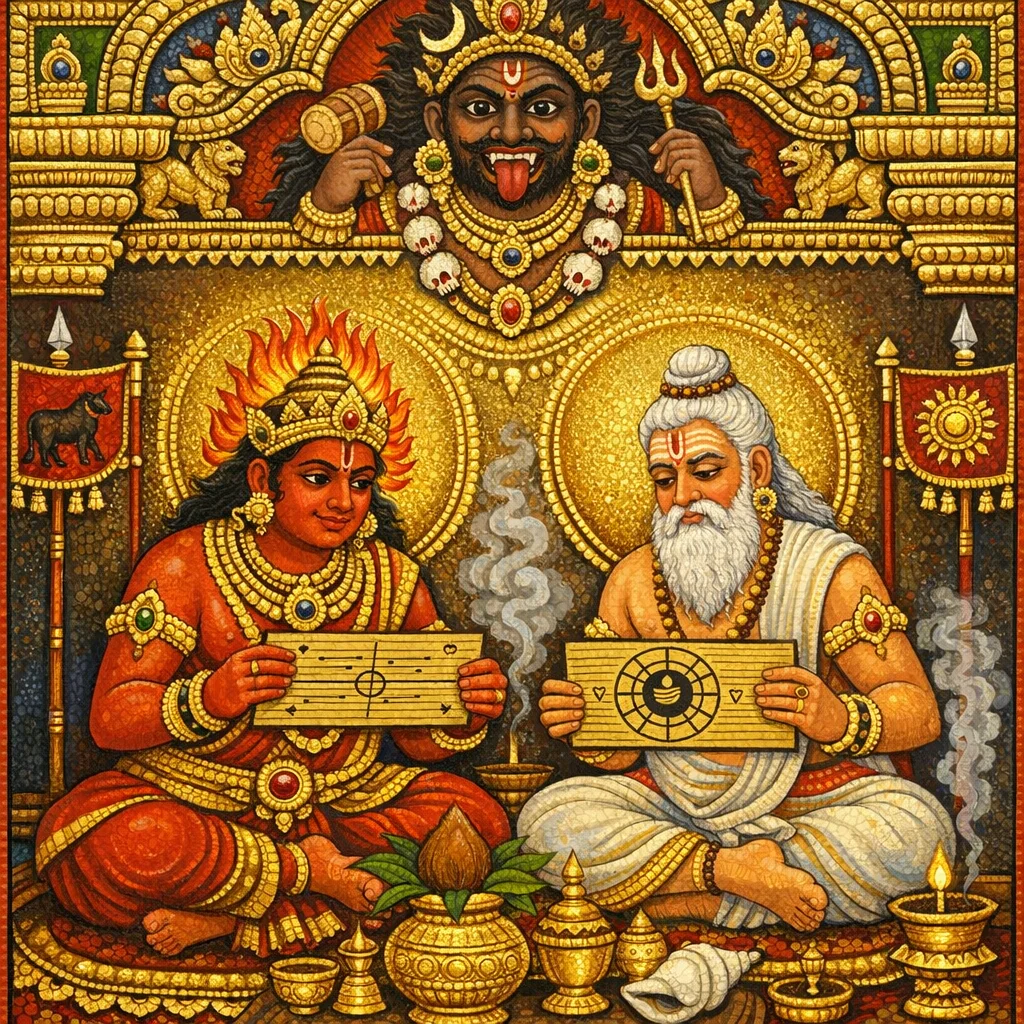
Adhyaya 123
युद्धजयार्णवीयनानायोगाः (Various Yogas from the Yuddha-jayārṇava)
在结束前一单元的 kāla-gaṇana(时间计算)之后,火神阿耆尼开始摘述《Yuddhajayārṇava》中以战争取胜为旨的要义。本章把音素与 tithi(月日)编入可操作的分类(自 Nandā 起),并将字母区段分配给行星主宰,使占断嵌入一套语言—星辰的编码网格。又提出诊察与计量的线索(nāḍī-spandana、ucchvāsa、pala),把人体脉动与时间单位连接到预兆解读。继而展开以诸轮(cakra)为核心的战事占星:Svarodaya-cakra、Śani-cakra、Kūrma-cakra、Rāhu-cakra,详述分区、方位安置与“致死”部位,并以 nakṣatra/muhūrta 的名目规定何时宜行何事。最后转入护身与胜利的修持:Bhairava-mantra 的应用(śikhā-bandha、tilaka、añjana、dhūpa-lepana),以及可佩带的草药与 vaśīkaraṇa 配方(额印、涂膏、油剂)。全章体现 Agneya vidyā 将 Jyotiṣa、仪式技术与应用药学融为一体,以奉行 dharma 的胜利为归宿。
Shlokas
No shlokas available for this adhyaya yet.
Frequently Asked Questions
A war-oriented Jyotiṣa toolkit: tithi and letter-to-graha mappings, multiple prognostic cakras (Svarodaya, Śani, Kūrma, Rāhu), and muhūrta-based prescriptions for what actions to perform or avoid.
They act as diagrammatic decision systems: divisions, directional placements, and specific ‘death-giving’ portions (notably linked with Śani) guide timing and risk assessment for actions related to conflict and protection.
The chapter treats victory as a synthesis of right timing (Jyotiṣa), protective rite (mantra and ritual acts like tilaka/añjana), and supportive materia medica—typical of the Agni Purana’s encyclopedic Agneya-vidyā approach.
Action-appropriateness: Raudra is prescribed for fierce acts, while Śveta is aligned with purification activities like bathing—demonstrating karmic regulation through time-quality.
Yes. Shloka 25 explicitly notes differences between manuscripts (e.g., a line absent in the Gha manuscript and alternate readings in the Kha manuscript), which is valuable for critical study.