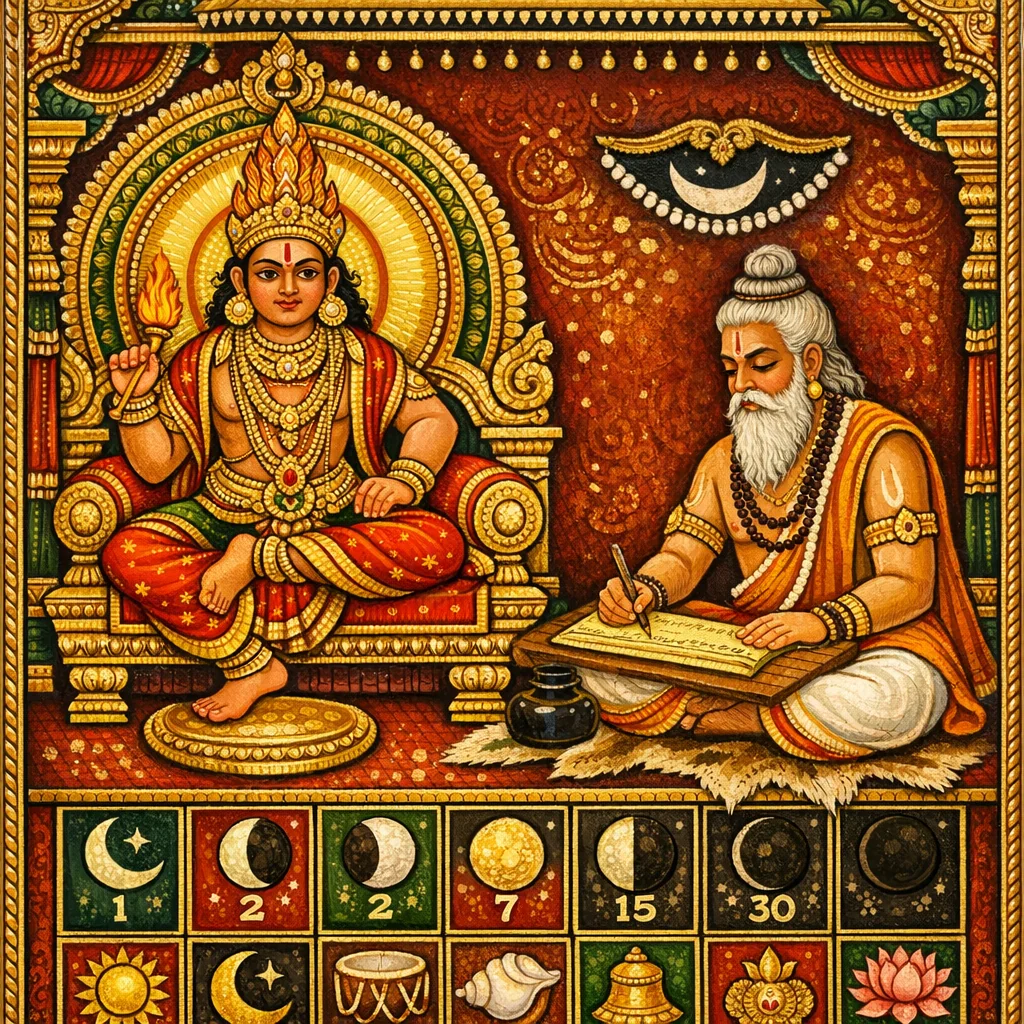
Adhyaya 122
Chapter 122 — Kāla-gaṇana (Computation of Time)
阿耆尼开篇以技术方式阐述有序的时间计算(samāgaṇa),以太阳运行与自“恰特罗月”(Caitra)起始的阴历月为根基。随后本章提出一套依规则运算的历法推算体系,运用编码的数词与位值操作,求得诸历要素:vāra(星期)、tithi(月日/阴历日)、nāḍī/ghaṭikā(时分单位)、nakṣatra(月宿)、yoga(瑜伽位)与karaṇa(半日分段)。文中详述分步算术——减法、乘以60、商与余数处理(含“负债”即负值)、逐月校正——并列举特殊情形,如从某些rāśi(黄道宫)起逆数,以及因不净或仪轨差异而需按所算差额比例作补偿供献。方法最终以令日月度量相等来稳定yoga,并判定诸karaṇa(如Pratipad初一之Kintughna),将精密历算确立为护持法(dharma)的技术,使祭仪择时、社会秩序与行事皆与宇宙法则相契。
Shlokas
No shlokas available for this adhyaya yet.
Frequently Asked Questions
A procedural arithmetic for calendrical computation: operations with multipliers (notably 60), quotient/remainder placement, fixed remainders (e.g., 27 for nakṣatra/yoga), month-by-month insertions (kṣepa), and handling of ṛṇa (negative) cases and reverse-counting across specific rāśis.
By establishing kāla-śuddhi—right timing and corrected calendrical factors—so rituals and vows align with cosmic order; the chapter frames precise Jyotiṣa computation as a dharmic aid that supports efficacy of practice, ethical order, and inner discipline toward puruṣārthas.