Adhyaya 250
Dhanurveda-kathanam (The Teaching of Martial Science)
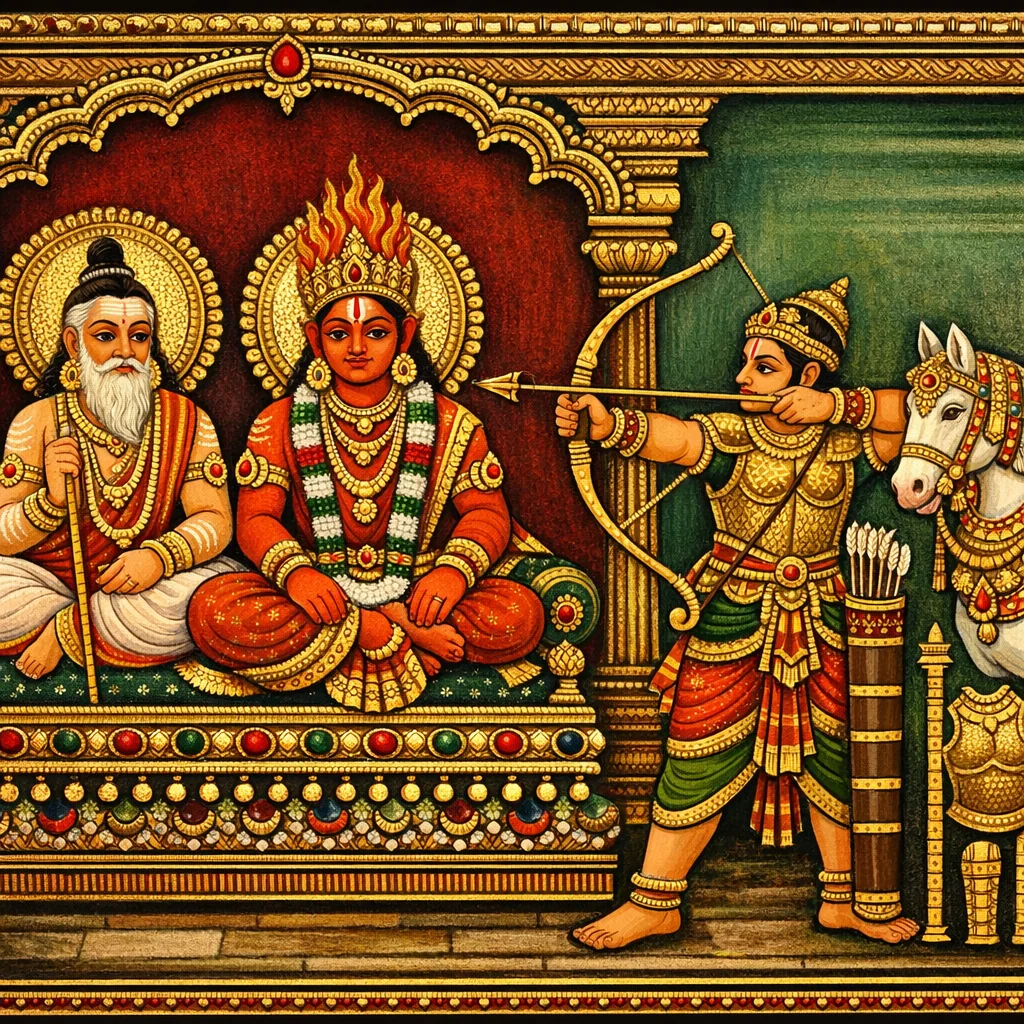
本章以《弓术》(Dhanurveda)为旨,火神阿耆尼开示:武艺须循戒律而进——先练手、心与目,使击中目标稳定可靠,然后方可从坐骑或车乘上施展。继而详述器具规范:绳索与套索的尺寸、宜取之形制,以及弓弦所当用之材料,表明胜利不仅凭勇,更赖制作合度。训练置于师承法度之中:师者安置学人身位,指授双手协同之法。又说实战运用:盘绕并掷出旋转之器以攻披甲之敌;行步身法 valgita、pluta、pravrajita 皆由正当结合 samayoga 所统摄,并述胜后拘束之法。并规定携兵与拔剑之式(剑佩左侧;左手固握,右手抽出),兼列诸器、尖刺与甲胄安置之度量。章末强调调教坐骑以利机动与部署,使个人技艺与后勤备办在正法(dharma)程序下相融。
Shlokas
No shlokas available for this adhyaya yet.
Frequently Asked Questions
Precise martial metrics and materials: e.g., a pāśa (noose) of ten hands, a well-twisted noose of even thirty units, bowstrings made from cotton, muñja, hemp-fibre, sinew, arka-fibre, and rawhide, plus specified handling protocols (left-hand grip/right-hand draw) and dimensional guidance for implements and armor placement.
By subordinating force to discipline and right procedure: mastery begins with control of hand, mind, and sight, proceeds through regulated training under teachers, and culminates in restraint and order (bandha, proper carriage, measured construction), aligning martial capability with dharma rather than aggression.