Adhyaya 217
Gāyatrī-nirvāṇa (गायत्रीनिर्वाणम्) — Śiva-Liṅga Stuti as a Path to Yoga and Nirvāṇa
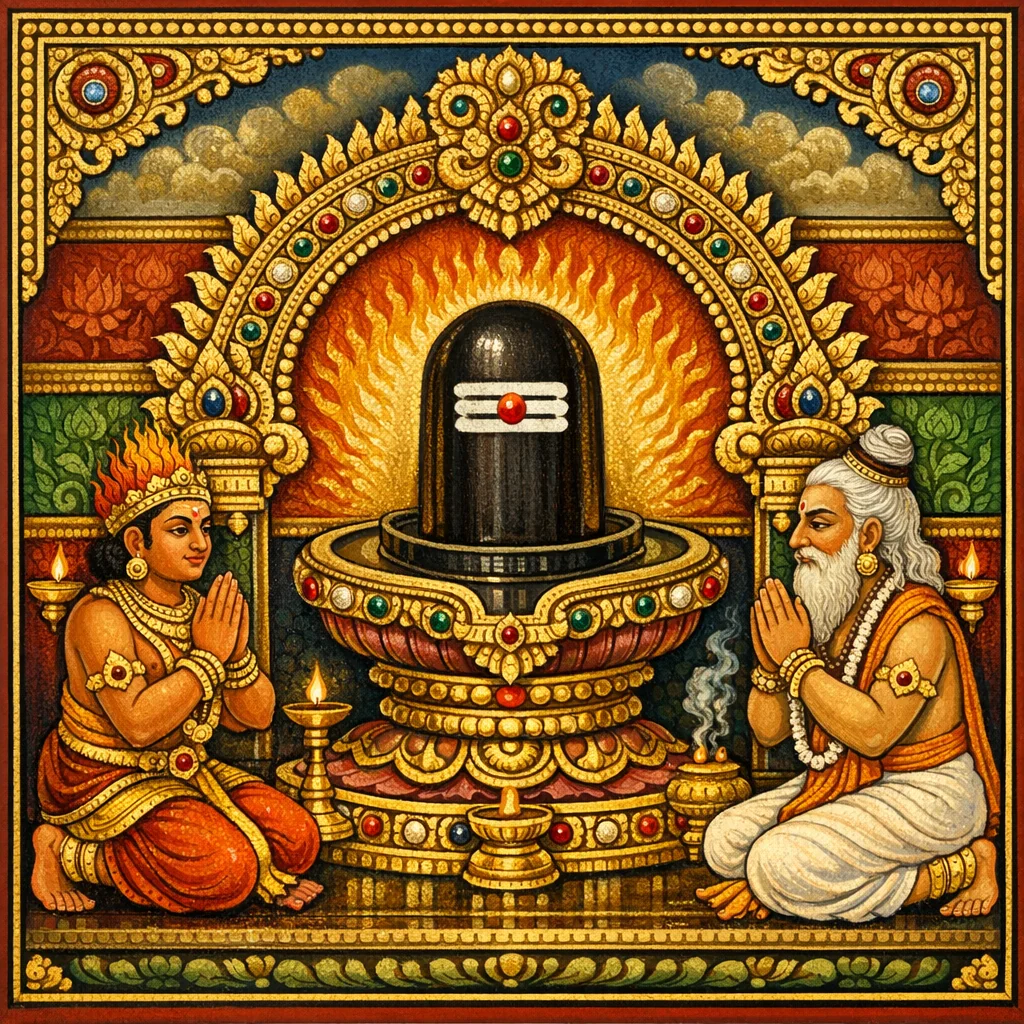
阿耆尼开示:礼赞湿婆之林伽形相,能依伽雅特丽而成就瑜伽;婆悉吒等诸仙从商羯罗处得名为“涅槃”的至上梵。随后本章展开为凝练的林伽赞:顶礼湿婆为金色、吠陀所显、至上、如虚空、千形万相、炽焰、太初,并为圣典(śruti)所宣说。赞歌渐次将林伽与宇宙及数论诸范畴相融——地下界(pātāla)与梵界(brahma)、未显(avyakta)、觉智(buddhi)、我执(ahaṅkāra)、诸大(bhūta)、诸根(indriya)、微细境(tanmātra)、普鲁沙(puruṣa)、诸有(bhāva)与三德(tri-guṇa)——终以祭祀(yajña)与真理要素(tattva)为其徽相。继而祈求:赐予最高瑜伽、贤善子嗣、不坏之梵与至上安宁。阿耆尼又述缘起:在室利山(Śrīparvata),湿婆因婆悉吒之赞而欢喜,赐其族系不绝与坚固的法意,旋即隐没——使此赞颂既为形上教义,亦为施福之修持。
Shlokas
No shlokas available for this adhyaya yet.
Frequently Asked Questions
That Śiva as Liṅga is the all-pervading reality mirrored in cosmic and psychological principles, and that Gāyatrī-linked devotion and yoga culminate in realization of Nirvāṇa (Parabrahman).
A layered identification of the liṅga with Sāṃkhya-style tattvas (avyakta, buddhi, ahaṅkāra, indriyas, tanmātras, bhūtas), the tri-guṇas, and yajña/tattva—presenting Śiva as both transcendence and immanence.
It frames stuti as sādhanā: devotion and mantra-yoga yield inner peace and Brahman-realization, while also legitimizing worldly stability through boons such as akṣaya lineage and steadfastness in dharma.