Adhyaya 216
Gāyatrī-nirvāṇa (The Liberative/Concluding Doctrine of Gāyatrī)
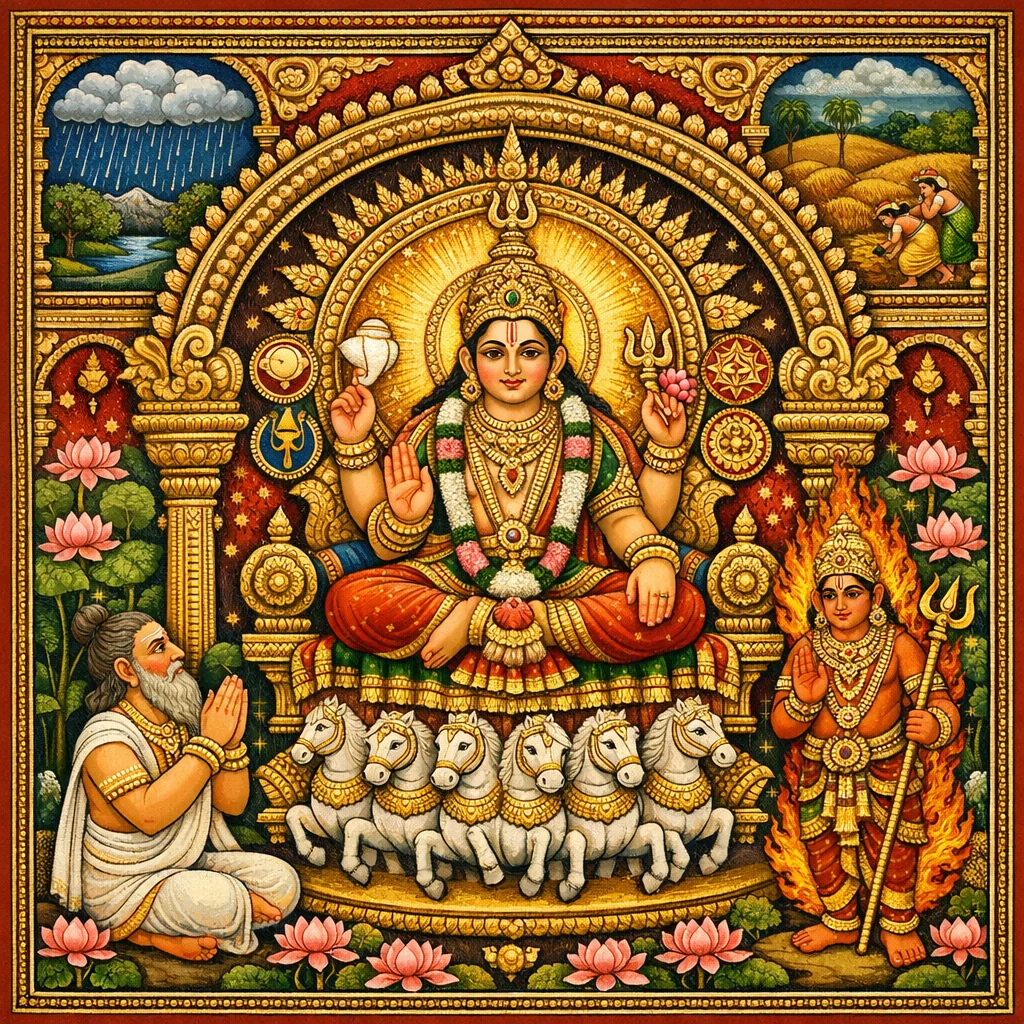
在完成暮旦礼(Sandhyā-vidhi)之后,火神阿耆尼教导行者以诵持伽耶特丽(Gāyatrī-japa)与忆念(smaraṇa)作为结行,强调咒语既是护持(rakṣā)亦是内在的自律。随后展开语文学与神学的释义:伽耶特丽称为娑毗特丽(Sāvitrī),因其照明;又称为萨拉斯瓦蒂(Sarasvatī),因其为娑毗特ṛ(Savitṛ)之言语形态(vāc)。关键词 bharga 由“发光”与“净化”之词根阐释,如同“燃烧/烹炼”,将光辉与转化性的精炼相连。vareṇyam 被确立为至上且可择之境,为求天界与解脱者所向往;dhīmahi 则释为持续的心念摄持与观照。经文调和宗派诵读,指出咒光是一实,可被称诵为毗湿奴、湿婆、女神力(Śakti)、太阳(Sūrya)或火(Agni),但在吠陀之始宣示一体的梵(Brahman)。继而提出仪式宇宙论:向火献供支撑太阳,进而生雨、成粮、育众生,显示咒与祭维系世界。高潮呈现不二(advaita):日轮中的至上光即第四境(turīya)与毗湿奴至上之境(Viṣṇu-parama-pada);由禅观可灭生死与三重苦,终以同一宣言作结:“我即梵……我即那太阳之人(Puruṣa),无量者(Oṃ)。”
Shlokas
No shlokas available for this adhyaya yet.
Frequently Asked Questions
Completion through Gāyatrī-japa and mental recollection (smaraṇa), framed as both spiritual discipline and protective power for disciples, spouse, and vital breaths (prāṇa).
Bharga is interpreted as tejas (radiance) and purifying brilliance, supported by etymological links to roots meaning ‘to shine’ and ‘to burn/cook’ (purificatory transformation).
It acknowledges multiple recitations (Śiva, Śakti, Sūrya, Agni) while asserting their unity in the one supreme light/Brahman, explicitly identifying that light with Viṣṇu as the world-cause.
It presents a causal chain: oblation to Agni supports Āditya; from the Sun comes rain; from rain food; from food living beings—linking ritual action to world-order.
By meditating on the supreme light as turīya within the solar orb, one destroys birth-death and threefold suffering, culminating in the non-dual recognition ‘I am Brahman’ and identity with the Āditya-Puruṣa.