Adhyaya 212
Meru-dānāni (Meru-Donations) — Kāmya-dāna, Month-wise Offerings, and the Twelvefold Meru Rite
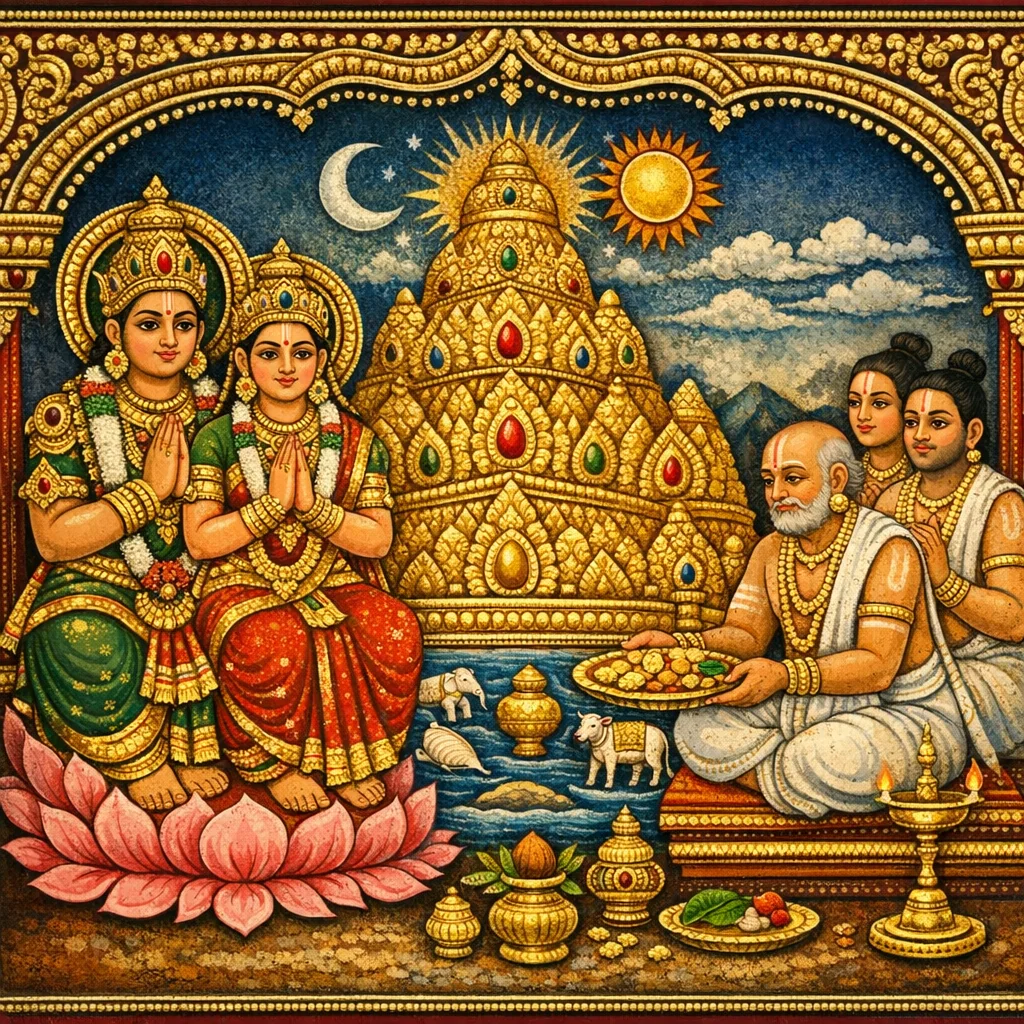
火神阿耆尼由前章对施舍品类的罗列,转入对 kāmya-dāna(为达特定愿求之誓愿布施)的系统阐述:以持续的逐月礼拜为根基,并以年终的大仪式为归结。他按月份说明应献之物(其中有以面团塑成的像)及其所宣称的果报,继而提出核心的 Meru-vrata:在迦尔提迦月行十二重 Meru-dāna,许诺兼得 bhukti(世间受用)与 mukti(解脱)。本章遂成一部仪式构筑手册:须以分级尺度与珍贵材质建造须弥(Meru),安置于莲华图式之中,以 Brahmā–Viṣṇu–Īśa 为中轴,并按方位次第环列具名诸山。阿耆尼又规定布施礼法(持诵咒语、以 gotra 指名受施、戒除财物欺诈)、吉时(saṅkrānti、ayana、日月食)以及多种须弥变式(黄金、白银、马、牛、布帛、酥油、谷物、芝麻、khaṇḍa-meru)。仪式以赞颂偈将须弥认作毗湿奴之形,并以虔敬 nivedana 作结,旨在清净、提升族系、得生天界,终而趋近哈利(Hari)。
Shlokas
No shlokas available for this adhyaya yet.
Frequently Asked Questions
Regular monthly worship → year-end grand worship → Kārttika Meru-vrata with bathing/fasting → worship of Viṣṇu (or Śiva) → mantra-guided gifting of a constructed Meru to a brāhmaṇa (often gotra-addressed) → dedication (nivedana) for bhukti and mukti.
Ratna-meru (jeweled), Hema/Svarṇa-meru (gold), Rāupya-meru (silver), Hasti-meru (elephant-form), Aśva-meru (horses), Go-meru (cows), Vastra-meru (cloth), Ājya-parvata (ghee mountain), Dhānya-meru (grain), Tila-meru (sesame), and Khaṇḍa-meru (symbolic/segmented Meru).
It frames giving as a mokṣa-supporting discipline: purity through non-deceit, devotion-centered worship, cosmological visualization (Meru as Viṣṇu-form), lineage uplift, and final orientation toward Hari/Viṣṇuloka—thus integrating merit, devotion, and liberation.
Graded measurement logic (highest/middle/lower), prescribed weights (palas, khāras, prastha), construction rules (three peaks with Brahmā–Viṣṇu–Maheśvara), directional mountain placement, and calendrical triggers (Kārttika, saṅkrānti, ayana, grahaṇa).