Adhyaya 210
Mahā-dānāni (The Great Gifts) — Ṣoḍaśa Mahādāna, Meru-dāna, and Dhenū-dāna Procedure
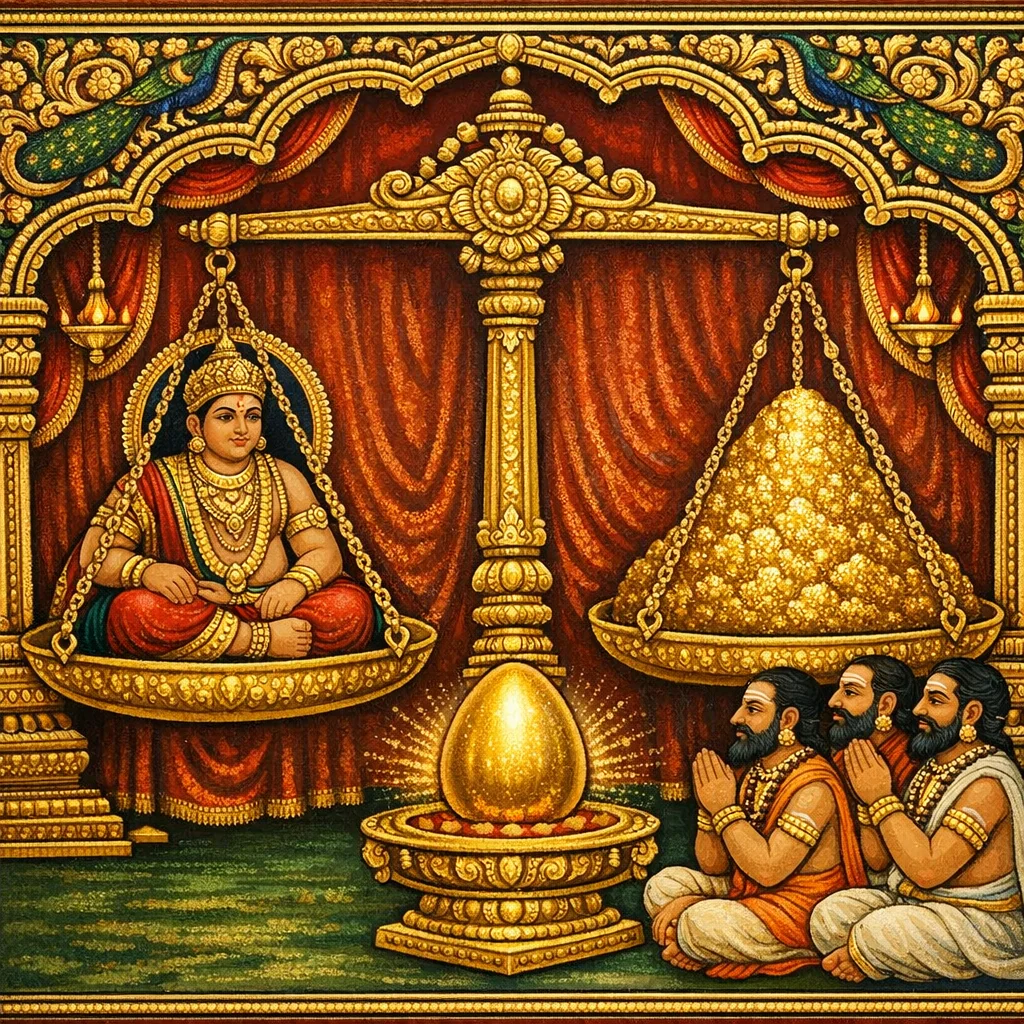
火神阿耆尼由前章对“布施”(dāna)之定义,转入对“摩诃大施”(Mahādāna)的条理阐述,强调以图拉普鲁沙(Tulāpuruṣa)与金胎(Hiraṇyagarbha)为首的十六种“伟大施”。他列举具象征性的施物:宇宙卵模型(Brahmāṇḍa)、满愿之树/藤(Kalpavṛkṣa/Kalpalatā)、千牛大施(go-sahasra)等巨量财富转赠,以及金制的迦摩德奴(Kāmadhenu)、马、车乘等,终至如毗湿瓦轮(Viśvacakra)与七海模型之仪式供献。继而规定“须弥施”(Meru-dāna)为“山施”:谷物、盐、粗糖(guḍa)、金、芝麻、棉、酥油(ghee)、银、糖等,按精确度量(droṇa、bhāra、pala、tulā)分级;先于曼荼罗与曼荼帕中礼拜诸神,最后转交具德婆罗门。随后阿耆尼详述十种“母牛施”(dhenū-dāna),如粗糖牛、酥油牛、芝麻牛、水牛、乳牛、蜜牛等,说明制作法则(以罐盛或堆成)、方位(牛面向东、足向北),并细述粗糖牛之材质、色相与饰物。仪式以以拉克什米(Lakṣmī)为中心的真言封印,将牛形女神认同为Svāhā/Svadhā及诸宇宙力,随后正式奉施。章末宣说功德:得生天界、以迦毗罗牛(Kapilā)提升家族,以及临终施“维多罗尼牛”(Vaitaraṇī)助越阎摩之门,显示仪轨精确与解脱保证相系。
Shlokas
No shlokas available for this adhyaya yet.
Frequently Asked Questions
It standardizes ritual charity through exact metrology and grading—droṇa/āḍhaka for capacity and pala/tulā/bhāra for weight—applied to Meru-dāna ‘mountain’ heaps and to the modeled dhenū-gifts, including orientation, materials, and recipient protocol.
By converting wealth into a consecrated act—performed with worship, mantras, and correct measures—it frames dāna as a purifier that yields puṇya, śānti, and eligibility for Bhukti and Mukti, culminating in death-proximate rites (Vaitaraṇī-dāna) aimed at safe passage beyond Yama’s threshold.