Adhyaya 332
Definition of Ardha-sama (Half-equal) Metres (अर्धसमनिरूपणम्)
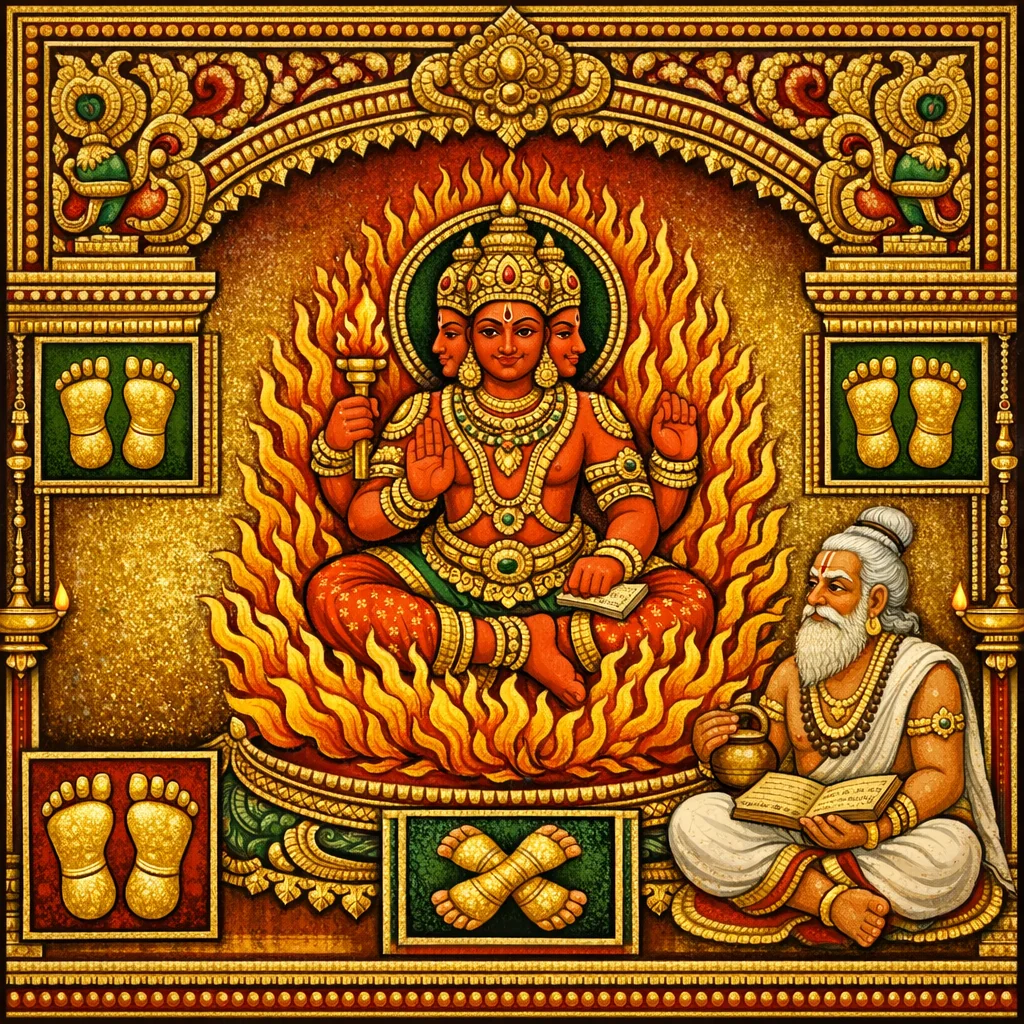
火神阿耆尼继续向圣者婆悉吒传授《韵律学》(Chhandas-śāstra),由 viṣama(不齐、不均)韵式转入 ardha-sama(半齐)韵式的分类。本章先列举此类所传记的诸韵:Upacitraka、Sa-samānā、Bhojabhagā、Drūtamadhyā、Bhagāgathā、Unanā、Jayā,继而详述用以辨识与构作它们的 gaṇa 组合次序与具名节奏型。又分别叙事体韵律模式(ākhyānikā)及其 viparīta(倒置)对应,举出 Rajasā、Gogatha、Droṇa、Ketumatī、Jagāgatha、Tatajagāgatha 等例,并补充 Dhariṇavallabhā、Aparākrama、Puṣpitā 等名目。末段示范 samavṛtta(等音节)结构,明列 gaṇa 次第与 mātrā(以 nāga 为单位)计数,并示其逆式 Khañjā,彰显韵律之学为精密可复现之 śāstra,与持戒之言语与达摩文化相应。
Shlokas
No shlokas available for this adhyaya yet.
Frequently Asked Questions
The chapter emphasizes identification and construction of ardha-sama metres through explicit gaṇa-sequences (e.g., Vegavatī’s bha-bha-bha-ga-go-ga-tha), named pattern-sets (including Rudra-vistāra), and mātrā/nāga-based counting culminating in a samavṛtta demonstration with a defined reverse-form (Khañjā).
By disciplining speech through exact metrical knowledge, it supports dhārmic communication, accurate preservation of sacred and literary utterance, and cultivated aesthetic order—treating linguistic precision as a form of sādhana that complements ritual life and ethical culture on the path toward puruṣārtha.