Adhyaya 206
Agastyārghyadāna-kathana (On the Giving of the Agastya Honor-Offering)
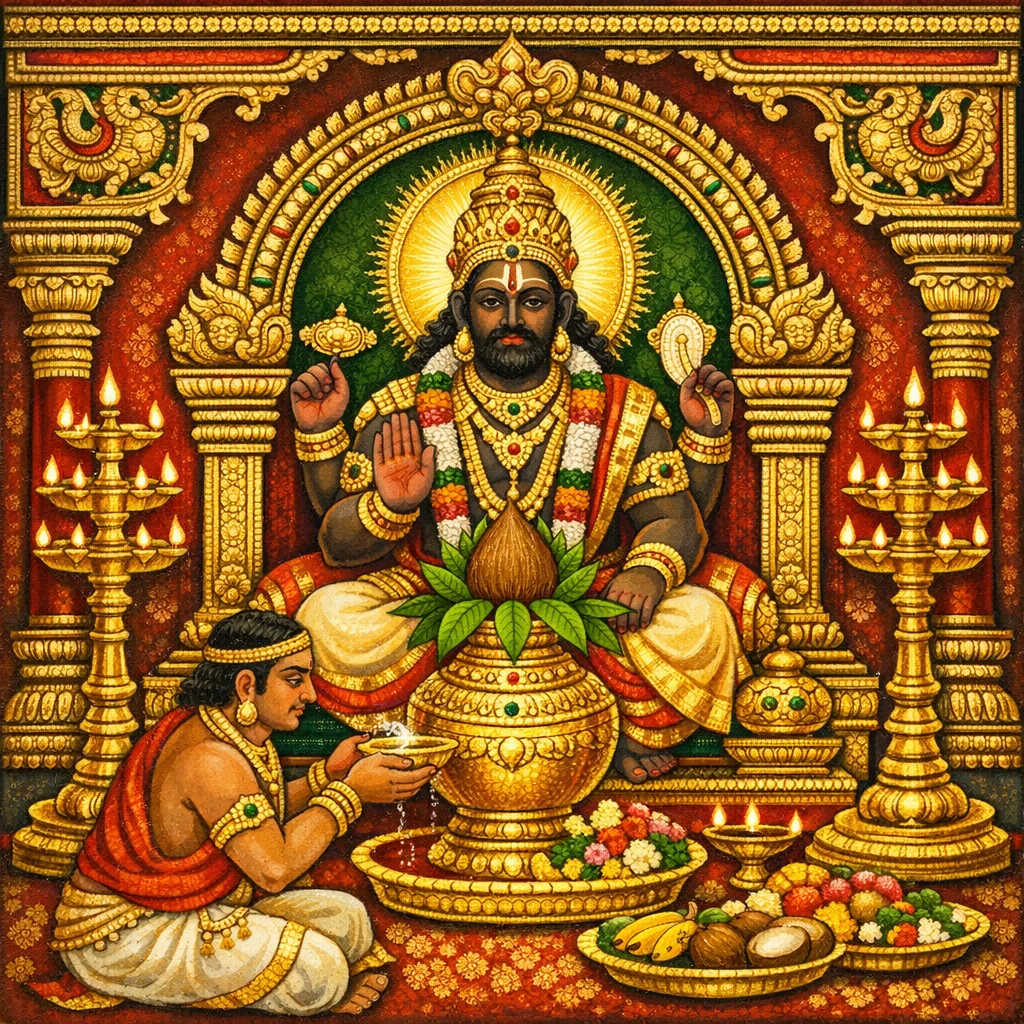
Thần Agni quy định một nghi lễ kiểu vrata lấy Agastya làm trung tâm, và nêu rõ Agastya đồng nhất với Viṣṇu, nhờ đó nối việc tôn kính bậc hiền triết với cứu cánh Vaiṣṇava là đạt đến Hari. Nghi thức có thời hạn và trình tự: trong ba ngày, trước lúc mặt trời mọc, hành giả nhịn ăn, lễ bái và dâng arghya lên Agastya. Vào giờ pradoṣa, đặt một hình tượng làm bằng hoa kāśa vào bình nước (ghaṭa/kumbha), rồi thức canh đêm (prajāgara). Sáng hôm sau dâng arghya gần hồ/nguồn nước, tụng lời tán thán các công hạnh huyền thoại của Agastya (làm cạn biển; diệt Ātāpi–Vātāpi) và cầu phúc, cầu đời sau cát tường. Chương cũng nêu vật phẩm và cấu trúc bố thí: gỗ đàn hương, vòng hoa, hương, vải, gạo/ngũ cốc, trái cây, vàng, cùng lễ dâng bình cho một bà-la-môn; thêm việc thết đãi và dakṣiṇā (bò, y phục, vàng). Có ghi các dị bản thần chú và quy định dễ hành: phụ nữ và Śūdra thực hiện không dùng thần chú Veda. Việc dâng arghya suốt bảy năm được nói là đem lại phú quý toàn diện—người hiếm muộn có con, thiếu nữ được chồng bậc vương giả.
Shlokas
No shlokas available for this adhyaya yet.
Frequently Asked Questions
Fasting and worship precede the arghya; at pradoṣa a kāśa-flower image is placed in a ghaṭa/kumbha, followed by night vigil; in the morning the arghya is offered near water, then tyāga (grain, fruit, libation) and charitable gifts/feeding of brāhmaṇas conclude the rite.
Sandalwood, garlands, incense, cloth, rice/grains, fruits, gold (and in an expanded description: five gems, gold and silver, seven grains, curd, sandalwood), plus a pot-gift to a brāhmaṇa and dakṣiṇā including cow, garments, and gold.
The rite explicitly aims at attaining Hari through Agastya-worship (mukti-oriented devotion) while also promising dharma-anchored prosperity—health, fortune, desired boons, lineage, and marital success—thus integrating dharma, artha, kāma, and mokṣa.
It states that for women and Śūdras the rite is ‘non-Vedic,’ i.e., performed without Vedic mantras, indicating an inclusive procedural adaptation while preserving the devotional and charitable structure.
By giving the arghya for seven years, ‘all obtain everything’: a childless woman gains sons and good fortune, and a maiden gains a husband of royal birth; the arghya is also described in some readings as imperishable and mind-fulfilling.