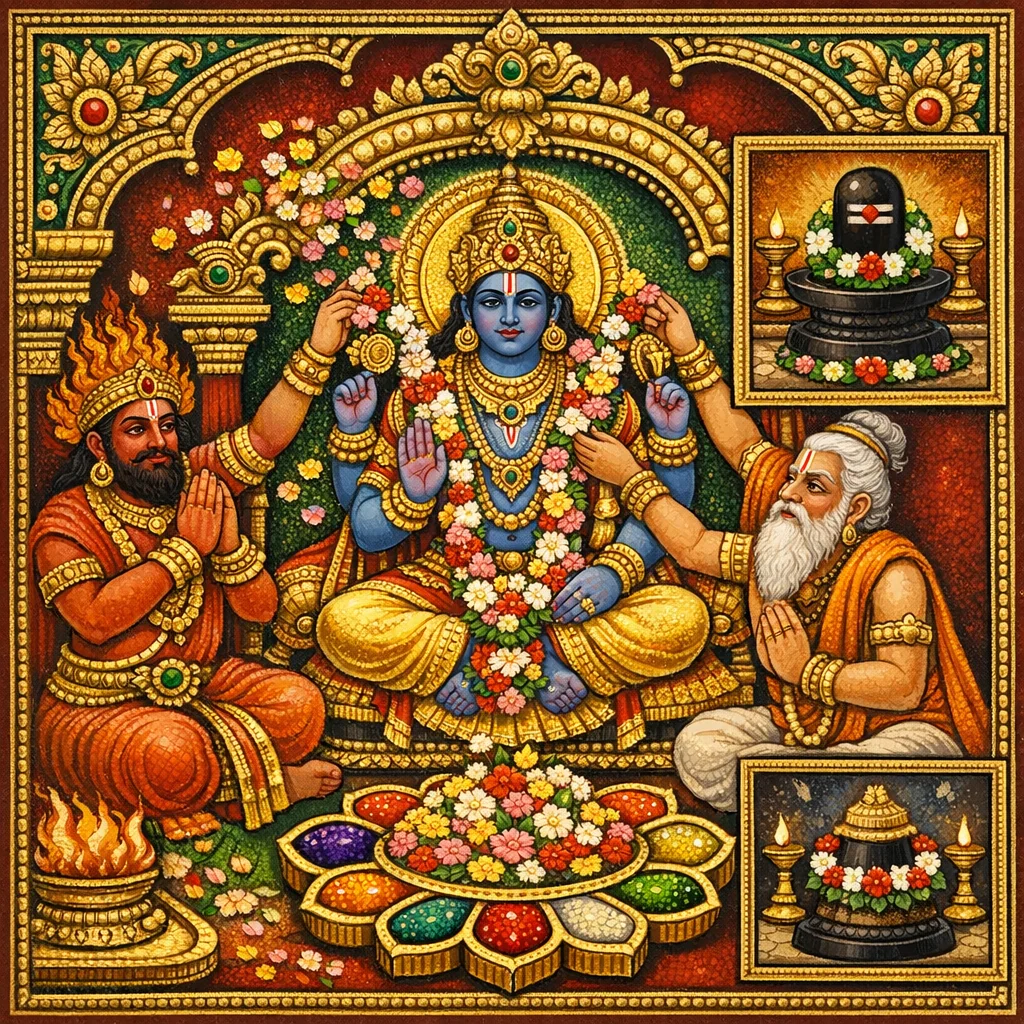
Adhyaya 202
Puṣpādhyāya-kathana (Account of Flowers in Worship)
Tiếp nối phần Vrata-khaṇḍa về thực hành thờ phụng, Thần Agni giảng cho hiền giả Vasiṣṭha rằng các lễ phẩm—đặc biệt là hoa và hương liệu—là phương tiện bhakti có kỷ luật làm đẹp lòng Hari (Viṣṇu) và đem lại quả báo theo bậc: tiêu trừ tội (pāpa-hāni), hưởng phúc lạc thế gian (bhukti), giải thoát (mukti) và được đến Viṣṇuloka. Chương trước hết liệt kê các loại hoa, lá “xứng hợp với chư thiên” (deva-yogya) và gắn nhiều lễ phẩm với kết quả tâm linh cụ thể; đồng thời đặt giới hạn: tránh dùng vật héo úa, gãy nát, khiếm khuyết hay bất tường. Cũng nêu phân biệt theo truyền thống: có hoa thích hợp dâng Viṣṇu, còn Śiva thờ bằng những loài khác, và một số lễ phẩm bị cấm đối với Śiva. Điểm then chốt là sự nội tâm hóa: “hoa” tối thượng chính là các đức hạnh và quán niệm—ahiṃsā, chế ngự căn (indriya-jaya), nhẫn (kṣānti), từ bi (dayā), tĩnh lặng (śama), khổ hạnh (tapaḥ), thiền định (dhyāna), chân thật (satya; một số bản chép thêm śraddhā)—cho thấy nghi lễ bên ngoài phải được hoàn tất bằng phẩm hạnh bên trong. Kết chương đặt các lễ phẩm vào khung pūjā có trật tự (āsana, mūrti-pañcāṅga, aṣṭa-puṣpikā) và chuỗi danh hiệu thần linh (Vāsudeva-ādi cho Viṣṇu; Īśāna-ādi cho Śiva).
Shlokas
No shlokas available for this adhyaya yet.
Frequently Asked Questions
Flowers and fragrant substances (gandha, dhūpa, dīpa, naivedya) are emphasized, with extensive lists of specific blossoms, lotuses, aromatic leaves, and also bilva and śamī leaves; the text also highlights that devotion (bhakti) makes all admissible offerings effective.
They are inner virtues presented as worship-offerings—commonly ahiṃsā, indriya-nigraha/jaya, kṣānti, dayā, śama/śānti, tapaḥ, dhyāna, and satya (with manuscript variation also referencing śraddhā). They are central because they complete external pūjā with ethical and contemplative transformation, aligning ritual with mukti.
One should avoid withered/fallen items, broken or damaged materials, and offerings marked by defects (described as “extra limbs/defects”); additionally, certain flowers are disallowed for Śiva, and inauspicious, non-fragrant items (e.g., associated with kuṣmāṇḍa or nimba in the text’s phrasing) are rejected.
It combines (1) catalog-style taxonomies of flowers and offering-types, (2) ritual-legal admissibility rules, (3) deity-specific liturgical distinctions, and (4) a moral psychology of worship via the inner ‘flowers’—integrating technical detail with the spiritual goals of bhukti and mukti.