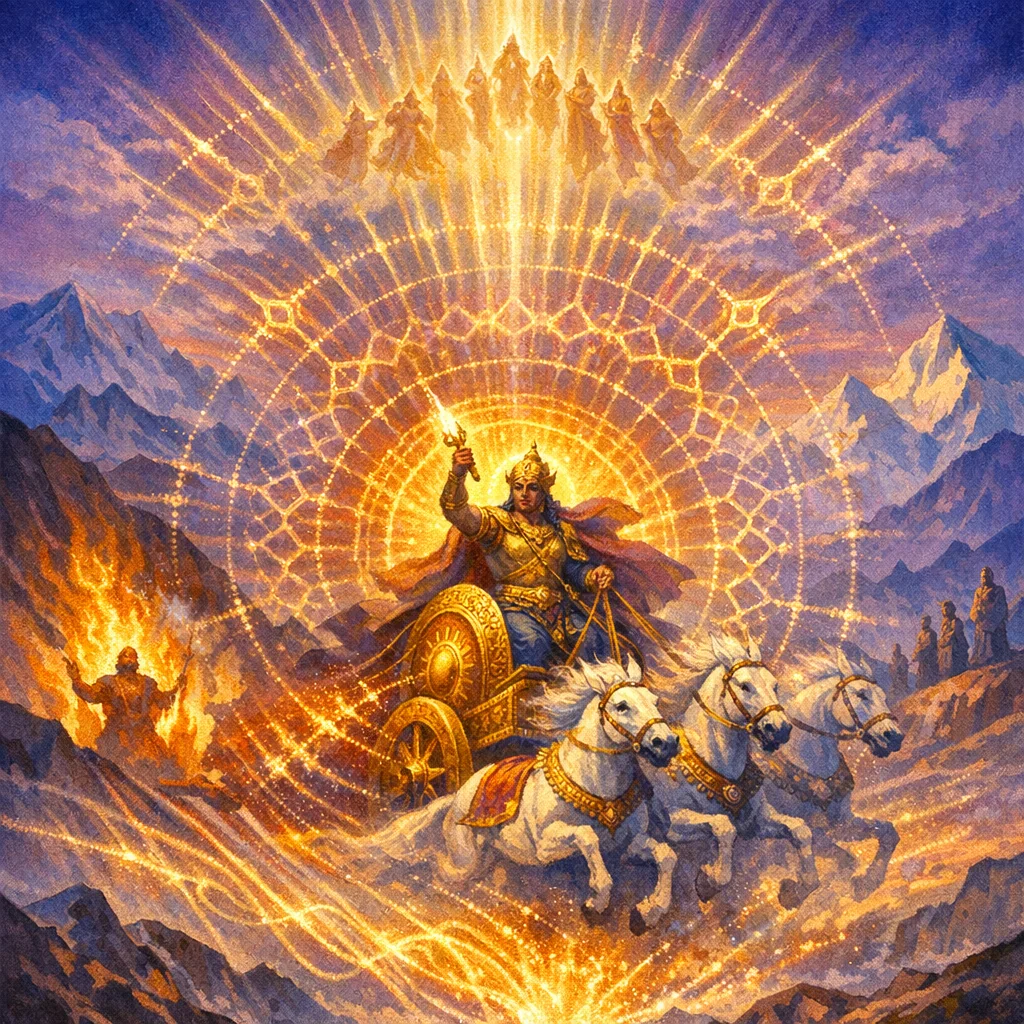
Dashati 3
Aindra victory-invocation: summoning Indra’s power to remove obstacles and secure success for the rite
Indra
Uplifting martial-triumphal and propulsive (victory-shout energy)
R̥ṣi attributions are not supplied; the verses reflect mainstream RV Indra/Agni hymn traditions rather than a clearly marked single family in the given data.
Applicable to Soma-liturgy as Indra-centered stotra for victory and obstacle-removal; also fits Agni-oriented moments that reinforce the fire as ritual support.
Mantras
Mantra 1
अभि गोत्राणि सहसा गाहमानो ऽदयो वीरः शतमन्युरिन्द्रः दुश्च्यवनः पृतनाषाडयुध्यो3 ऽस्माकं सेना अवतु प्र युत्सु
Assailing with force the cow-stalls, plunging (among them), unsubdued, the hero Indra of a hundred energies, hard to be shaken, conqueror in battles, invincible—may he protect our host in the forefront of the fights.
Mantra 2
इन्द्र आसां नेता बृहस्पतिर्दक्षिणा यज्ञः पुर एतु सोमः देवसेनानामभिभञ्जतीनां जयन्तीनां मरुतो यन्त्वग्रम्
Indra is the leader of these; Bṛhaspati (is their guide); let the Dakṣiṇā, the sacrifice, and Soma go in front: of the victorious divine hosts that break through (the foe), let the Maruts go at the head.
Mantra 3
इन्द्रस्य वृष्णो वरुणस्य राज्ञ आदित्यानां मरुतां शर्ध उग्रम् महामनसां भुवनच्यवानां घोषो देवानां जयतामुदस्थात्
The shout of the gods arose—of Indra the mighty, of king Varuṇa, of the Ādityas, of the fierce troop of the Maruts, of the great-minded, the world-shaking, the conquering (deities).
Frequently Asked Questions
It is a victory-oriented invocation: the chant ‘turns’ or brings Indra’s chariot through praise, asking him to remove obstacles and secure aid and favour for the sacrifice.
Because Soma-ritual success depends on Agni as the ever-present ritual fire; recalling Agni’s latent, continual birth in nature reinforces that the rite is cosmically supported and continuously sustained.
It signifies triumphant, conquering resonance—both the mythic victory-cry of the deities and, liturgically, the heightened sonic power of the chant reaching its climactic point.