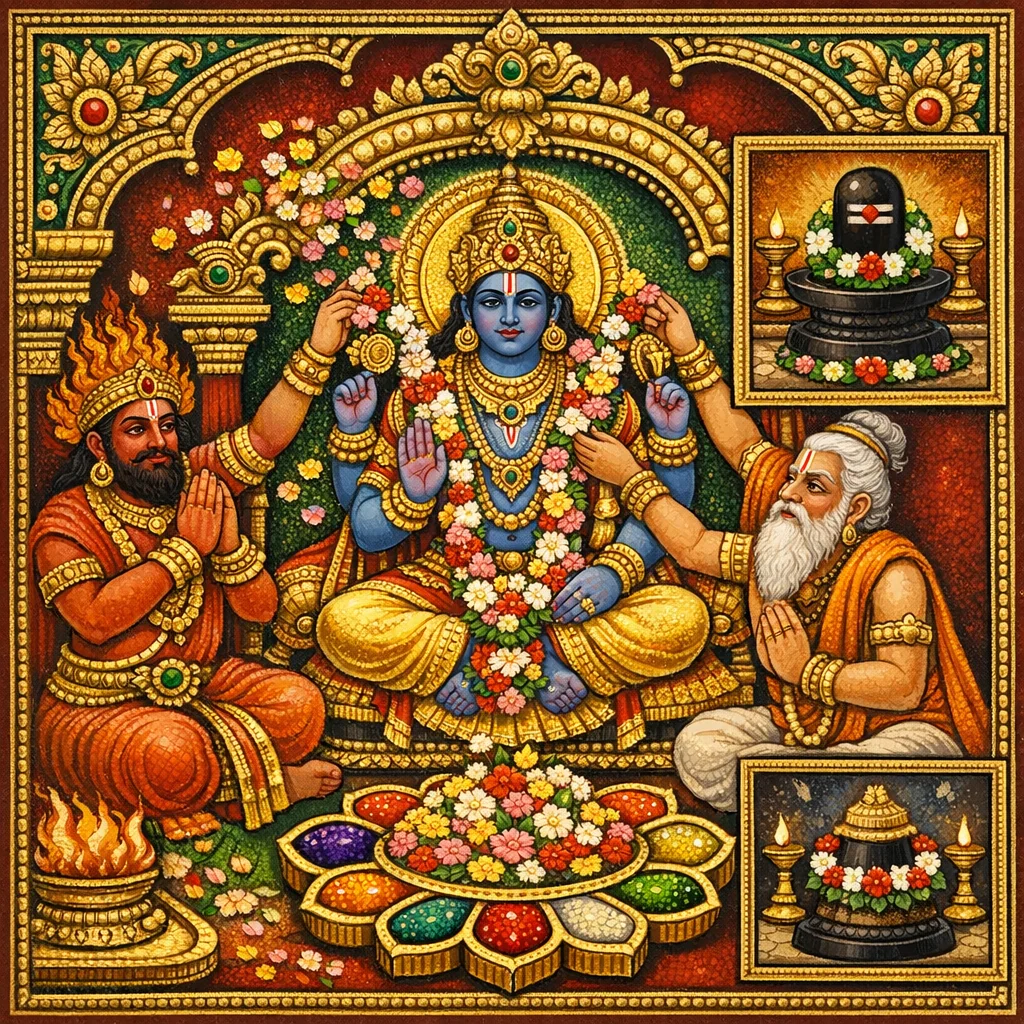
Adhyaya 202
Puṣpādhyāya-kathana (Account of Flowers in Worship)
ورت کھنڈ کی عملی پوجا-ہدایت کو آگے بڑھاتے ہوئے اس ادھیائے میں بھگوان اگنی، رشی وسیشٹھ کو بتاتے ہیں کہ پھول، خوشبودار اشیا، چندن وغیرہ کی نذر منظم بھکتی کے ذرائع ہیں؛ یہ ہری (وشنو) کو راضی کرتی ہے اور پاپ-ہانی، بھوگ، مکتی اور وشنولوک کی رسائی جیسے درجۂ بہ درجۂ پھل دیتی ہے۔ پہلے ‘دیویوگیہ’ پھولوں اور پتّوں کی فہرست اور کئی اُپہاروں کے مخصوص نتائج بیان ہوتے ہیں؛ پھر حد مقرر کی جاتی ہے کہ مرجھائے، ٹوٹے، عیب دار یا نامبارک مواد سے پوجا نہ کی جائے۔ فرقۂ وارانہ امتیاز کے ساتھ کچھ پھول وشنو کے لیے مناسب، شیو کے لیے جدا، اور بعض نذریں شیو پوجا میں ممنوع بتائی گئی ہیں۔ آخر میں اعلیٰ ترین ‘پھول’ باطنی اوصاف—اہنسا، اندریہ-جَے، کشانتی، دَیا، شَم، تپس، دھیان، ستیہ (بعض نسخوں میں شردھا بھی)—قرار دے کر دکھایا گیا ہے کہ بیرونی رسم اندرونی کردار سے مکمل ہوتی ہے۔ اختتام پر آسن، مورتی-پنچانگ، اشٹ-پُشپِکا اور دیوتا ناموں کے क्रम (وشنو کے لیے واسودیو-آدی؛ شیو کے لیے ایشان-آدی) کے اندر اَर्पن کی ترتیب بیان کی گئی ہے۔
Shlokas
No shlokas available for this adhyaya yet.
Frequently Asked Questions
Flowers and fragrant substances (gandha, dhūpa, dīpa, naivedya) are emphasized, with extensive lists of specific blossoms, lotuses, aromatic leaves, and also bilva and śamī leaves; the text also highlights that devotion (bhakti) makes all admissible offerings effective.
They are inner virtues presented as worship-offerings—commonly ahiṃsā, indriya-nigraha/jaya, kṣānti, dayā, śama/śānti, tapaḥ, dhyāna, and satya (with manuscript variation also referencing śraddhā). They are central because they complete external pūjā with ethical and contemplative transformation, aligning ritual with mukti.
One should avoid withered/fallen items, broken or damaged materials, and offerings marked by defects (described as “extra limbs/defects”); additionally, certain flowers are disallowed for Śiva, and inauspicious, non-fragrant items (e.g., associated with kuṣmāṇḍa or nimba in the text’s phrasing) are rejected.
It combines (1) catalog-style taxonomies of flowers and offering-types, (2) ritual-legal admissibility rules, (3) deity-specific liturgical distinctions, and (4) a moral psychology of worship via the inner ‘flowers’—integrating technical detail with the spiritual goals of bhukti and mukti.