Adhyaya 201
Worship of the Nine Vyūhas (Nava-vyūha-arcana)
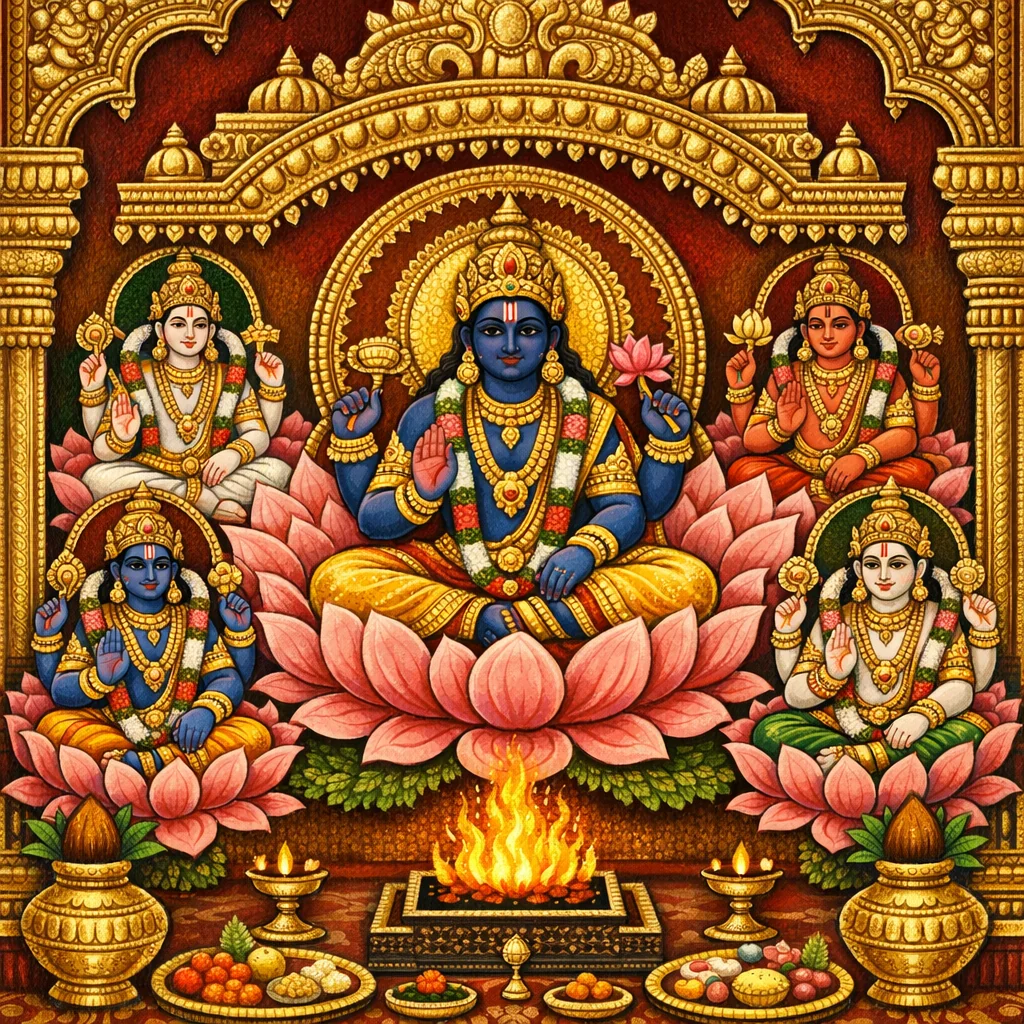
اس باب میں پہلے بیان کردہ دیپدان ورت کے اختتام کا ذکر کرکے فوراً ہری کی منقولہ نو-ویوہ (نَوَویوہ) ارچنا کی فنی عبادتی ترتیب شروع ہوتی ہے۔ اگنی کنول-منڈل کی ساخت بتاتے ہیں—مرکز میں واسودیو، اور سمتوں میں سنکرشن، پردیومن، انِرُدھ اور نارائن؛ ہر ایک کے ساتھ مخصوص بیجاکشر، تَتّو/کرماستان کی تعیین اور جل-ستھاپن وغیرہ شامل ہیں۔ پھر سدبرہما، وشنو، نرسِمھ، بھور-وراہ وغیرہ روپوں کے منتر-بیج وِنیاس، دروازے اور مغربی حصے میں معاون نیاس، نیز گرُڑ اور گدا منتر کی خاص کارروائیاں بیان ہوتی ہیں۔ اس کے بعد بیرونی منڈل سے باطنی سادھنا—دش انگ کرم پوجا، دِکپالوں کے لیے گھٹ ستھاپن، تورن-وِتان کا تصور اور چندرامرت دھیان۔ آخر میں بارہ بیجوں کے نیاس سے ‘دیویہ دےہ’ کی تشکیل، پھول ڈال کر شِشیہ کی شناخت، تطہیر کے لیے ہوم کی تعداد اور دیکشا-دکشنہ مقرر کی گئی ہے—یوں دیکشا کو اس کرم-وِگیان کی سماجی و روحانی مُہر قرار دیا گیا ہے۔
Shlokas
No shlokas available for this adhyaya yet.
Frequently Asked Questions
A lotus-maṇḍala Navavyūha worship beginning with Vāsudeva at the center, followed by directional deity placements with specific bīja-syllables, then internalization through visualization, daśāṅga-krama, and nyāsa culminating in dīkṣā.
After mandala and mantra placements, it shifts to subtle-body contemplation (lunar nectar), self-identification with Viṣṇu, and nyāsa that produces a “divine body,” explicitly valuing heart-worship of Hari (anirmālyā) as the inner completion of the rite.
Disciples are seated to the left, identify a chosen form by blind flower-casting, perform homa with 108 and then 1000 oblations for purification, and receive dīkṣā after payment of prescribed fees honoring the guru.