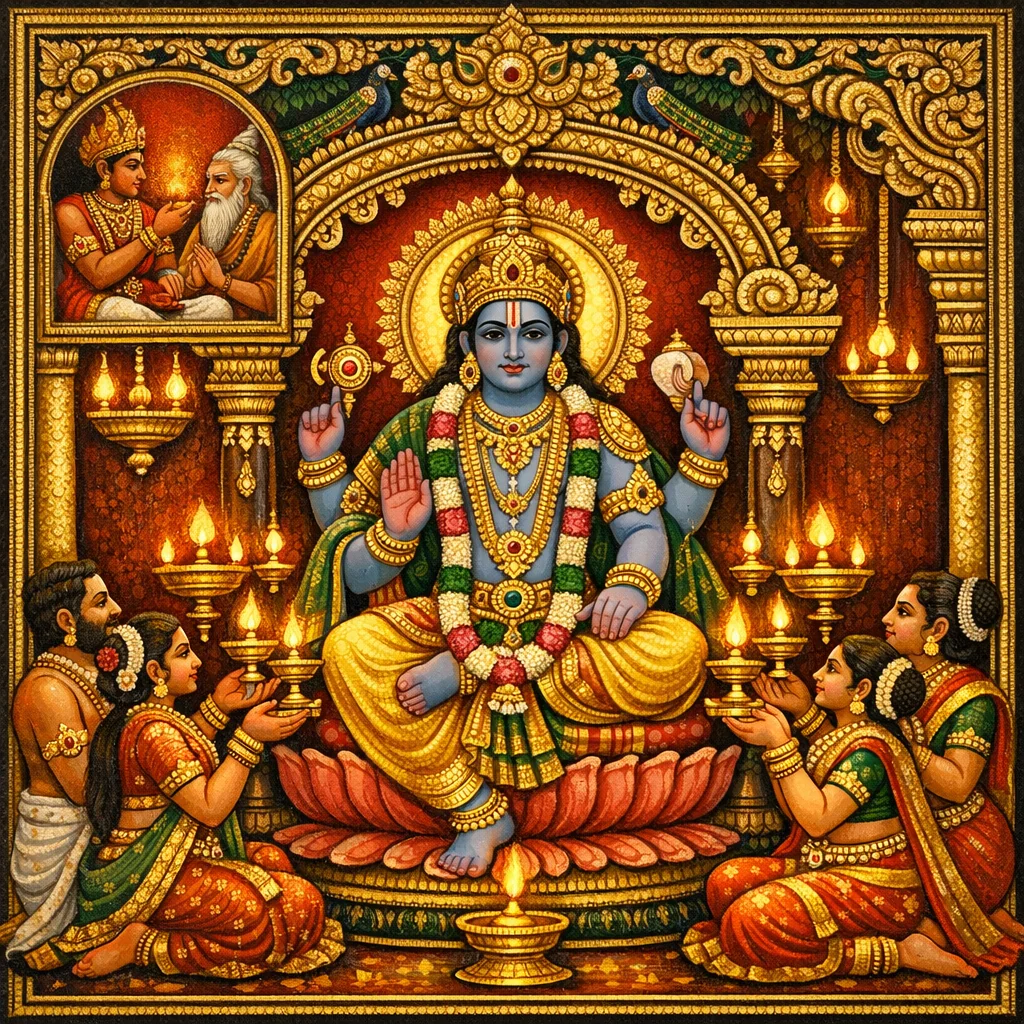
Adhyaya 200
Dīpadāna-vrata (The Vow of Offering Lamps)
بھگوان اگنی دیپدان ورت کو بھکتی اور مکتی دینے والا بتاتے ہیں۔ دیوتا کے مندر یا برہمن کے گھر ایک سال تک چراغ جلانا اور نذر کرنا ہمہ گیر خوشحالی دیتا ہے؛ خاص طور پر چاتُرمَاسی اور کارتِک میں اس کا پُنّیہ بے مثال ہے، وشنو لوک کی رسائی اور جنتی لذتیں عطا کرتا ہے۔ پھر للیتا کی حکایت میں وشنو مندر کے چراغ سے وابستہ ایک غیر ارادی عمل بھی عظیم پھل کا سبب بنا اور وہ شاہی خاندان میں دوبارہ جنم لے کر ازدواجی فراوانی پاتی ہے۔ چراغ چوری کی سخت مذمت ہے—گونگے/کند ذہن جنم اور تاریکی کے نرک میں سقوط کا انجام۔ حواس پرستی، بدخواہش اور خصوصاً زنا/پرستری کی خواہش کو ترک کر کے ہری نام جپ اور سادہ نذر، یعنی دیپدان، کی طرف رہنمائی کی گئی ہے۔ آخر میں تاکید ہے کہ دیپدان تمام ورتوں کے پھل بڑھاتا ہے اور اس تعلیم کو سن کر اپنانے سے بلند گتی نصیب ہوتی ہے۔
Shlokas
No shlokas available for this adhyaya yet.
Frequently Asked Questions
Offer a lamp—ideally sustained as a yearly practice—in a deity’s shrine (especially Viṣṇu’s) or a brāhmaṇa’s home; the act is taught as a high-merit vrata granting prosperity, longevity, clarity of sight, and higher worlds, ultimately supporting liberation.
Kārttika is presented as a peak season of ritual potency: lamp-giving then is said to yield exceptional heavenly results, surpassing ordinary times and amplifying vrata-fruit.
It demonstrates that even an unpremeditated or indirect contribution to a lamp-offering in a Viṣṇu temple can generate powerful puṇya, underscoring the vow’s efficacy and the sacredness of temple-based offerings.
The chapter condemns dīpa-theft with severe karmic outcomes and uses hell imagery to caution against negligence, sense-addiction, and sexual misconduct (adultery), redirecting the practitioner toward dharmic restraint and Hari-nāma.