Adhyaya 196
Chapter 196 — Nakṣatra-vratāni (Observances of the Lunar Mansions)
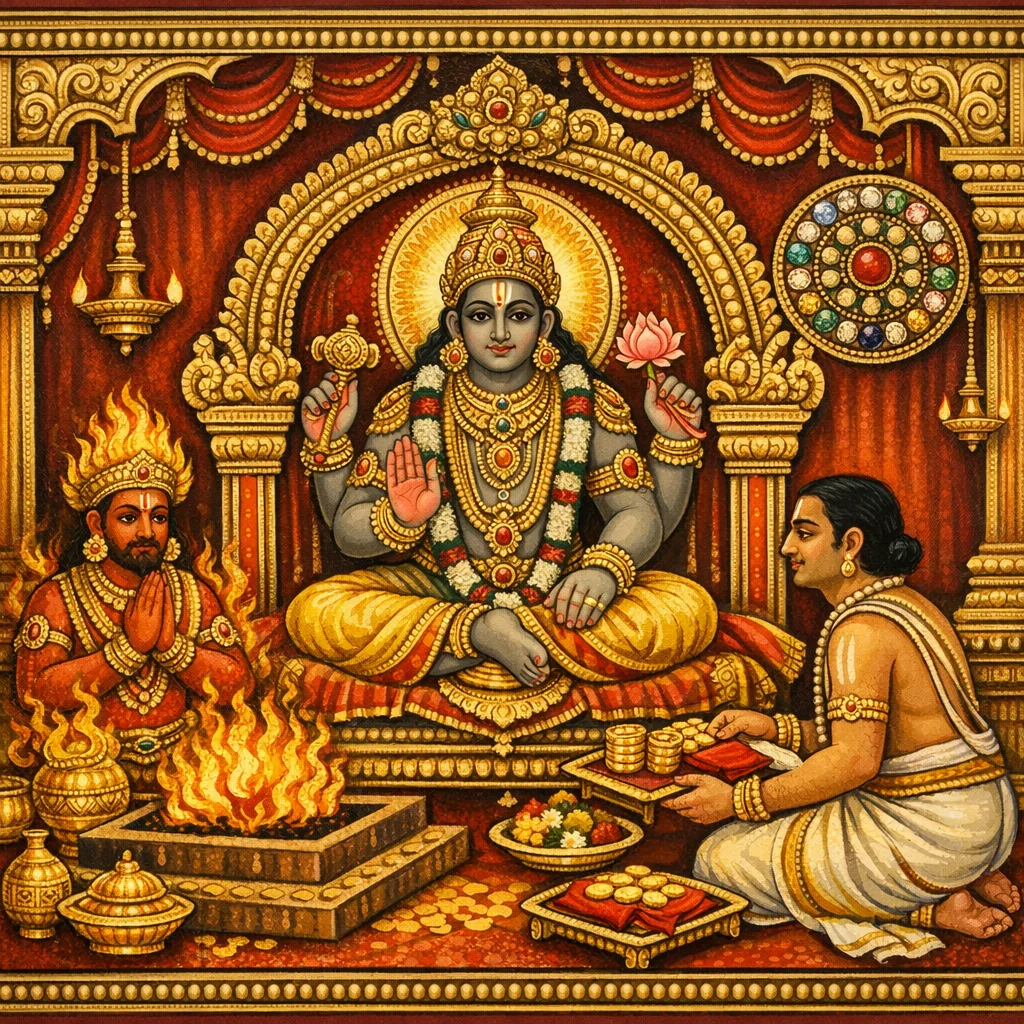
اگنی دیو وِسِشٹھ رِشی کو نکشتر-ورتوں کا نظام سکھاتے ہیں—چَیتر ماہ سے نکشتر-پُرُش کی آواہن کے ساتھ آغاز۔ ہری (وشنو) کی پوجا اس طرح ہوتی ہے کہ نکشتر کائناتی جسم کے اعضا پر بہ ترتیب منطبق کیے جاتے ہیں—پاؤں، پنڈلیاں، گھٹنے، رانیں، گُہْیَ، کمر، پہلو، پیٹ، چھاتیاں، پیٹھ، بازو، انگلیاں، ناخن، گلا، کان، منہ، دانت، ناک، آنکھیں اور پیشانی—یوں فلکی زمانہ مجسم عبادتی ترتیب بن جاتا ہے۔ چِترا/آردرا اور سال کے اختتام پر خاص پوجا؛ گُڑ سے بھرے گھڑے میں سونے کے ہری کی پرتِشٹھا، اور دکشنا کی اشیا نسخہ/پाठ کے اختلاف سے بدلتی ہیں۔ پھر کارتک-کرتِّکا مرکز شَامبھَواینیہ ورت—کیشَو ناموں یا اَچْیُت منتر سے، ماہ بہ ماہ نَیویدْی، پنچگَوْیَ شُدھی، اور وِسَرجن کے بعد نَیویدْی اور نِرمَالیہ کے فرق کی عقیدتی تعریف۔ اختتام پر گناہ-نابودی، پُنّیہ-افزائش، اَکْشَی سمردھی اور نسل کی بقا کی دعائیں؛ سات برس کے انوشتھان سے بھُکتی و مُکتی۔ آگے اَنَنت ورت (مارگشیِرش/مِرگشیِرش)—رات کا کھانا، تیل سے پرہیز، چار مہینوں کا ہوم-شیڈول، بے پایاں ثواب، اور ماندھاتا کی پیدائش کی مثال۔
Shlokas
No shlokas available for this adhyaya yet.
Frequently Asked Questions
It is Viṣṇu envisioned as the cosmic person constituted by the lunar mansions; worship is performed by assigning specific nakṣatras to specific limbs, making the body a ritual map of the nakṣatra cycle.
A substance is termed naivedya only until the moment of visarjana (ritual dismissal); once Jagannātha is dismissed, it immediately becomes nirmālya (the remnant of the offering).
On the Kārttika day when Kṛttikā prevails, the practitioner invokes Acyuta (via Keśava-names or a simple Acyuta salutation), offers prescribed foods across months, maintains purity via pañcagavya, and seeks both enjoyment and liberation.
It is said to generate an endless accumulation of merit, to recur as the ‘gift Ananta’ even in another birth, and to yield imperishable (akṣaya) attainment of desired aims.