Adhyaya 189
Śravaṇa Dvādaśī Vrata (श्रवणद्वादशीव्रतम्)
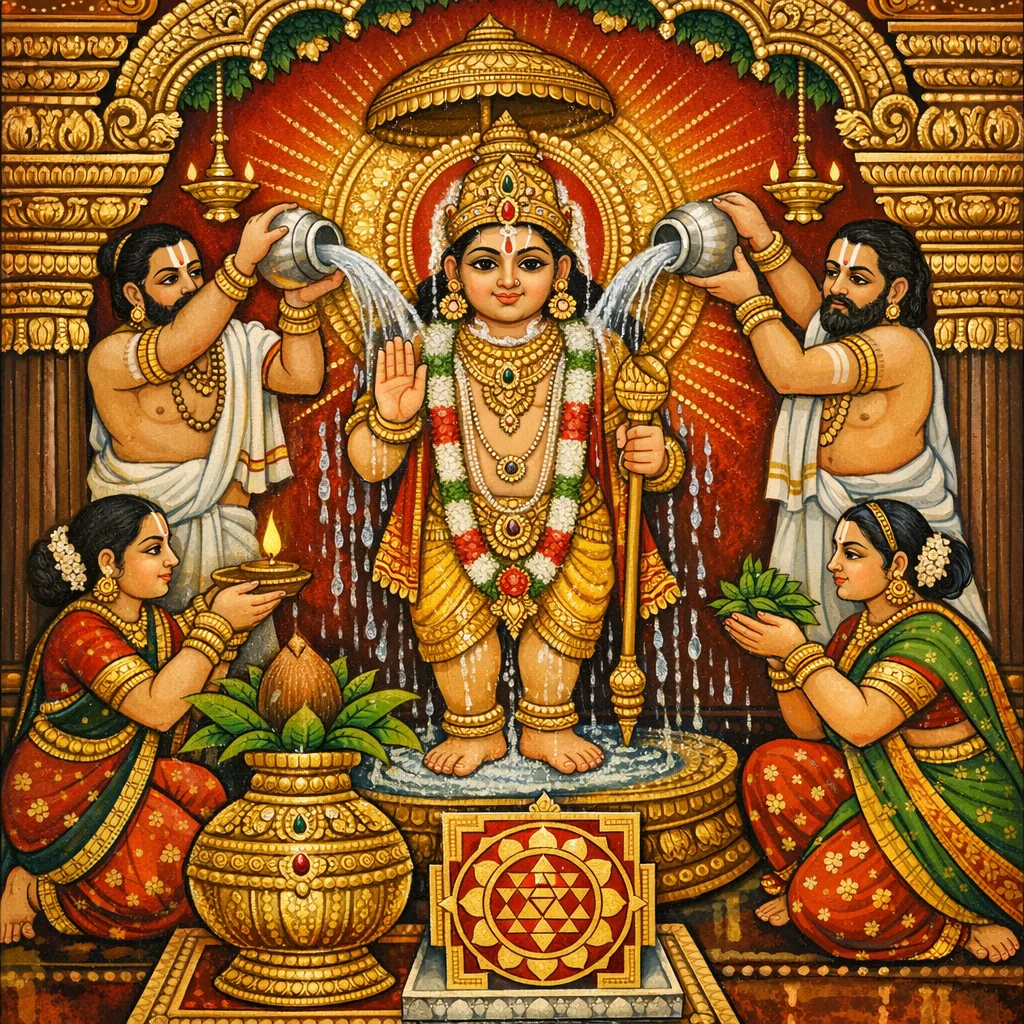
بھگوان اگنی رشی وِسِشٹھ کو بھاد्रپد کے شُکل پکش میں، جب شروَن نکشتر کا سنگم ہو، دْوادشی کے دن ‘شروَن دْوادشی ورت’ کی विधی بتاتے ہیں۔ اُپواس، پَوتر شروَن اور ودوانوں کی ستسنگ کے سبب اسے نہایت مہافل دایَک کہا گیا ہے۔ دْوادشی کو نِراہار رہ کر، تْریودشی کو عام ممانعت کے باوجود پارن کرنے کی ہدایت ہے۔ سُورن یَنتر پر رکھے جل-کلش میں وِشنو-وامن کا آواہن کر کے پوجا، شُدھ جل اور پنچامرت سے ابھیشیک، سفید وستروں کی آورن، چھتر، پادُکا وغیرہ کے ساتھ باقاعدہ پوجا-پروٹوکول اور وِشنو کے اعضا پر منتر-نیاس کا क्रम بیان ہے۔ گھی میں پکا اَنّ نَیویدیہ، دہی-بھات کے کلش کا دان، رات بھر جاگرن، سحر کے وقت سنگم میں اسنان اور گووند (بُدھ شروَن) کو پُشپانجلی پرارتھنا کی جاتی ہے۔ آخر میں دکشنا اور برہمن بھوجن؛ عقیدتاً وامن ہی ارپن میں ویاپت ہو کر اسے گرہن کرتا ہے اور بھُکتی، کیرتی، اولاد، ایشوریہ اور مُکتی عطا کرتا ہے۔
Shlokas
No shlokas available for this adhyaya yet.
Frequently Asked Questions
It is prescribed on Dvādaśī in the bright fortnight of Bhādrapada when it is conjoined with the Śravaṇa nakṣatra; the chapter notes manuscript variants about alternative month/nakṣatra readings, but the main instruction emphasizes Bhādrapada-śukla Dvādaśī with Śravaṇa.
The practitioner remains without food on Dvādaśī (nirāhāra) and performs pāraṇa on Trayodaśī, stated as to be done even if it is otherwise considered prohibited—highlighting the vrata’s specific injunction.
Invocation into a water-pot placed on a golden yantra, abhiṣeka with pure water and pañcāmṛta, arghya, fragrant homa with the Vāmana mantra, naivedya cooked in ghee, gifting pots of curd-rice, and concluding with dakṣiṇā and feeding brāhmaṇas.
It explicitly states results such as enjoyment, fame, progeny, and sovereignty (bhukti-oriented aims) while also promising liberation (mukti), presenting disciplined ritual action as a bridge between worldly order and spiritual release.