Adhyaya 126
Chapter 126 — Nakṣatra-nirṇaya (Determination of the Lunar Mansions) and Rāhu-Based Victory/Defeat Omens
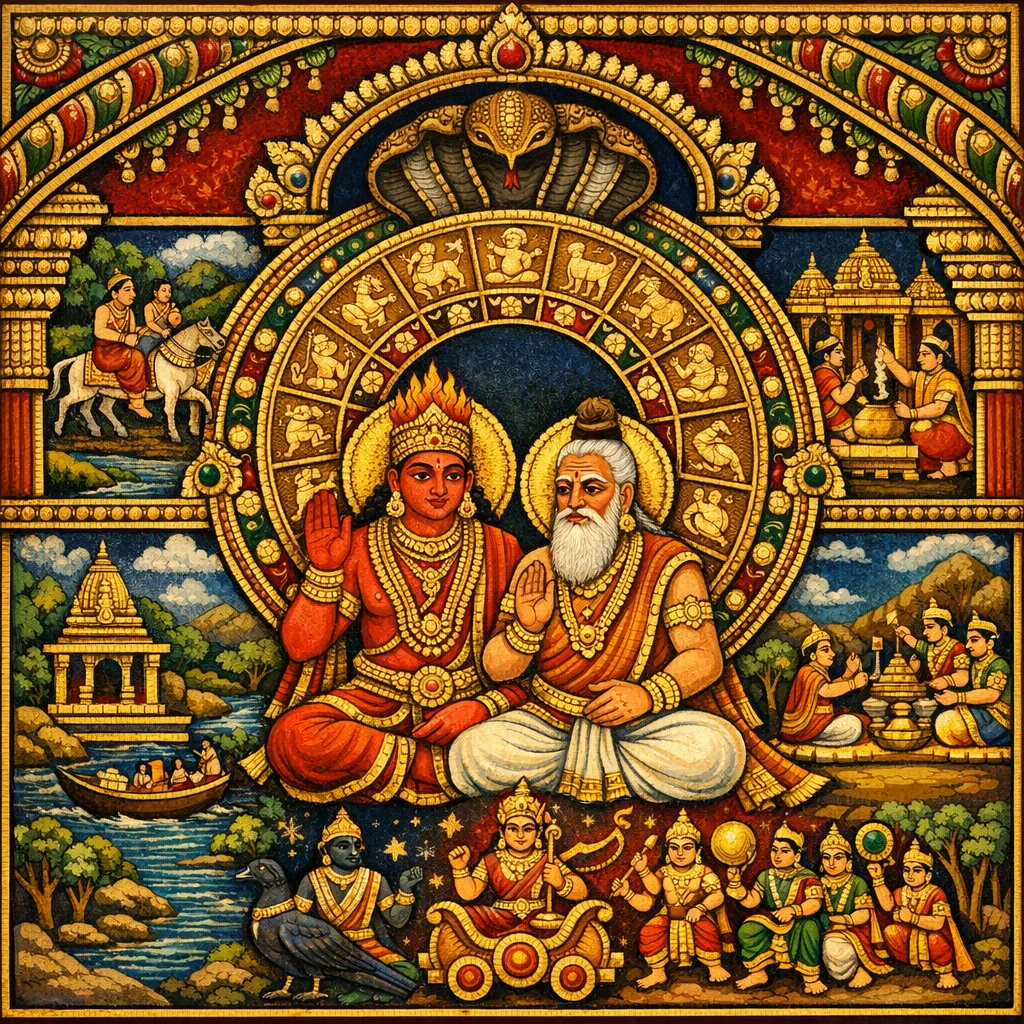
ایشور سورج کے موجودہ نکشتر کو جسم کے حصّوں (سر، چہرہ، آنکھیں، دل، اعضا، کمر، دُم) سے جوڑ کر “نکشتر-دیہ-گولک” کے نقشے کے ذریعے سعد و نحس نتائج کی پہچان بتاتے ہیں۔ پھر یُدھجَیَارṇوَ کی طرز پر راہو کا سانپ کی پھن والی شکل بیان ہوتی ہے—۲۸ نقطے لکھ کر راہو کے مقیم نکشتر سے آغاز کر کے ۲۷ نکشتر ترتیب دیے جاتے ہیں؛ اس میں خاص طور پر ساتویں سے متعلق جگہیں جنگ میں موت/نقص کے اشارے، اور دوسری جگہیں عزت، فتح اور شہرت دینے والی کہی گئی ہیں۔ یام کے نصف حصّوں کے سیّارہ-حاکم گنوائے گئے ہیں اور تدبیر بتائی گئی ہے کہ زحل، سورج اور راہو کو “پیچھے” رکھنا جنگ، سفر بلکہ جوئے میں بھی کامیابی دیتا ہے۔ آگے نکشتر ثابت، تیز، نرم، سخت اور پِتْر/نَیرِرت وغیرہ اقسام میں بانٹ کر سفر، پرتیِشٹھا، تعمیر، کھدائی اور شاہی اعمال کے لیے مُہورت چننے کی ہدایت ہے۔ آخر میں تِتھی “جلنے” کے قواعد، تِتھی–وار–نکشتر کے تری پُشکر یوگ سے نتیجوں کی افزائش، سفر سے واپسی کی علامتیں، اور گنڈانت وغیرہ خطرناک جوڑوں میں نیک اعمال اور ولادت تک کے لیے شدید خطرے کی تنبیہ کی گئی ہے۔
Shlokas
No shlokas available for this adhyaya yet.
Frequently Asked Questions
It maps the Sun’s current nakṣatra onto a schematic body (head/face/eyes/heart/limbs/waist/tail) and interprets outcomes—e.g., head indicates sovereignty, heart indicates wealth, certain placements indicate theft or death.
A serpent-hood (phani) diagram is formed by dots and lines; the nakṣatra occupied by Rāhu is placed on the hood and the remaining nakṣatras are arranged in order, after which specific positional relations (notably seventh-related) are read as victory, defect, or fatality indicators.
Tripuṣkara is defined through specific sets of tithis, weekdays, and nakṣatras; when present, results—gain, loss, victory, increase, or outcomes regarding birth—are said to become amplified (notably threefold).
The text cautions against the Revatī–Aśvinī and Āśleṣā–Maghā junction zones with specified avoidance measures (nāḍī/ghaṭikā/yāma), and names the Jyeṣṭhā–Mūla junction as a fierce ‘yāmaka’.