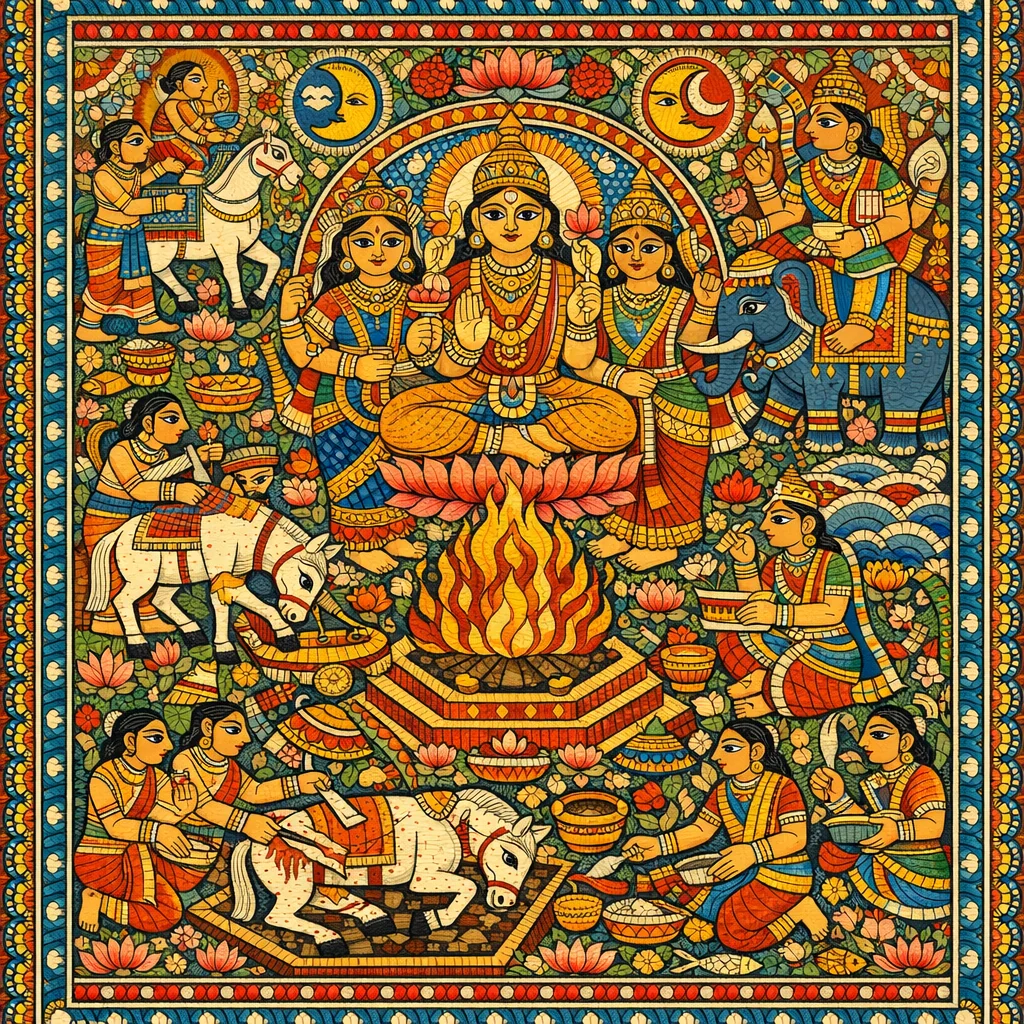
Adhyaya 25
Ashvamedha conclusion and Purushamedha.
Mantras
Mantra 1
शादं॑ द॒द्भिरव॑कां दन्तमूलै॒र्मृदं॒ बर्स्वै॑स्ते॒गान्दᳪष्ट्रा॑भ्या॒ᳪ सर॑स्वत्या अग्रजि॒ह्वं जि॒ह्वाया॑ उत्सा॒दम॑वक्र॒न्देन॒ तालु॒ वाज॒ᳪ हनु॑भ्याम॒प आ॒स्ये॒न॒ वृष॑णमा॒ण्डाभ्या॑मादि॒त्याँ श्मश्रु॑भि॒: पन्था॑नं भ्रू॒भ्यां द्यावा॑पृथि॒वी वर्तो॑भ्यां वि॒द्युतं॑ क॒नीन॑काभ्याᳪ शु॒क्लाय॒ स्वाहा॑ कृ॒ष्णाय॒ स्वाहा॒ पार्या॑णि॒ पक्ष्मा॑ण्यवा॒र्या॒ इ॒क्षवो॑ऽवा॒र्या॒णि॒ पक्ष्मा॑णि॒ पार्या॑ इ॒क्षव॑:
With the teeth (I assign) the Śāda; with the tooth-roots the Avakā; with the tusks the clay and the sharp points; with the tongue’s tip (I assign) Sarasvatī; with the tongue the raised part; with the palate the vigour; with the jaws the waters; with the mouth the virile power; with the testicles the Ādityas; with the beard the path; with the eyebrows Heaven and Earth; with the eye-sockets lightning; with the pupils—(I assign) ‘To the White, Svāhā! to the Black, Svāhā!’ The outer (are) the eyelashes, the inner the canes; the inner the eyelashes, the outer the canes.
Mantra 2
वातं॑ प्रा॒णेना॑पा॒नेन॒ नासि॑के उपया॒ममध॑रे॒णौष्ठे॑न॒ सदुत्त॑रेण प्रका॒शेनान्त॑रमनूका॒शेन॒ बाह्यं॑ निवे॒ष्यं मू॒र्ध्ना स्त॑नयि॒त्नुं नि॑र्बा॒धेना॒शनिं॑ म॒स्तिष्के॑ण वि॒द्युतं॑ क॒नीन॑काभ्यां॒ कर्णा॑भ्या॒ᳪ श्रोत्रँ॒ श्रोत्रा॑भ्यां॒ कर्णौ॑ तेद॒नीम॑धरक॒ण्ठेना॒पः शु॑ष्कक॒ण्ठेन॑ चि॒त्तं मन्या॑भि॒रदि॑तिᳪ शी॒र्ष्णा निरृ॑तिं॒ निर्ज॑र्जल्येन शी॒र्ष्णा सं॑क्रोशैः प्रा॒णान् रेष्माण॑ᳪ स्तु॒पेन॑
The Wind with the in-breath; with the out-breath (I place) the nostrils; with the lower lip the taking-in; with the upper (I place) Being; with light the inner; with the after-shine the outer; with the crown the thunder; with the crushing (force) the thunderbolt; with the brain the lightning; with the pupils (I place) the ears; with the organs of hearing the hearing; with the ears—these now; with the lower throat the waters; with the dry throat the mind; with the neck-sinews Aditi; with the head Nirṛti; with the head’s wasting (I place) the cry; with the breaths the reins; with the tuft the vital airs.
Mantra 3
म॒शका॒न् केशै॒रिन्द्र॒ᳪ स्वप॑सा॒ वहे॑न॒ बृह॒स्पति॑ᳪ शकुनिसा॒देन॑ कू॒र्माञ्छ॒फैरा॒क्रम॑णᳪ स्थू॒राभ्या॑मृ॒क्षला॑भिः क॒पिञ्ज॑लाञ्ज॒वं जङ्घा॑भ्या॒मध्वा॑नं बा॒हुभ्यां॒ जाम्बी॑ले॒नार॑ण्यम॒ग्निम॑ति॒रुग्भ्यां॑ पू॒षणं॑ दो॒र्भ्याम॒श्विना॒वᳪसा॑भ्याᳪ रु॒द्रᳪ रोरा॑भ्याम्
With the hairs (he assigns) the gnats; with his own might (he assigns) Indra; with the bearer, Bṛhaspati; with the bird’s perching, the tortoises; with the hoofs, the stride; with the two thick (parts), the gaining of the bear; with the shanks, the partridges—speed; with the arms, the road; with the jāmbīla, the wilderness; with the hymns, Agni; with the two fore-arms, Pūṣan; with the two shoulders, the Aśvins; with the two roarings, Rudra.
Mantra 4
अ॒ग्नेः प॑क्ष॒तिर्वा॒योर्निप॑क्षति॒रिन्द्र॑स्य तृ॒तीया॒ सोम॑स्य चतु॒र्थ्यदि॑त्यै पञ्च॒मीन्द्रा॒ण्यै ष॒ष्ठी म॒रुता॑ᳪ सप्त॒मी बृह॒स्पते॑रष्ट॒म्य॒र्य॒म्णो न॑व॒मी धा॒तुर्द॑श॒मीन्द्र॑स्यैकाद॒शी वरु॑णस्य द्वाद॒शी य॒मस्य॑ त्रयोद॒शी
Agni’s is the wing; Vāyu’s the under-wing; Indra’s the third; Soma’s the fourth; Aditi’s the fifth; Indrāṇī’s the sixth; the Maruts’ the seventh; Bṛhaspati’s the eighth; Aryaman’s the ninth; Dhātṛ’s the tenth; Indra’s the eleventh; Varuṇa’s the twelfth; Yama’s the thirteenth.
Mantra 5
इ॒न्द्रा॒ग्न्योः प॑क्ष॒ति: सर॑स्वत्यै॒ निप॑क्षतिर्मि॒त्रस्य॑ तृ॒तीया॒पां च॑तु॒र्थी निरृ॑त्यै पञ्च॒म्यग्नीषोम॑योः ष॒ष्ठी स॒र्पाणा॑ᳪ सप्त॒मी विष्णो॑रष्ट॒मी पू॒ष्णो न॑व॒मी त्वष्टु॑र्दश॒मीन्द्र॑स्यैकाद॒शी वरु॑णस्य द्वाद॒शी य॒म्यै त्र॑योद॒शी द्यावा॑पृथि॒व्योर्दक्षि॑णं पा॒र्श्वं विश्वे॑षां दे॒वाना॒मुत्त॑रम्
Indra-and-Agni’s is the wing; Sarasvatī’s the under-wing; Mitra’s the third; the Waters’ the fourth; Nirṛti’s the fifth; Agni-and-Soma’s the sixth; the Serpents’ the seventh; Viṣṇu’s the eighth; Pūṣan’s the ninth; Tvaṣṭṛ’s the tenth; Indra’s the eleventh; Varuṇa’s the twelfth; Yamī’s the thirteenth; Heaven-and-Earth are the right flank; of all the Gods is the upper (or northern) side.
Mantra 6
म॒रुता॑ᳪ स्कन्धा॒ विश्वे॑षां दे॒वानां॑ प्रथ॒मा कीक॑सा रु॒द्राणां॑ द्वि॒तीया॑ऽऽदि॒त्यानां॑ तृ॒तीया॑ वा॒योः पुच्छ॑म॒ग्नीषोम॑यो॒र्भास॑दौ॒ क्रुञ्चौ॒ श्रोणि॑भ्या॒मिन्द्रा॒बृह॒स्पती॑ ऊ॒रुभ्यां॑ मि॒त्रावरु॑णाव॒ल्गाभ्या॑मा॒क्रम॑णᳪ स्थू॒राभ्यां॒ बलं॒ कुष्ठा॑भ्याम्
The Maruts are the shoulders; of all the Gods is the first vertebral frame; of the Rudras the second; of the Ādityas the third; Vāyu is the tail; Agni-and-Soma are the two shining ones, the two cranes; with the hips (are) Indra-and-Bṛhaspati; with the thighs, Mitra-and-Varuṇa; with the two thick (parts) is the stride; with the two knees is strength.
Mantra 7
पू॒षणं॑ वनि॒ष्ठुना॑ऽन्धा॒हीन्त्स्थू॑लगु॒दया॑ स॒र्पान्गुदा॑भिर्वि॒ह्रुत॑ आ॒न्त्रैर॒पो व॒स्तिना॒ वृष॑णमा॒ण्डाभ्यां॒ वाजि॑न॒ᳪ शेपे॑न प्र॒जाᳪ रेत॑सा॒ चाषा॑न् पि॒त्तेन॑ प्रद॒रान् पा॒युना॑ कू॒श्माञ्छ॑कपिण्डैः
With the bladder (he assigns) Pūṣan; with the thick-buttocked (part) the blind serpents; with the buttocks the serpents; with the intestines the writhing (creatures); with the bladder the Waters; with the two testicles the virile one; with the penis the steed; with the seed progeny; with the bile the cāṣa-birds; with the anus the fissures; with dung-balls the gourds.
Mantra 8
इन्द्र॑स्य क्री॒डोऽदि॑त्यै पाज॒स्यं॒ दि॒शां ज॒त्रवोऽदि॑त्यै भ॒सज्जी॒मूता॑न् हृदयौप॒शेना॒न्तरि॑क्षं पुरी॒तता॒ नभ॑ उद॒र्ये॒ण चक्रवा॒कौ मत॑स्नाभ्यां॒ दिवं॑ वृ॒क्काभ्यां॑ गि॒रीन् प्ला॒शिभि॒रुप॑लान् प्ली॒ह्ना व॒ल्मीका॑न् क्लो॒मभि॑र्ग्लौ॒भिर्गुल्मा॑न् हि॒राभि॒: स्रव॑न्तीर्ह्र॒दान् कु॒क्षिभ्या॑ᳪ समु॒द्रमु॒दरे॑ण वैश्वान॒रं भस्म॑ना
Indra’s is the sportive play; for Aditi is the vigour: for Aditi are the collar-bones of the quarters. The heart’s covering is the rain-clouds; the peritoneal membrane is the mid-air; the navel is the sky; by the belly is the pair of ruddy geese; by the kidneys is the heaven; by the ribs are the mountains; by the sinews are the rocks; by the spleen are the ant-hills; by the lungs and lobes are the thickets; by the veins are the flowing pools; by the flanks is the ocean; by the belly is Vaiśvānara; by the ash (is he established).
Mantra 9
विधृ॑तिं॒ नाभ्या॑ धृ॒तᳪ रसे॑ना॒पो यू॒ष्णा मरी॑चीर्वि॒प्रुड्भि॑र्नीहा॒रमू॒ष्मणा॑ शी॒नं वस॑या॒ प्रुष्वा॒ अश्रु॑भिर्ह्रा॒दुनी॑र्दू॒षीका॑भिर॒स्ना रक्षा॑ᳪसि चि॒त्राण्यङ्गै॒र्नक्ष॑त्राणि रू॒पेण॑ पृथि॒वीं त्व॒चा जु॑म्ब॒काय॒ स्वाहा॑
The sustaining frame by the navel; the firm-set by the sap; the waters by the broth; the rays by the droplets; the mist by the heat; the fat by the suet; the dew by the tears; the pools by the exudations; the demons by the sinew; the bright (forms) by the limbs; the stars by the appearance; the earth by the skin—to Jumbaka, hail!
Mantra 10
हि॒र॒ण्य॒ग॒र्भः सम॑वर्त॒ताग्रे॑ भू॒तस्य॑ जा॒तः पति॒रेक॑ आसीत् । स दा॑धार पृथि॒वीं द्यामु॒तेमां कस्मै॑ दे॒वाय॑ ह॒विषा॑ विधेम
Hiraṇyagarbha arose in the beginning; born as the sole lord of what hath come to be. He upheld this earth and yonder heaven: to what god shall we offer worship with oblation?
Mantra 11
यः प्रा॑ण॒तो नि॑मिष॒तो म॑हित्वैक॒ इद्राजा॒ जग॑तो ब॒भूव॑ । य ईशे॑ अ॒स्य द्वि॒पद॒श्चतु॑ष्पद॒: कस्मै॑ दे॒वाय॑ ह॒विषा॑ विधेम
He who by his greatness became the sole king of all that breathes and blinks; he who rules over this two-footed and four-footed world—to what god shall we offer worship with oblation?
Mantra 12
यस्म्ये॒मे हि॒मव॑न्तो महि॒त्वा यस्य॑ समु॒द्रᳪ र॒सया॑ स॒हाहुः । यस्ये॒माः प्र॒दिशो॒ यस्य॑ बा॒हू कस्मै॑ दे॒वाय॑ ह॒विषा॑ विधेम
Whose greatness these snowy mountains are; whose ocean, with its sap, they call; whose are these regions, whose the arms (that compass them)—to what god shall we offer worship with oblation?
Mantra 13
य आ॑त्म॒दा ब॑ल॒दा यस्य॒ विश्व॑ उ॒पास॑ते प्र॒शिषं॒ यस्य॑ दे॒वाः । यस्य॑ छा॒यामृतं॒ यस्य॑ मृ॒त्युः कस्मै॑ दे॒वाय॑ ह॒विषा॑ विधेम
He who bestoweth life, he who bestoweth strength; whose ordinance all beings revere, whose ordinance the Gods obey; whose shadow is immortality, whose shadow is death—to what God shall we offer worship with oblation?
Mantra 14
आ नो॑ भ॒द्राः क्रत॑वो यन्तु वि॒श्वतोऽद॑ब्धासो॒ अप॑रीतास उ॒द्भिद॑: । दे॒वा नो॒ यथा॒ सद॒मिद् वृ॒धे अस॒न्नप्रा॑युवो रक्षि॒तारो॑ दि॒वे – दि॑वे
May auspicious powers of purpose come unto us from every side—unbeguiled, unthwarted, breaking through! May the Gods be with us, that day by day, ever for our increase, they be unremiss, guardians unto us.
Mantra 15
दे॒वानां॑ भ॒द्रा सु॑म॒तिरृ॑जूय॒तां दे॒वाना॑ᳪ रा॒तिर॒भि नो॒ निव॑र्तताम् । दे॒वाना॑ᳪ स॒ख्यमुप॑सेदिमा व॒यं दे॒वा न॒ आयु॒: प्रति॑रन्तु जी॒वसे॑
May the Gods’ gracious favour proceed straight; may the Gods’ bounty turn hither unto us. We have approached the Gods’ friendship; may the Gods secure for us life, for living.
Mantra 16
तान्पूर्व॑या नि॒विदा॑ हूमहे व॒यं भगं॑ मि॒त्रमदि॑तिं॒ दक्ष॑म॒स्रिध॑म् । अ॒र्य॒मणं॒ वरु॑ण॒ᳪ सोम॑म॒श्विना॒ सर॑स्वती नः सु॒भगा॒ मय॑स्करत्
With the ancient invitation we call them hither—we call Bhaga, Mitra, Aditi, Dakṣa the unfailing; Aryaman, Varuṇa, Soma, the Aśvins. May Sarasvatī, the bounteous, make for us welfare.
Mantra 17
तन्नो॒ वातो॑ मयो॒भु वा॑तु भेष॒जं तन्मा॒ता पृ॑थि॒वी तत्पि॒ता द्यौ॑: । तद् ग्रावा॑णः सोम॒सुतो॑ मयो॒भुव॒स्तद॑श्विना शृणुतं धिष्ण्या यु॒वम्
May that Wind, bringing welfare, blow for us as healing; may that Mother Earth, that Father Sky (be so). May those pressing-stones, may Soma when pressed, bringing welfare (be so). Hear this, O Aśvins, ye steadfast ones, ye twain!
Mantra 18
तमीशा॑नं॒ जग॑तस्त॒स्थुष॒स्पतिं॑ धियञ्जि॒न्वमव॑से हूमहे व॒यम् । पू॒षा नो॒ यथा॒ वेद॑सा॒मस॑द् वृ॒धे र॑क्षि॒ता पा॒युरद॑ब्धः स्व॒स्तये॑
Him, the sovereign Lord of all that moveth and that standeth still, the quickener of devotion, for help we invoke, even we. May Pūṣan, that by knowledge he may sit beside us for our increase, be our guardian, our warder, unbeguiled, for our welfare.
Mantra 19
स्व॒स्ति न॒ इन्द्रो॑ वृ॒द्धश्र॑वाः स्व॒स्ति न॑: पू॒षा वि॒श्ववे॑दाः । स्व॒स्ति न॒स्तार्क्ष्यो॒ अरि॑ष्टनेमिः स्व॒स्ति नो॒ बृह॒स्पति॑र्दधातु
May Indra of waxing renown grant us welfare; may Pūṣan, the all-knowing, grant us welfare. May Tārkṣya of uninjured felly grant us welfare; may Bṛhaspati bestow welfare upon us.
Mantra 20
पृष॑दश्वा म॒रुत॒: पृश्नि॑मातरः शुभं॒यावा॑नो वि॒दथे॑षु॒ जग्म॑यः । अ॒ग्नि॒जि॒ह्वा मन॑व॒: सूर॑चक्षसो॒ विश्वे॑ नो दे॒वा अव॒साग॑मन्नि॒ह
The Maruts with dappled steeds, the sons of Pṛśni, fair-going, wont to come to the rites; the Agni-tongued Manus, the sun-eyed—may all the Gods come hither unto us with help.
Mantra 21
भ॒द्रं कर्णे॑भिः शृणुयाम देवा भ॒द्रं प॑श्येमा॒क्षभि॑र्यजत्राः । स्थि॒रैरङ्गै॑स्तुष्टु॒वाᳪस॑स्त॒नूभि॒र्व्य॒शेमहि दे॒वहि॑तं॒ यदायु॑:
May we hear with our ears what is auspicious, O Gods; may we see with our eyes what is auspicious, O ye adorable. With firm limbs, praising with our bodies, may we attain that life which is ordained by the Gods.
Mantra 22
श॒तमिन्नु श॒रदो॒ अन्ति॑ देवा॒ यत्रा॑ नश्च॒क्रा ज॒रसं॑ त॒नूना॑म् । पु॒त्रासो॒ यत्र॑ पि॒तरो॒ भव॑न्ति॒ मा नो॑ म॒ध्या री॑रिष॒तायु॒र्गन्तो॑:
A hundred years, indeed, are nigh unto us, O Gods—wherein we have made old age for our bodies; where sons become fathers: may no injury befall us in the mid-course of life’s journey.
Mantra 23
अदि॑तिर्द्यौ॒रदि॑तिर॒न्तरि॑क्ष॒मदि॑तिर्मा॒ता स पि॒ता स पु॒त्रः । विश्वे॑ दे॒वा अदि॑ति॒: पञ्च॒ जना॒ अदि॑तिर्जा॒तमदि॑ति॒र्जनि॑त्वम्
Aditi is the Heaven; Aditi is the Mid-air; Aditi is the Mother—she is the Father, she is the Son. Aditi is all the Gods; Aditi is the five tribes of men; Aditi is what hath been born, and Aditi is what is to be born.
Mantra 24
मा नो॑ मि॒त्रो वरु॑णो अर्य॒मायुरिन्द्र॑ ऋभु॒क्षा म॒रुत॒: परि॑ ख्यन् । यद्वा॒जिनो॑ दे॒वजा॑तस्य॒ सप्ते॑: प्रव॒क्ष्यामो॑ वि॒दथे॑ वी॒र्या॒णि
Let not Mitra, Varuṇa, Aryaman, nor Life, nor Indra, nor the Rbhukṣans, nor the Maruts, mark us round about with blame, when in the rite we shall proclaim the mighty deeds of the prize-winning, god-born team.
Mantra 25
यन्नि॒र्णिजा॒ रेक्ण॑सा॒ प्रावृ॑तस्य रा॒तिं गृ॑भी॒तां मु॑ख॒तो नय॑न्ति । सुप्रा॑ङ॒जो मेम्य॑द्वि॒श्वरू॑प इन्द्रापू॒ष्णोः प्रि॒यमप्ये॑ति॒ पाथ॑:
When, with raiment and with treasure, they lead forth from the front the gift of him that is well covered; then the well-adorned, all-formed one, moving onward, attaineth the dear path of Indra and Pūṣan.
Mantra 26
ए॒ष छाग॑: पु॒रो अश्वे॑न वा॒जिना॑ पू॒ष्णो भा॒गो नी॑यते वि॒श्वदे॑व्यः । अ॒भि॒प्रियं॒ यत्पु॑रो॒डाश॒मर्व॑ता॒ त्वष्टेदे॑नᳪ सौश्रव॒साय॑ जिन्वति
This he-goat, Pūṣan’s portion, is led in front with the prize-winning steed, for the All-gods. When, with the courser, he quickeneth the dear Puroḍāśa, then Tvaṣṭṛ thereby prospereth him unto good renown.
Mantra 27
यद्ध॑वि॒ष्य॒मृतु॒शो दे॑व॒यानं॒ त्रिर्मानु॑षा॒: पर्यश्वं॒ नय॑न्ति । अत्रा॑ पू॒ष्णः प्र॑थ॒मो भा॒ग ए॑ति य॒ज्ञं दे॒वेभ्य॑: प्रतिवे॒दय॑न्न॒जः
When, in due season, the oblation that goeth to the gods, men lead the steed around it thrice; then here Pūṣan’s first share cometh—the goat—presenting the sacrifice unto the gods.
Mantra 28
होता॑ध्व॒र्युराव॑या अग्निमि॒न्धो ग्रा॑वग्रा॒भ उ॒त शᳪस्ता॒ सुवि॑प्रः । तेन॑ य॒ज्ञेन॒ स्व॒रंकृतेन॒ स्वि॒ष्टेन व॒क्षणा॒ आ पृ॑णध्वम्
The Hotṛ and the Adhvaryu, the summoner, the kindler of Agni, the grasper of the pressing-stones, and the praiser, the well-inspired,—by that sacrifice, duly ordered and well-offered, do ye fill up the portions (that are to be borne) unto the gods.
Mantra 29
यू॒प॒व्र॒स्का उ॒त ये यू॑पवा॒हाश्च॒षालं॒ ये अ॑श्वयू॒पाय॒ तक्ष॑ति । ये चार्व॑ते॒ पच॑नᳪ स॒म्भर॑न्त्यु॒तो तेषा॑म॒भिगू॑र्तिर्न इन्वतु
The cutters of the post, and they that bear the post, they that fashion the cap for the horse’s post, and they that provide the cooking for the steed,—may the benediction of those men speed us onward.
Mantra 30
उप॒ प्रागा॑त्सु॒मन्मे॑ऽधायि॒ मन्म॑ दे॒वाना॒माशा॒ उप॑ वी॒तपृ॑ष्ठः । अन्वे॑नं॒ विप्रा॒ ऋष॑यो मदन्ति दे॒वानां॑ पु॒ष्टे च॑कृमा सु॒बन्धु॑म्
Nigh hath it come; good-will for me is set; the gods’ intent and hope hath drawn near, well-supported. After it the inspired seers rejoice: for the gods’ nourishment have we wrought a well-linked bond.
Mantra 31
यद्वा॒जिनो॒ दाम॑ स॒न्दान॒मर्व॑तो॒ या शी॑र्ष॒ण्या॒ रश॒ना रज्जु॑रस्य । यद्वा॑ घास्य॒ प्रभृ॑तमा॒स्ये तृण॒ᳪ सर्वा॒ ता ते॒ अपि॑ दे॒वेष्व॑स्तु
What halter and fastening are the racer’s, what head-strap and cord belong to the steed, and what choicest grass is brought as his fodder,—let all that, even that, be thine among the gods.
Mantra 32
यदश्व॑स्य क्र॒विषो॒ मक्षि॒काश॒ यद्वा॒ स्वरौ॒ स्वधि॑तौ रि॒प्तमस्ति॑ । यद्धस्त॑योः शमि॒तुर्यन्न॒खेषु॒ सर्वा॒ ता ते॒ अपि॑ दे॒वेष्व॑स्तु
What flies attend the horse’s flesh, what splinters, what stain is on the axe, what is upon the slaughterer’s hands, what under his nails,—let all that, even that, be thine among the gods.
Mantra 33
यदूव॑ध्यमु॒दर॑स्याप॒वाति॒ य आ॒मस्य॑ क्र॒विषो॑ ग॒न्धो अस्ति॑ । सु॒कृ॒ता तच्छ॑मि॒तार॑: कृण्वन्तू॒त मेध॑ᳪ शृत॒पाकं॑ पचन्तु
Whatsoever noisome effluvium is wafted from the belly, and whatsoever odour there is of raw flesh,—let the skilful assuagers make that harmless; and moreover let them cook the holy portion, duly boiled and perfectly dressed.
Mantra 34
यत्ते॒ गात्रा॑द॒ग्निना॑ प॒च्यमा॑नाद॒भि शूलं॒ निह॑तस्याव॒धाव॑ति । मा तद्भूम्या॒माश्रि॑ष॒न्मा तृणे॑षु दे॒वेभ्य॒स्तदु॒शद्भ्यो॑ रा॒तम॑स्तु
What from thy body, as it is cooked by Agni, drippeth down upon the spit of the slain,—let not that cleave to the earth, nor to the grasses: let it be a gift unto the gods that desire it.
Mantra 35
ये वा॒जिनं॑ परि॒पश्य॑न्ति प॒क्वं य ई॑मा॒हुः सु॑र॒भिर्निर्ह॒रेति॑ । ये चार्व॑तो माᳪसभि॒क्षामु॒पास॑त उ॒तो तेषा॑म॒भिगू॑र्तिर्न इन्वतु
They who look round upon the steed when it is cooked, and they who say, ‘Fragrant is it as it is borne forth’; and they who wait upon the horse for a meat-portion,—may the gracious favour of them also speed us onward.
Mantra 36
यन्नीक्ष॑णं माँ॒स्पच॑न्या उ॒खाया॒ या पात्रा॑णि यू॒ष्ण आ॒सेच॑नानि । ऊ॒ष्म॒ण्या॒पि॒धाना॑ चरू॒णाम॒ङ्काः सू॒नाः परि॑ भूष॒न्त्यश्व॑म्
What inspection there is of the meat-cooking pot, what vessels there are for the pouring in of broth; what heat-retaining covers, what well-made bowls of the messes,—these, duly ordered, encompass and adorn the Horse.
Mantra 37
मा त्वा॒ऽग्निर्ध्व॑नयीद्धू॒मग॑न्धि॒र्मोखा भ्राज॑न्त्य॒भि वि॑क्त॒ जघ्रि॑: । इ॒ष्टं वी॒तम॒भिगू॑र्तं॒ वष॑ट्कृतं॒ तं दे॒वास॒: प्रति॑ गृभ्ण॒न्त्यश्व॑म्
Let not Agni make thee crackle, nor let smoky taint be thine; let not the ukhā glare upon thee, as though thou hadst been smelt upon and marred. Offered, won, graciously approved, and hallowed with Vaṣaṭ,—the gods receive that Horse.
Mantra 38
नि॒क्रम॑णं नि॒षद॑नं वि॒वर्त॑नं॒ यच्च॒ पड्वी॑श॒मर्व॑तः । यच्च॑ पपौ॒ यच्च॑ घा॒सिं ज॒घास॒ सर्वा॒ ता ते॒ अपि॑ दे॒वेष्व॑स्तु
Thy stepping forth, thy lying down, thy turning round, and whatsoever is the track and footing of the courser; and what he hath drunk, and what fodder he hath eaten,—let all that of thine be accepted among the Gods.
Mantra 39
यदश्वा॑य॒ वास॑ उपस्तृ॒णन्त्य॑धीवा॒सं या हिर॑ण्यान्यस्मै । स॒न्दान॒मर्व॑न्तं॒ पड्वी॑शं प्रि॒या दे॒वेष्वा या॑मयन्ति
What cloth they spread beneath the horse, what covering they place upon him, what golden ornaments for him,—the binding of the courser, his track and footing,—as things dear, may they bring them unto the Gods.
Mantra 40
यत्ते॑ सा॒दे मह॑सा॒ शूकृ॑तस्य॒ पार्ष्ण्या॑ वा॒ कश॑या वा तु॒तोद॑ । स्रु॒चेव॒ ता ह॒विषो॑ अध्व॒रेषु॒ सर्वा॒ ता ते॒ ब्रह्म॑णा सूदयामि
What, when thou didst settle down, of the mightily urged one, was smitten by heel or by whip,—those (hurts) I, as with the ladle in the sacrifices, by sacred power make all of them for thee well-ordered and appeased.
Mantra 41
चतु॑स्त्रिᳪशद्वा॒जिनो॑ दे॒वब॑न्धो॒र्वङ्क्री॒रश्व॑स्य॒ स्वधि॑ति॒: समे॑ति । अच्छि॑द्रा॒ गात्रा॑ व॒युना॑ कृणोत॒ परु॑ष्परुरनु॒घुष्या॒ विश॑स्त
Four-and-thirty are the portions of the vigorous steed, the Gods’ kinsman: the axe cometh together with (its work). Make ye the limbs unbroken by due skill; joint by joint, duly proclaimed, cut ye (him) up.
Mantra 42
एक॒स्त्वष्टु॒रश्व॑स्या विश॒स्ता द्वा य॒न्तारा॑ भवत॒स्तथ॑ ऋ॒तुः । या ते॒ गात्रा॑णामृतु॒था कृ॒णोमि॒ ता-ता॒ पिण्डा॑नां॒ प्र जु॑होम्यग्नौ
One (portion) of Tvaṣṭṛ’s horse is cut up; two are the controllers, and so is the Season. What limbs of thine I duly arrange according to order,—those, those lumps thereof I offer forth in Agni.
Mantra 43
मा त्वा॑ तपत्प्रि॒य आ॒त्माऽपि॒यन्तं॒ मा स्वधि॑तिस्त॒न्व आ ति॑ष्ठिपत्ते । मा ते॑ गृ॒ध्नुर॑विश॒स्ताऽति॒हाय॑ छि॒द्रा गात्रा॑ण्य॒सिना॒ मिथू॑ कः
May not thy dear self, as it goeth hence, be scorched; may not the axe come upon thy body. Let not the ravening assailants, passing beyond thee, with the knife make thy limbs full of gaps, in mutual confusion.
Mantra 44
न वा उ॑ ए॒तन्म्रि॑यसे॒ न रि॑ष्यसि दे॒वाँ२ इदे॑षि प॒थिभि॑: सु॒गेभि॑: । हरी॑ ते॒ युञ्जा॒ पृष॑ती अभूता॒मुपा॑स्थाद्वा॒जी धु॒रि रास॑भस्य
Thou diest not thereby, nor art thou harmed: to the Gods indeed thou goest by paths well-going. Let thy two bays be yoked, the dappled pair; the strong one stand at the pole, at the yoke of the ass.
Mantra 45
सु॒गव्यं॑ नो वा॒जी स्वश्व्यं॑ पु॒ᳪसः पु॒त्राँ۲ उ॒त वि॑श्वा॒पुष॑ᳪ र॒यिम् । अ॒ना॒गा॒स्त्वं नो॒ अदि॑तिः कृणोतु क्ष॒त्रं नो॒ अश्वो॑ वनताᳪ ह॒विष्मा॑न्
Grant us goodly cattle, O strong one, and goodly horses; sons of men, and wealth that nourisheth all. Make us, O Aditi, guiltless; let the horse, possessed of oblation, win for us dominion.
Mantra 46
इ॒मा नु कं॒ भुव॑ना सीषधा॒मेन्द्र॑श्च॒ विश्वे॑ च दे॒वाः । आ॒दि॒त्यैरिन्द्र॒: सग॑णो म॒रुद्भि॑र॒स्मभ्यं॑ भेष॒जा क॑रत् । य॒ज्ञं च॑ नस्त॒न्वं॒ च प्र॒जां चा॑दित्यै॒रिन्द्र॑: स॒ह सी॑षधाति
Now may these worlds be set in order—Indra and all the Gods. With the Ādityas, Indra, with his troop, with the Maruts, may he make for us remedies. And may Indra, together with the Ādityas, set in order for us the sacrifice, and our body, and our progeny.
Mantra 47
अग्ने॒ त्वं नो॒ अन्त॑म उ॒त त्रा॒ता शि॒वो भ॑व वरू॒थ्य॒: । वसु॑र॒ग्निर्वसु॑श्रवा॒ अच्छा॑ नक्षि द्यु॒मत्त॑मᳪ र॒यिं दा॑: । तं त्वा॑ शोचिष्ठ दीदिवः सु॒म्नाय॑ नू॒नमी॑महे॒ सखि॑भ्यः
O Agni, thou art our nearest, yea our protector; be gracious, a sheltering defence. Agni is good, famed for wealth: lead us aright; give us wealth most radiant. Thee, O most brilliant, brightly shining, for thy favour we now implore, for our companions.
Frequently Asked Questions
They supply the rite’s highest theological anchor: the many acts of royal sovereignty are offered back to the single primordial lord (Prajāpati/Hiraṇyagarbha), making the Aśvamedha a universal, not merely political, sacrifice.
They sacralize dismemberment by naming portions, sanctifying the tools and officiants, and arranging limbs in proper order so that the horse becomes a ritually reconstituted cosmos offered without disorder or blemish.
It provides protective and reparative formulas—covering inadvertent harm in restraint, and impurities like smoke, scorching heat, crackling, and raw odor—so the offering is ‘repaired’ and completed in purity and auspiciousness.